
We know how hard it is on the factory floor. You work fast but always aim for perfection. One mistake can hurt your sales and your customers’ trust.
TensorVok thinks tech should help you succeed. We use Industrial Defect Detection to make your team better. Our goal is to give you tools that make complex data easy to use.
Looking ahead to 2026, top manufacturing QC is a must. Our systems keep workers safe and make production better. We offer the manufacturing QC solutions you need to lead. Let us improve your Industrial Defect Detection for a safer, more efficient future.
Key Takeaways of Industrial Defect Detection
- TensorVok provides high-precision AI solutions to enhance production safety and quality.
- Our “sense, think, act” philosophy streamlines complex decision-making on the factory floor.
- Advanced technology is essential for meeting the evolving standards of 2026.
- We prioritize both worker well-being and operational efficiency in every system we deploy.
- Strategic implementation of automated tools reduces errors and protects your brand reputation.
The Evolution of Industrial Defect Detection in Modern Manufacturing
The old way of checking things by hand is going away. Now, we use smart systems to find problems before they start. This change is key to keeping up with today’s high standards.
How has AI transformed traditional quality control?
Old quality management depended on people to find mistakes. But people get tired and miss things. Now, machine learning helps systems find tiny flaws that humans can’t see. Many companies plan to use AI to stay ahead.
“Quality is not an act, it is a habit. In the modern factory, that habit is now powered by the relentless precision of artificial intelligence.”
By using AI, companies can make things more evenly. This change makes production more reliable and based on data.
Why is real-time defect detection critical for 2026 production standards?
In 2026, waiting to check things after they’re made is not good enough. We need to check things as they happen. This way, we avoid wasting time and money.
Using real-time monitoring helps teams make quick decisions. This keeps products good and saves money. Using automated inspection helps meet rules without slowing down. These new tools are essential for staying ahead in a tough world.
Understanding the TensorVok Approach to Smart Manufacturing
At TensorVok, we think smart manufacturing starts with how machines see things. We go beyond old ways to get detailed data for quick decisions.
We connect the real world of making things with digital smarts. This way, every part is checked very well. It cuts down on waste and makes things move faster.
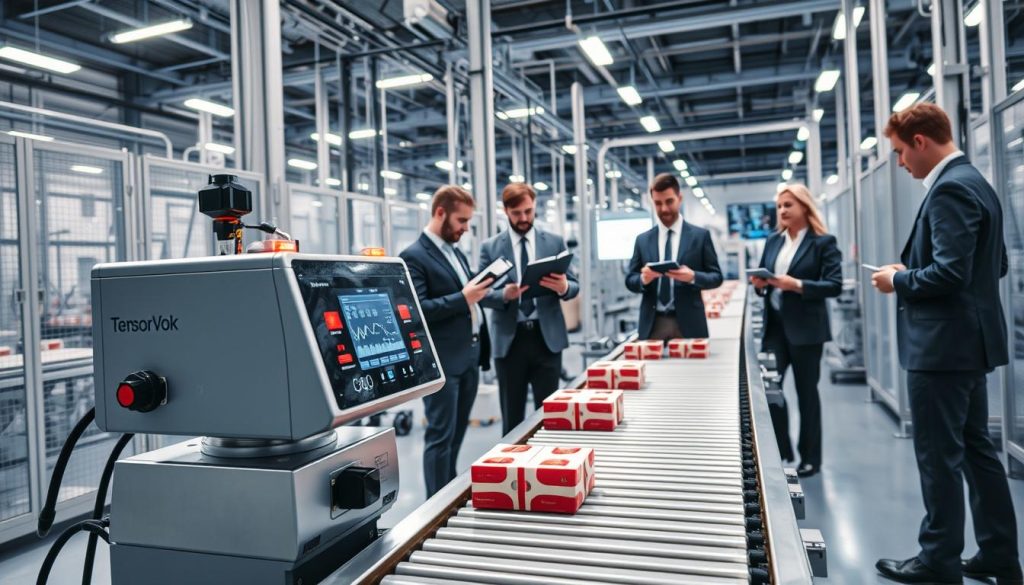
What core technologies power the TensorVok sensing ecosystem?
Our tech is based on AIoT technology. It links sensors to smart units. We use machine learning to spot tiny problems.
Our defect detection algorithms work fast. They check things right away. This keeps your making process smooth.
“The future of industry is not just about automation; it is about giving machines the ability to understand the quality of their own output in real-time.”
How does the sense-think-act framework improve operational efficiency?
Our special sense-think-act system is key to finding defects. It looks at inputs, checks them, and fixes problems fast.
This system makes things better for makers every day:
- Enhanced Precision: Finds tiny flaws like humans do.
- Increased Production Efficiency: Stops problems before they get big.
- Actionable Insights: Turns sensor data into useful reports for bosses.
We aim to build a strong base for long-term growth and trust. With AIoT technology and smart defect detection algorithms, you can keep top quality in a tough market.
Key Challenges in Automated Quality Assurance
Even the most advanced factories face big challenges with automated inspection. They want perfection but the factory floor is full of complex problems. Understanding these issues is key to moving forward.
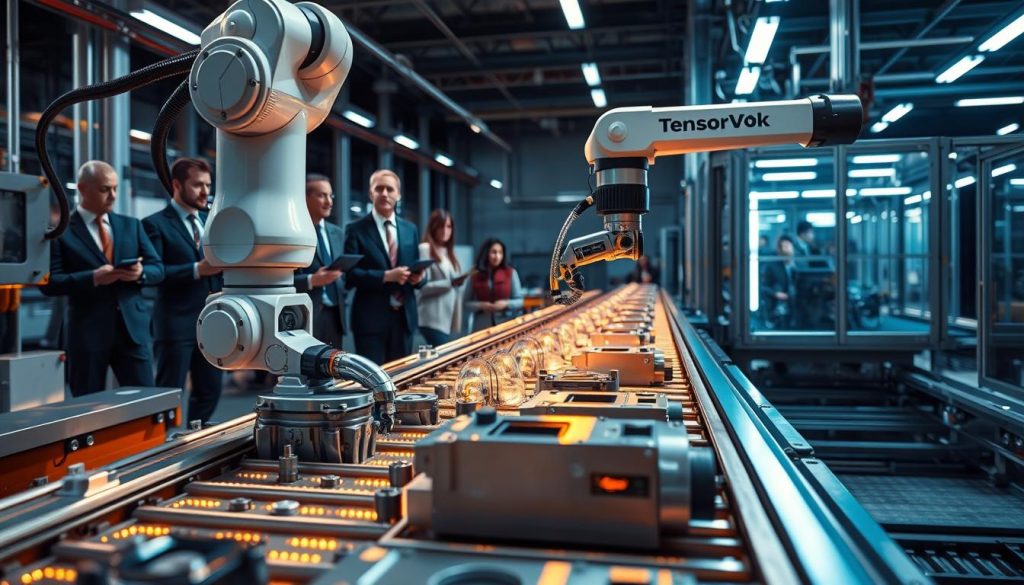
What are the primary limitations of legacy vision systems?
Old systems struggle with things like changing light and dust. They can’t keep up with today’s fast production lines. This makes them unreliable for manufacturers.
“The greatest danger in times of turbulence is not the turbulence; it is to act with yesterday’s logic.”
Also, old computer vision systems are hard to update. They use old rules that can’t handle today’s products. This makes them slow and a bottleneck.
How do manufacturers overcome high false-positive rates in automated inspection?
We use advanced machine learning to solve these problems. Our defect detection algorithms, like RF-DETR, work fast and accurately. They can process over 30 FPS, keeping up with the fastest lines.
These tools help lower false-positive rates. They learn to tell real defects from harmless changes. This lets teams focus on real improvements, not chasing errors.
The Role of Industrial Defect Detection in Safety Compliance
We think keeping your workers safe means finding dangers before they happen. By using intelligent oversight, we help teams stay safe. This way, risks are caught early, before they cause accidents.
Safety is our main goal. We see technology as key to keeping people safe at work. Advanced sensors watch over production all day, every day.
How does automated inspection reduce workplace hazards?
Old ways of checking quality often miss small problems. Our automated inspection finds tiny flaws that could cause big failures.
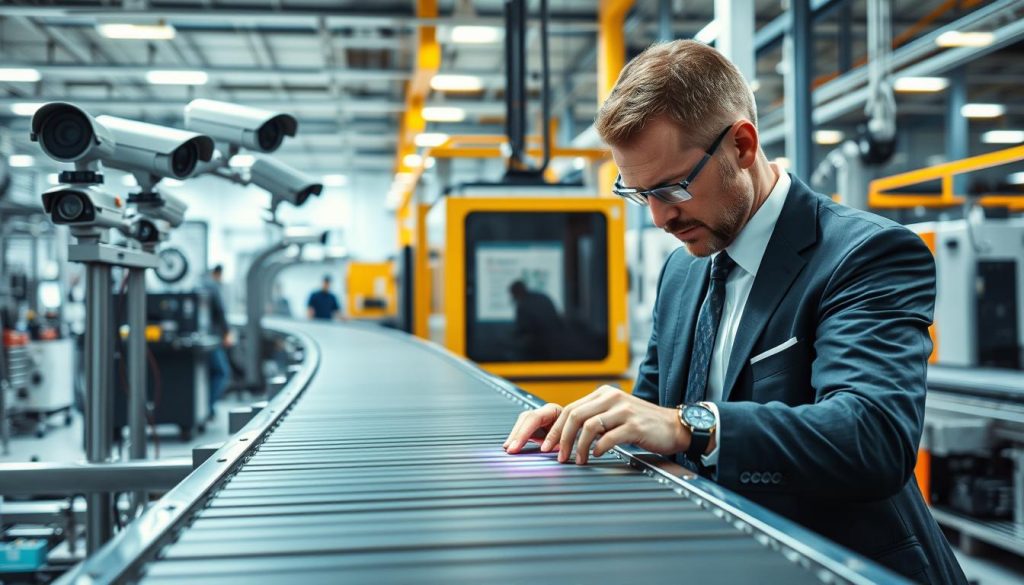
With real-time monitoring, we spot dangers right when they start. This quick action stops bad things from happening to workers.
Can AI-driven defect detection ensure regulatory compliance in high-stakes industries?
Keeping up with global standards is hard for makers today. Industrial Defect Detection is key for getting and keeping ISO 9001:2015 certification. This is often needed to sell products.
Our systems make it easy to show quality work. This helps meet regulatory compliance rules. It makes sure your place is always ready for checks, keeping safety high.
Together, real-time monitoring and automated reports make safety easier. We give you the tools to keep your workers and your good name safe in a tough world.
Integrating AI into Existing Production Lines
Adding advanced intelligence to old systems is key in smart manufacturing. We use a gentle method that keeps your setup the same but adds precision. Our goal is to keep your place running smoothly while we make changes.
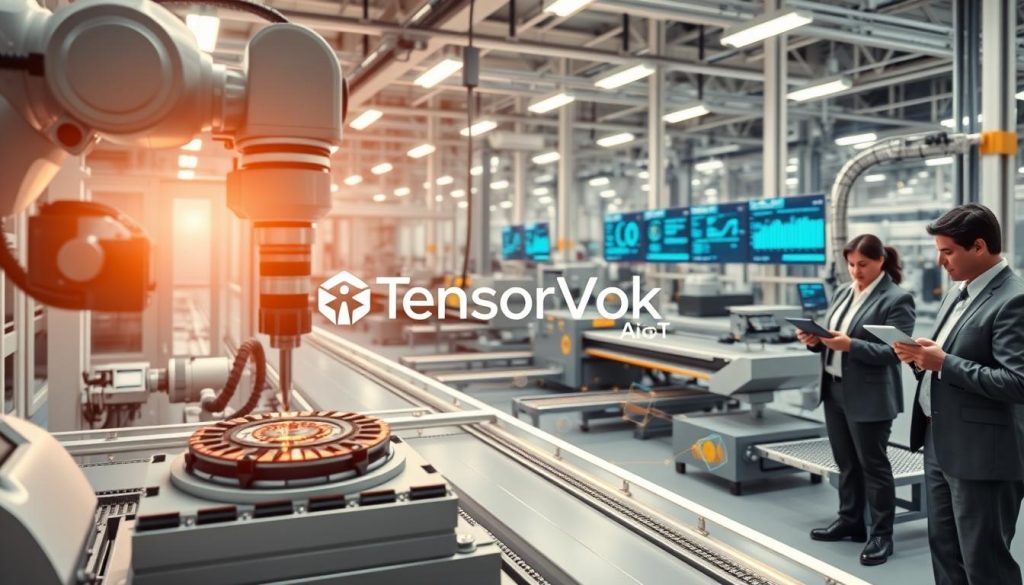
What is the typical timeline for deploying TensorVok solutions?
We know time is precious in any factory. Our setup usually takes four to eight weeks. Efficiency is our main goal every step of the way.
First, we check your setup to see what you have. Then, we set up our AIoT technology to work with your stuff. This quick setup means you see better quality right away, without a big change.
How does hardware compatibility affect the scalability of defect detection systems?
Being able to grow depends on your setup. We use edge computing to work fast, right where data is made. This makes adding new checks easy, like adding a new node to your network.
Being able to work with many systems is key for growth. Our tech talks to lots of industrial protocols. This means your system stays useful as your needs change. Here’s how our way is better than old systems.
| Feature | Legacy Systems | TensorVok Solution |
|---|---|---|
| Data Processing | Centralized/Slow | Edge Computing/Instant |
| Integration | Hardware Overhaul | Seamless Plug-and-Play |
| Scalability | Limited/Rigid | Modular/High |
| Maintenance | High Downtime | Minimal Disruption |
Choosing edge computing lets you grow your checks across lines. This keeps your factory fast and accurate. We aim to help your factory lead in smart manufacturing.
Data Management and Predictive Analytics
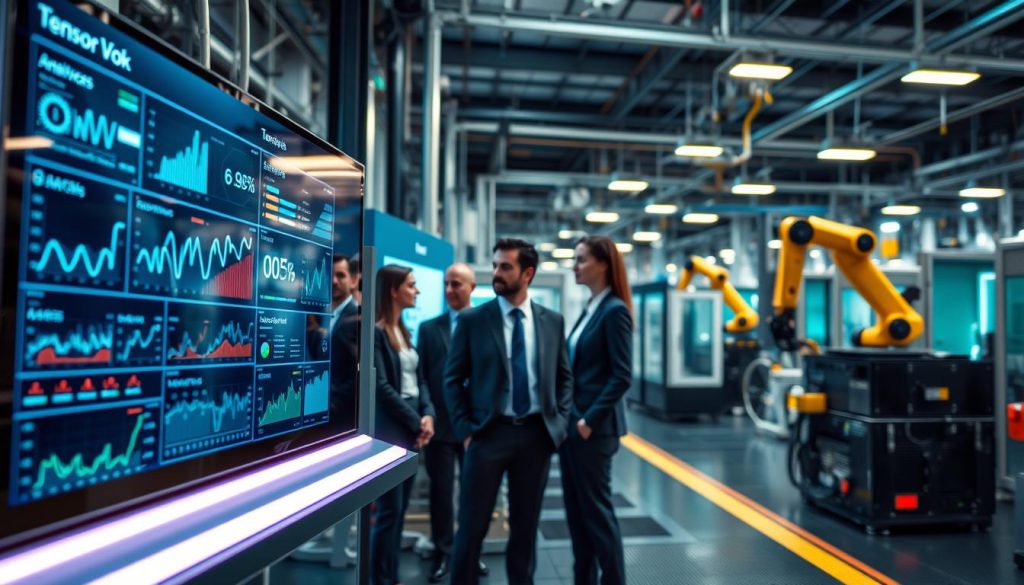
Turning raw data into a valuable asset is key for today’s efficiency. At TensorVok, we see every check as a chance to learn. This helps you keep your place in order.
How is inspection data utilized to predict future equipment failures?
Our systems do more than just check if things pass or fail. They look for patterns in defects and how machines act. This way, we can spot problems early with predictive maintenance.
This proactive approach lets your team fix things during planned breaks. Not when it’s an emergency. With real-time monitoring, your machines work better and last longer.
What security measures protect sensitive manufacturing data in cloud-connected systems?
We keep your important info safe with edge computing. We handle data close to where it’s made. This keeps it safe from the outside while keeping things fast.
This way, we follow strict regulatory compliance rules. Your data stays private and safe. You can rest easy knowing your secrets are protected.
Our focus on keeping data safe stops expensive, unplanned downtime. We mix safe tech with smart analytics. This helps your team make smart choices that protect everyone and your profits.
Cost-Benefit Analysis of Advanced QC Systems
Manufacturing defects can cost a lot, but we often don’t see it. These defects can eat away at profits every year. Studies show that poor quality can take up to 40% of a company’s income.
This big loss comes from wasted materials, extra work, and costly fixes. With better checks, these problems can be stopped before they start.
How quickly can manufacturers expect a return on investment with AI inspection?
We think making things better should be the main reason for new tech. TensorVok solutions help find problems early. This stops bad products from being made, saving a lot of money.
Using quality assurance tech means you don’t keep making the same mistake. Most companies see a big payback in the first year. This makes smart tech a smart choice for any business.
What are the hidden costs of manual inspection versus automated solutions?
Manual checks seem cheap, but they’re not. They can lead to tired workers making mistakes. This means companies have to keep more stock to cover these errors.
Our manufacturing QC fixes this by making sure every product is perfect. It does this without needing people to check everything all the time.
| Cost Factor | Manual Inspection | Automated Solution |
|---|---|---|
| Labor Expenses | High (Recurring) | Low (One-time) |
| Error Rate | Variable/High | Consistent/Low |
| Throughput Speed | Limited by Humans | High-Speed/Continuous |
| Data Insights | Fragmented/Manual | Real-time/Predictive |
Investing in automation helps save money. It lets workers do more important tasks. This makes things better and more profitable.
Customization and Flexibility for Diverse Manufacturing Sectors
Every factory has its own challenges. We know standard solutions don’t fit everyone. Our AIoT technology helps you tackle these challenges.
How does TensorVok adapt to unique product geometries and materials?
Our systems get that product complexity is key today. We use smart defect detection algorithms for your materials. This means our sensors work well with all kinds of products.
Our tools make your production smooth and efficient. You don’t need to change hardware often. Our software updates quickly, keeping your quality high as your products change.
Can the system handle high-speed production environments without sacrificing accuracy?
Keeping precision at fast speeds is important. Our systems process data fast, catching every defect. Our defect detection algorithms ignore the noise and find real issues.
Here’s how we compare to old methods in fast settings:
| Feature | Traditional Systems | TensorVok AIoT |
|---|---|---|
| Adaptability | Low (Rigid setup) | High (Self-learning) |
| Speed Capacity | Limited by hardware | Optimized for high-speed |
| Accuracy | Prone to false positives | High precision |
| Material Handling | Single-material focus | Multi-material versatility |
We aim to give your team AIoT technology that grows with your business. Our focus on flexibility means your investment stays strong. We believe in true innovation that meets changing global needs.
Training and Workforce Adaptation
The power of modern manufacturing comes from synergy between humans and machines. Machines do the hard work of data processing. Your team adds the important context to keep things running well. We help your team adapt to this new digital era.
What skills do operators need to manage AI-driven defect detection tools?
Operators don’t need to be tech experts to use automated inspection systems. They need to understand data and basic system fixes. Knowing how to set up sensors and handle alerts is key.
We make our systems easy to use. This lets your team focus on big decisions, not coding. By learning computer vision dashboards, they can spot trends and solve problems fast.
How does the human-in-the-loop model enhance system performance?
The best quality assurance mixes machine speed with human smarts. Our SAM 3 tech is very accurate, almost as good as humans. This lets your team handle tough cases that need their expertise.
This model makes the system better over time. When humans check or change AI decisions, it gets smarter. This teamwork keeps your place safe and efficient.
| Feature | Manual Inspection | AI-Assisted Inspection |
|---|---|---|
| Decision Speed | Slow and Variable | Instantaneous |
| Consistency | Prone to Fatigue | High Reliability |
| Operator Role | Primary Inspector | System Supervisor |
| Data Logging | Paper-based/Manual | Automated/Digital |
Future Trends in Manufacturing Quality Control
We are entering a new era where machines make decisions. The next decade will see big changes in computer vision and smart sensors. TensorVok is committed to making these changes work for everyone.
What role will edge computing play in the next generation of defect detection?
Edge computing will be key for fast manufacturing. It processes data right where it’s needed. This cuts down on delays.
Real-time processing catches problems as they happen. This is important for factories that can’t stop work. Local intelligence is the future of quality control.
How will autonomous decision-making change the factory floor by 2030?
By 2030, factories will fix problems on their own. Computer vision will make machines adjust to avoid mistakes. This big change will make factories work better.
These systems will also predict when machines need fixing. They’ll look for small signs of trouble. This way, factories can avoid big problems. Finding flaws is just the start; the goal is to make quality happen by design.
Conclusion
Today’s world needs more than just basic checks. TensorVok offers smart, automated systems for today’s global market. We help your team get better at making things right with our precise technology.
Being great starts with good quality control. Our sensing system makes your operations stable. It turns technical info into a way to stand out from others.
Safety is key for any good place. Our solutions make sure you follow all rules to keep workers safe. Join us at https://tensorvok.com/ to make your production lines safer and more efficient.