
Did you know that preventable industrial incidents cost businesses billions of dollars every year? As we get closer to 2026, old ways of monitoring aren’t enough to keep places safe. We need to move to proactive measures for real Industrial safety which is Fire Hazard Detection AI solutions.
At TensorVok, we think the future is about being proactive. With AIoT technology, places can now sense, think, and act before trouble starts. Our method uses Predictive fire analytics and Edge AI for fast, human-like oversight.
Today’s systems focus on cutting down False alarm reduction. This means teams only deal with real dangers. Using AI Fire & Smoke Detection is key to protecting your stuff and people. It’s a must for any company looking ahead.
Key Takeaways
- Old safety methods are failing to stop huge financial losses in modern industries.
- Advanced AIoT tech lets systems spot and act on threats early.
- Edge computing is fast, making quick, life-saving decisions possible.
- Lowering false alarms is key for keeping things running smoothly and staff trust.
- Predictive analytics turn safety from a cost into a business plus.
The Evolution of Industrial Fire Safety
The history of fire protection in factories has changed a lot. It moved from simple systems to smart, aware ones. For years, industrial safety used basic sensors that set off alarms when heat or smoke levels hit certain points. But these tools often didn’t tell the difference between real fires and things like dust or steam.
This old way of doing things often caused factories to shut down and people to leave when it wasn’t needed. Now, Fire Hazard Detection AI uses visual and environmental data in real-time. It’s more accurate for complex places.
AI Fire & Smoke Detection gives a better understanding of the workplace. It doesn’t react to every particle in the air. Instead, it learns to spot the signs of a real fire. This is key for keeping factories running smoothly, where every minute matters.
Using Edge AI and AIoT technology means we can handle data right where it’s collected. This cuts down on delays and makes sure safety decisions are made fast. Here’s a table showing how old methods differ from new AI ones.
| Feature | Legacy Systems | AI-Driven Systems |
|---|---|---|
| Detection Logic | Fixed Thresholds | Context-Aware Analysis |
| Environmental Sensitivity | High False Alarm Rate | False alarm reduction |
| Data Processing | Centralized/Slow | Predictive fire analytics |
| Maintenance Needs | Manual Calibration | Automated Updates |
The shift to smarter monitoring is more than just a tech update. It’s a must for keeping places safe today. We can now spot risks before they turn into big problems. This way, workers stay safe, and businesses save money by avoiding false alarms.
Key Technologies Driving Fire Hazard Detection AI
To ensure industrial safety, we focus on the core technologies behind today’s detection systems. Modern Fire Hazard Detection AI goes beyond just sensing heat. It interprets complex environmental data in real-time. This means safety protocols can act fast when danger appears.
Edge AI is at the heart of this change. It processes data locally, avoiding delays. This local smarts means quick decisions in critical industrial settings.
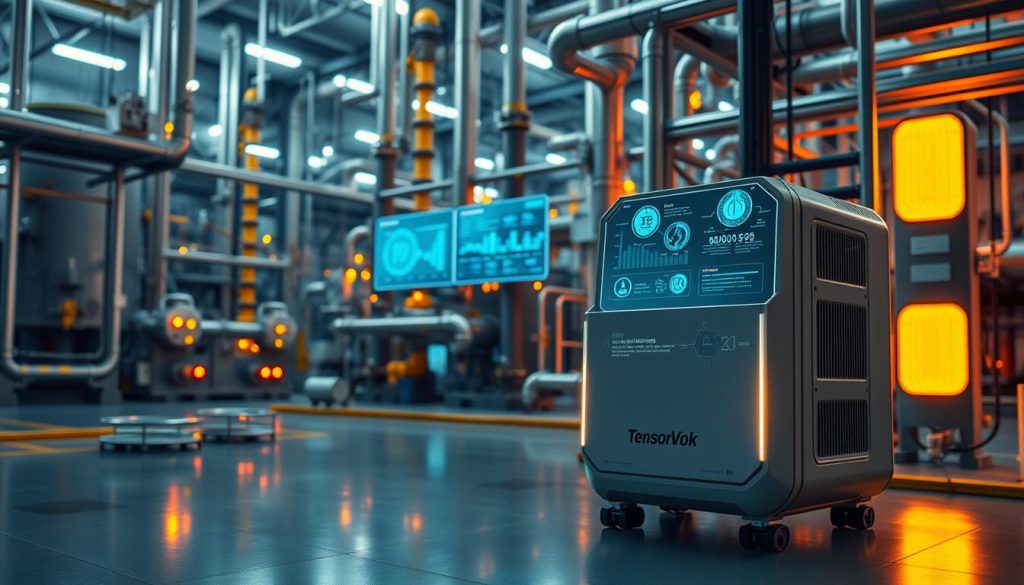
AIoT technology is key to a complete safety system. It connects sensors for a full view of facility conditions. With visual analytics, we can tell real threats from harmless signs, cutting down on false alarms.
Predictive fire analytics spot dangers before they start. This turns safety from a quick fix to a long-term strategy. Here’s how these new tools beat old ones.
| Feature | Traditional Systems | AI-Enhanced Systems |
|---|---|---|
| Data Processing | Centralized/Cloud | Edge Computing |
| Detection Accuracy | Basic Thresholds | Multi-Sensor Fusion |
| Response Time | Delayed | Real-Time |
| False Alarms | High Frequency | Minimal |
With AI Fire & Smoke Detection, we add a protective layer that fits your facility’s needs. These technologies work together to keep your team safe and operations running smoothly.
Top Fire Hazard Detection AI Solutions for Industrial Safety
High-stakes environments need more than just sensors. They need Fire Hazard Detection AI for precision. We’ve looked at top platforms that help move from reacting to preventing safety issues. These systems use advanced algorithms to act fast in emergencies.
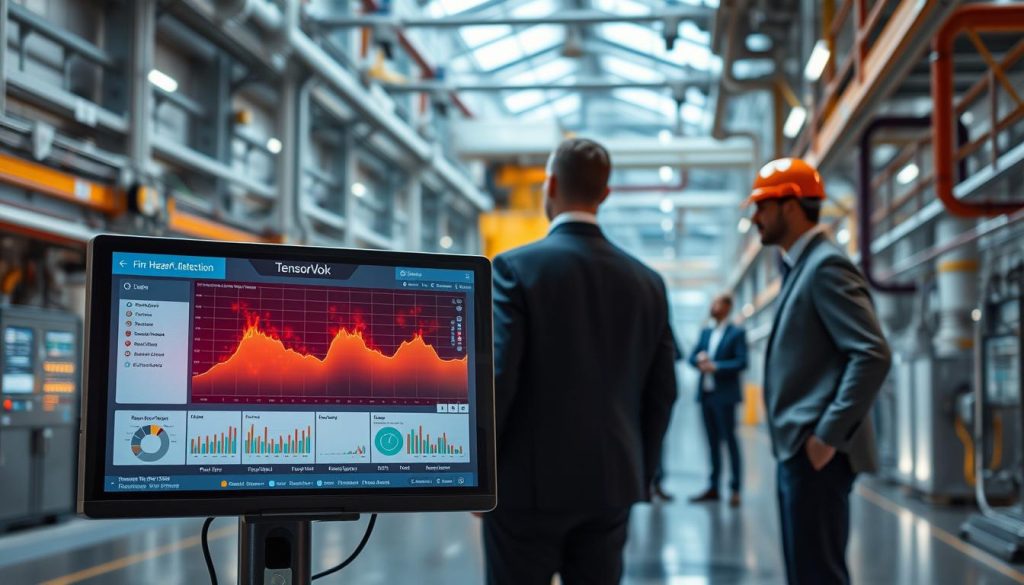
Honeywell Connected Life Safety Services
Overview
Honeywell has a strong system for fire safety. It uses AIoT technology to link different safety devices into one system. This makes monitoring easier and more real-time.
Pros
- Works well with current building systems.
- Offers detailed cloud reports and diagnostics.
- Great for big industrial areas.
Cons
- Needs a big upfront investment.
- Can be hard for non-tech people to learn.
Features
The system is great at managing data in one place. It does automated reports and remote checks. This cuts down on the need for manual checks.
Siemens Cerberus FIT with AI Analytics
Overview
Siemens aims for reliability and ease in industrial safety. Their Cerberus FIT uses smart analytics to spot real threats, not just false alarms.
Pros
- Easy to use for quick responses.
- Works well in dirty or tough places.
- Has a strong support network worldwide.
Cons
- Not customizable for special industrial needs.
- Needs a lot of hardware.
Features
This solution uses predictive fire analytics to find dangers early. It filters out false alarms like steam or dust. This means alerts are only for real risks.
Bosch AVIOTEC IP Starlight
Overview
Bosch uses Edge AI in their cameras for safety. This lets them spot flames and smoke right away, even in dark places.
Pros
- Quick decision-making with visual checks.
- Fast because it processes data at the edge.
- Flexible for complex setups.
Cons
- Needs a clear view for best results.
- More expensive than regular sensors.
Features
The system’s main strength is cutting down on false alarms. It looks at video in real-time. This way, it ignores normal movement and only alerts for fire and smoke.
| Solution | Primary Strength | Best For |
|---|---|---|
| Honeywell | Connectivity | Large Campuses |
| Siemens | Reliability | Harsh Environments |
| Bosch | Visual AI | Early Detection |
Criteria for Selecting AI-Powered Fire Detection Systems
Choosing an AI-powered safety system is a big decision for your future. Fire Hazard Detection AI needs to fit your specific needs and layout. It’s not a one-size-fits-all solution.
When looking at AI Fire & Smoke Detection, focus on systems that process data well. A good system should spot threats early, keeping your place safe. This is key for keeping your workplace safe.
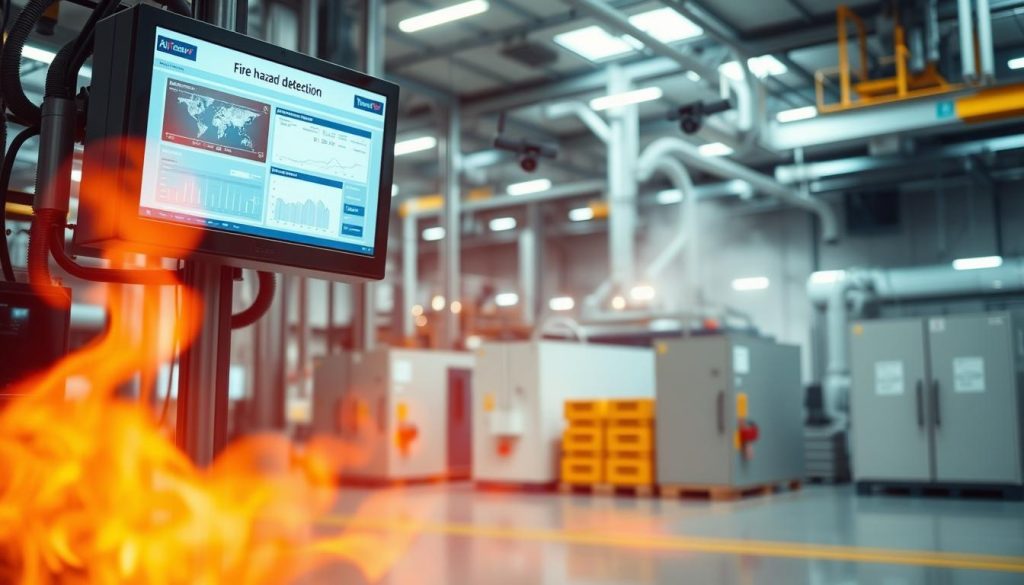
Make sure your choice will last for years. Here are important things to think about:
- Scalability: Can the system grow with your facility?
- Cybersecurity: Does the vendor protect data well?
- Infrastructure Compatibility: Will it work with your current setup?
- Edge AI Capabilities: Does it work locally for quick responses?
Today’s AIoT technology makes decisions faster and smarter. Edge AI means your place can keep running, even when the network is down. This is what makes a safety plan strong.
Also, find systems that cut down on false alarms. Too many false alarms can make people ignore real ones. Predictive fire analytics help tell the difference, so your team only acts when it’s really needed.
Integrating AI with Existing Industrial IoT Infrastructure
We believe that true industrial safety comes from combining old hardware with new AIoT technology. By adding Fire Hazard Detection AI to your setup, you turn passive watching into an active defense. This way, your place doesn’t just collect data; it uses it to stop disasters before they start.
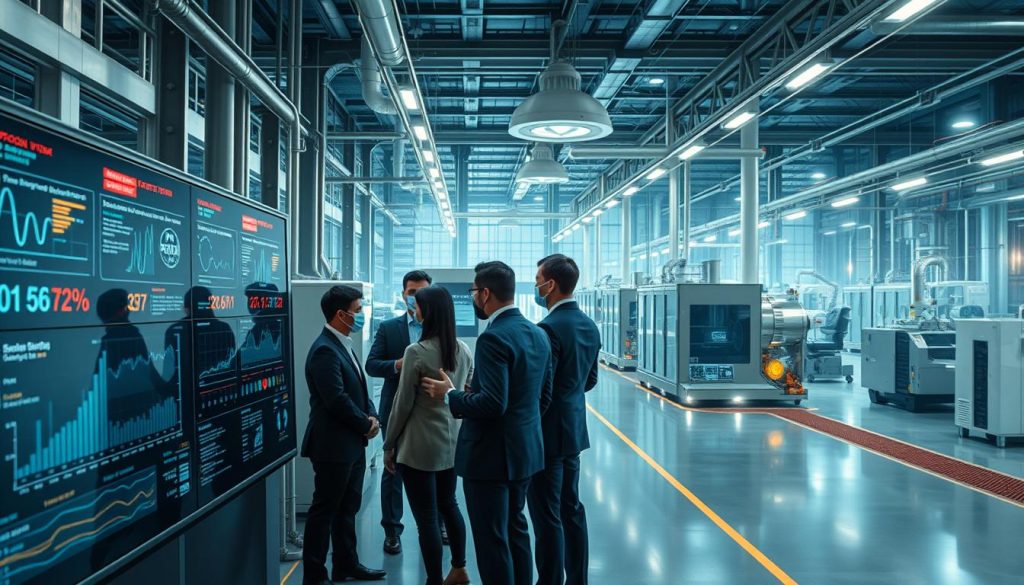
To link your current sensors with Edge AI units, you need to bridge them. This makes a safety network that can act fast. For example, if a fire is found, it can turn off air units to stop smoke from spreading.
“The future of workplace protection lies in the ability of disparate systems to ‘sense, think, and act’ as a single, cohesive unit.”
Setting up AI Fire & Smoke Detection needs a smart plan for data. By linking detection data to your risk management systems, you see your site’s health clearly. This lets you spot electrical dangers before they start fires.
The table below shows how AI changes safety from old monitoring to a new AI-driven system:
| Feature | Traditional System | Integrated AI System |
|---|---|---|
| Response Time | Manual Verification | Automated & Instant |
| Data Accuracy | High False Alarms | False alarm reduction |
| System Scope | Isolated Sensors | Unified Safety Network |
| Action Capability | Alert Only | Automated Shutdowns |
The aim is to make a safe place where tech helps protect people. By using what you already have, you save money and make safety better. Reliability is now a standard thanks to smart, connected systems.
Regulatory Compliance and Safety Standards in 2026
Looking ahead to 2026, the link between Fire Hazard Detection AI and safety laws is key for facility managers. It’s not just about following rules anymore. It’s about using the best tech to keep people and things safe.
In the U.S., safety rules are getting stricter. They want systems that show clear, detailed safety records. AI Fire & Smoke Detection helps by making reports that are easy to check. This keeps your safety records up to date with the latest rules.

Edge AI makes things happen in real time, right where they happen. This is great for following the law. AIoT technology keeps data safe and close to home. This meets tough privacy and data rules that inspectors often look for. We think this local way is the future of safe, legal work places.
Also, predictive fire analytics helps move from just fixing problems to staying ahead of them. By cutting down on false alarms, these systems avoid mistakes that can lead to trouble with the law. TensorVok solutions help your place meet today’s standards and get ready for tomorrow’s.
Overcoming Implementation Challenges in Hazardous Environments
Integrating advanced safety tech into dangerous areas is not easy. It needs a deep understanding of your facility’s layout and risks. To use Fire Hazard Detection AI well, you must go beyond simple installation. You need to tackle the unique challenges of your site.
One big challenge is finding areas where sensors might not work. In complex places, things like walls can block sensors. AI Fire & Smoke Detection helps us figure out how to cover every area.
Dealing with risks from lithium-ion batteries is also key. These batteries can get very hot, very fast. Our Edge AI solutions can spot temperature rises quickly. This helps prevent big problems.
Switching to AIoT technology helps keep an eye on things even in hard-to-reach spots. It connects all sensors into one smart network. This makes sure your place is safe all the time.
We also focus on Predictive fire analytics. This helps us stop fires before they start. It means your team can spend less time on false alarms. This keeps everyone safe and your important stuff too.
Conclusion
Updating your fire safety systems is key to protecting your workers and property. Moving from just watching for fires to using predictive analytics can stop disasters early. This change helps prevent fires from getting worse.
Using Fire Hazard Detection AI changes how you handle risks. It cuts down on downtime and boosts safety. TensorVok offers top-notch AI Fire & Smoke Detection for tough places.
Our Edge AI keeps your site safe fast. Our AIoT tech fits with your current setup for constant watch. This means your team only deals with real threats, not false alarms.
Keeping industrial sites safe needs a proactive approach and the right tech. Join TensorVok to bring smart solutions to your facility. Visit https://tensorvok.com/ to start protecting your site today.