
Did you know that global retail shrinkage costs businesses over $100 billion every year? This huge number shows a big problem in today’s shopping world. It’s a critical vulnerability that needs a smart fix.
At TensorVok, we think protecting your store doesn’t have to hurt customer trust. Old security ways can feel too much or not stop problems early. With a smart retail anti-theft solution, stores can switch from just reacting to being proactive and smart.
Today’s shoplifting detection AI helps stores stay safe in a tough economy. We help retailers see, think, and act fast. This keeps things safe for everyone while making shopping welcoming.
Key Takeaways
- Retail shrinkage causes massive annual financial losses globally.
- Proactive security strategies outperform traditional reactive methods.
- Advanced technology protects assets without compromising shopper privacy.
- Intelligent systems help retailers maintain a positive customer experience.
- TensorVok provides high-precision tools for modern safety compliance.
The Evolution of Shoplifting Detection AI
The world of retail security has changed a lot in the last ten years. We’ve moved from simple ways to keep things safe to advanced systems. These systems are key to keeping stores safe today.
This change is needed because stores are getting more complex. As thieves get smarter, we need better ways to keep stores safe.
From Manual Surveillance to Automated Intelligence
Before, security depended on people watching screens all day. They looked for signs of trouble.
But people can only watch for so long. Automated surveillance gives stores a digital eye that never gets tired.
With shoplifting detection AI, stores can spot things people can’t. These systems look at lots of video at the same time. This lets staff stop theft before it happens.
“The future of retail security lies not in watching more, but in understanding what we see with greater precision and speed.”
Why Traditional CCTV is No Longer Sufficient
Old CCTV systems just record crimes after they happen. They help police, but don’t stop theft.
Shoplifting costs Canadian stores up to $5 billion a year. This shows that just watching isn’t enough to stop theft.
People watching screens get tired, which is a problem during busy times. Old cameras can’t stop retail shrink that new tech could prevent.
Modern shoplifting detection AI makes cameras more than just watchers. It helps stores stay safe and keep their profits up.
How Shoplifting Detection AI Works
Shoplifting detection AI turns regular video cameras into smart protectors for stores. It uses a “sense, think, act” framework. This means it does more than just watch; it gives quick insights into what’s happening.
This smart way helps stores keep their stuff safe. It also makes sure real customers feel welcome.
Computer Vision and Behavioral Analysis
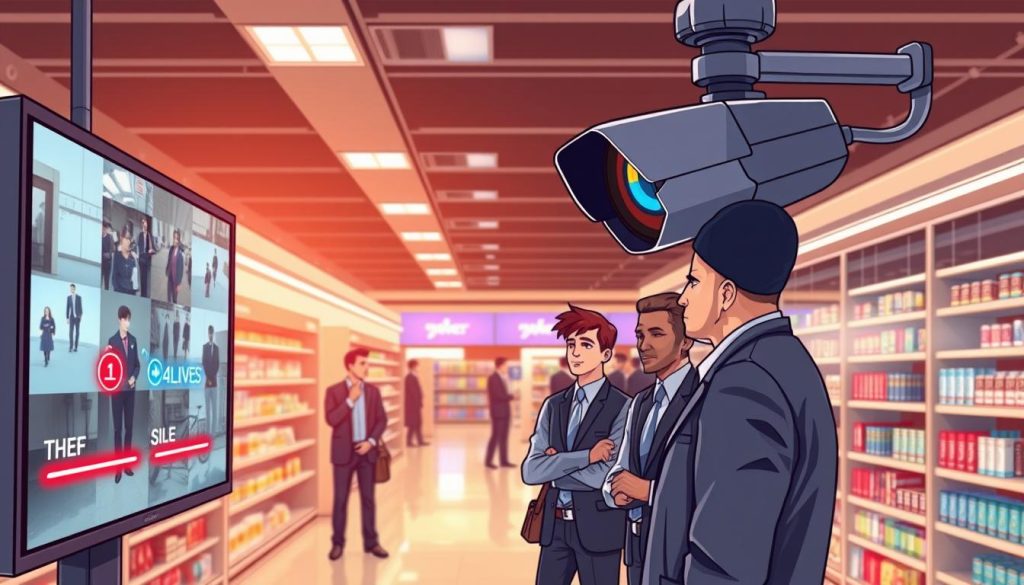
Our tech’s heart is computer vision. It reads video data live. It does behavioral analysis to spot theft signs, like hiding items or messing with tags.
It’s smarter than old systems that just record. It gets what people are doing.
Our AI learns many patterns, like:
- Suspicious hand movements near expensive items.
- Quick hiding of items in clothes or bags.
- Staying in one spot longer than usual.
- Trying to sneak past checkout without paying.
Real-Time Alerting Mechanisms
Good real-time theft detection needs to be fast and right. When it spots a problem, it tells your security team right away. This quick action helps stop theft before it happens.
Processing Video Feeds at the Edge
We use Edge AI to handle video on the camera or server, not the cloud. This makes alerts come fast, in just milliseconds. It also keeps your data safe and uses less network.
Distinguishing Between Normal Shopping and Suspicious Activity
A big challenge in AI-driven security is avoiding false alarms. Our tech is set up to tell normal shopping from real theft. This means your team only gets alerts when it’s really needed. They can then focus on helping customers.
“The true power of AI in retail lies in its ability to filter out the noise of daily operations, highlighting only the moments that truly matter for loss prevention.”
Step-by-Step Implementation of AI Security Systems
Setting up a strong retail anti-theft solution needs a smart plan. It must mix tech with how things work. We’ll show you how to keep your store safe and welcoming for customers.
Conducting a Site Risk Assessment
First, we find out where your store is weak. We look at busy spots, hidden areas, and where expensive items are shown.
This helps us know where to watch closely. It makes sure your security is good and covers everything.
Selecting Compatible Hardware and Camera Infrastructure
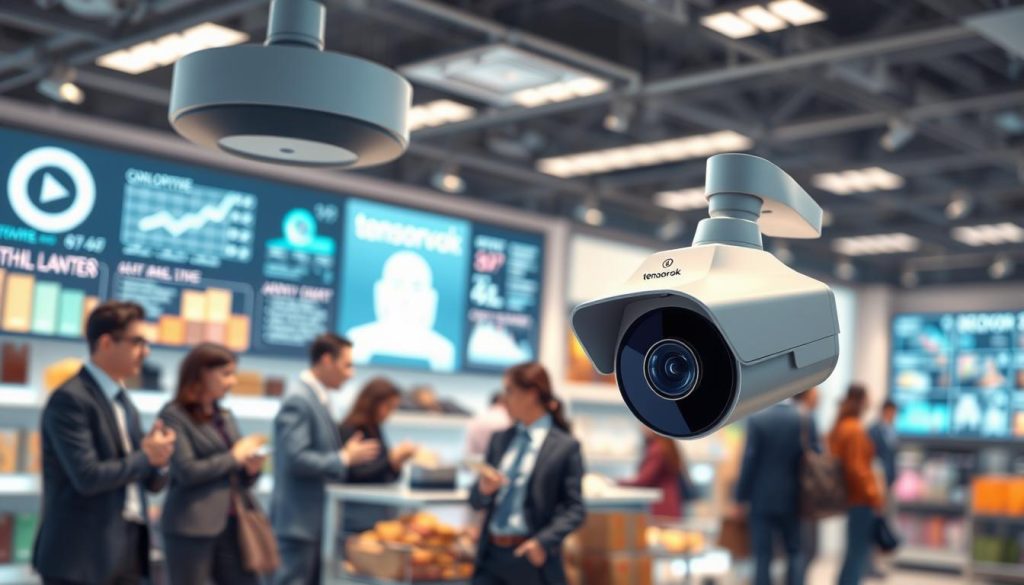
Picking the right gear is key for AI-driven security. We suggest high-def cameras that fit with your network. This saves money on big changes.
Cameras should be 1.8 to 3.5 meters high. This lets the AI see clearly without being blocked by shelves or signs.
Configuring Software Parameters for Your Store Layout
After setting up the hardware, we adjust the software for your store. We pick special areas to watch, like checkout counters or aisles with high-risk items.
This helps the system ignore normal customer actions. It flags any odd behavior. Being precise here is important to avoid mistakes and keep the system working well.
Training Staff on AI-Generated Alerts
Good loss prevention needs more than tech. Your team must know how to handle alerts from the system.
We teach them to tell real threats from false alarms. When your team and AI work together, they can act fast and protect your stuff well.
| Implementation Phase | Primary Objective | Key Benefit |
|---|---|---|
| Risk Assessment | Identify Vulnerabilities | Targeted Coverage |
| Hardware Setup | Optimize Camera Placement | High Detection Accuracy |
| Software Tuning | Define Security Zones | Reduced False Alerts |
| Staff Training | Improve Response Time | Enhanced Retail security systems |
Navigating UK Privacy Laws and GDPR Compliance
We think keeping things safe shouldn’t mean ignoring privacy. As stores use new tech, following GDPR compliance is key. This way, you keep things safe while also respecting shoppers’ rights.
Understanding Data Protection Impact Assessments
Before using new tech, do a Data Protection Impact Assessment (DPIA). It helps spot and fix privacy risks with your retail security systems. It shows you’re serious about following UK laws.
A good DPIA checks if your AI tools are really needed. Get your legal team involved early. This helps avoid big problems later.
Ensuring Anonymization and Facial Recognition Ethics
Using AI wisely means not focusing on faces. Our systems look at how people move, not who they are. This way, we keep things safe without tracking people.
Make sure AI doesn’t collect face data. Anonymizing data is key for retail security systems. It keeps customers safe and private.
Transparency Requirements for Retail Customers
Being open is key for trust today. You must tell visitors about the tech watching them. This builds trust and shows you follow GDPR compliance.
Signage and Public Notification Strategies
Put clear signs at store entrances. They should explain the monitoring in simple words. Use icons to help everyone understand.
Also, share detailed privacy policies online or at the desk. This shows you care about ethics. Being open makes your brand look good and safe.
Evaluating Top Shoplifting Detection AI Solutions
Finding a good retail anti-theft solution means finding one that is both smart and keeps privacy safe. There are many tools out there. It’s important to pick the right one for your store. A privacy-conscious security approach is key in the UK.
Veesion: Behavioral Analysis for Retail
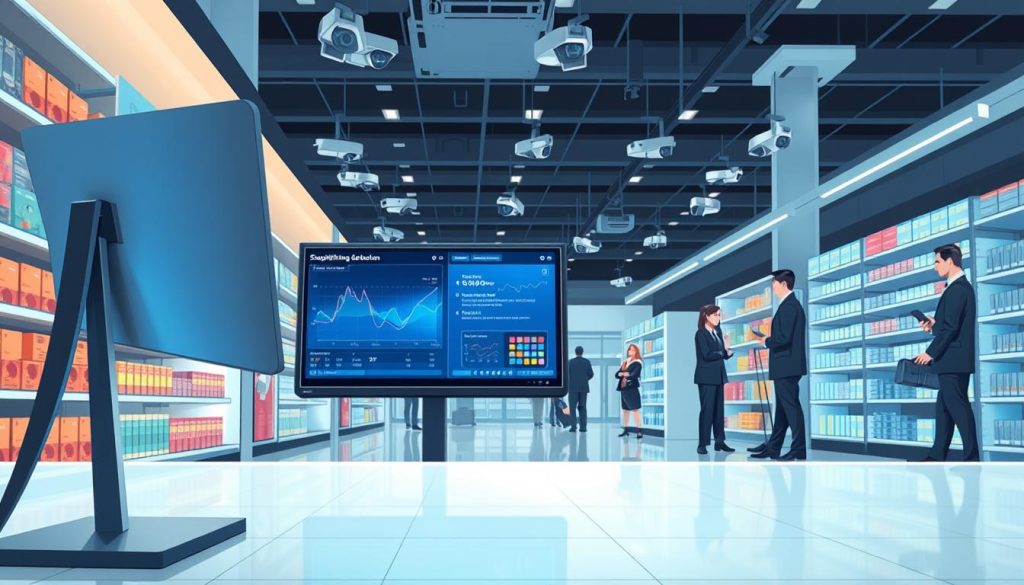
Veesion uses smart shoplifting detection AI to watch stores in real-time. It looks at how people act, like hiding things, but doesn’t use face scans. This is great for stores that want to keep customers’ privacy but also keep things safe.
StopLift: Checkout Scanning Intelligence
StopLift helps stop theft at the checkout. It checks if items are scanned right and catches mistakes. This retail anti-theft solution helps stores make more money by keeping losses down.
Everseen: End-to-End Loss Prevention
Everseen has a big platform that works all over the store. It looks for odd things happening, from shelves to checkout. It connects all the data to show how well the store is doing and where it might be at risk.
| Solution | Primary Focus | Key Strength |
|---|---|---|
| Veesion | Behavioral Analysis | Privacy-first detection |
| StopLift | Checkout Scanning | Point-of-sale accuracy |
| Everseen | End-to-End Monitoring | Full-store integration |
Integrating AI with Existing Loss Prevention Teams
Technology is a strong force multiplier when used with your security team. It doesn’t replace their judgment. Instead, it helps them see and hear more.
By mixing tech insights with human smarts, you build a strong defense against theft. This team effort makes sure your team is always in charge.
Bridging the Gap Between Tech and Human Security
The real power of AI-driven security is in spotting real threats. When it finds something, it gives your team the info they need to act fast.
We think the best loss prevention comes from a team that trusts technology. When staff trust the system, they can handle the store floor better.
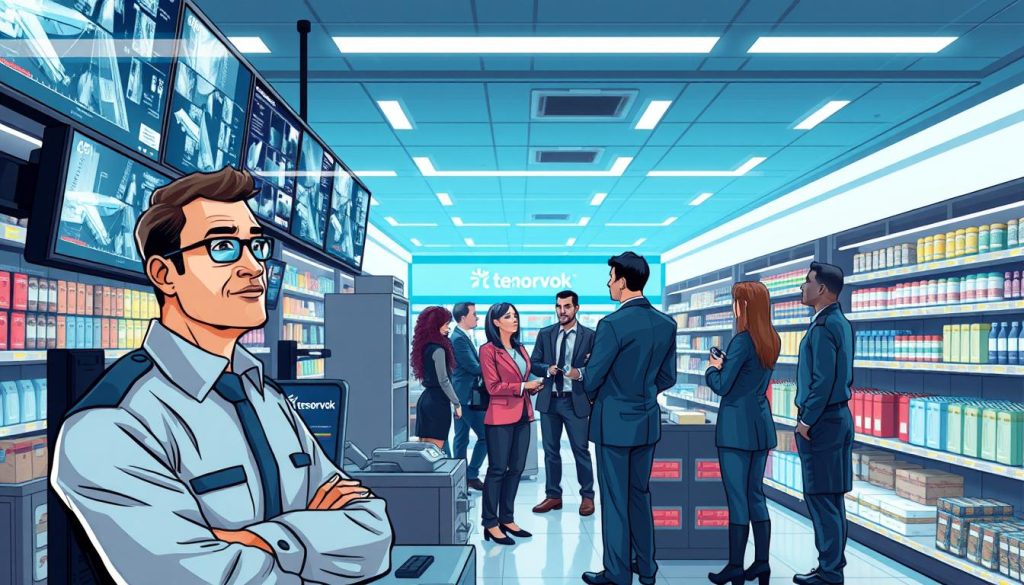
Establishing Standard Operating Procedures for Alerts
Having clear rules is key to acting on data. Without them, even the best real-time theft detection can cause confusion or slow responses.
Many stores use a central security spot to handle alerts. There, operators can send out codes to alert staff to suspicious activity. This allows for a discreet and professional response.
Setting these rules helps everyone know what to do when a threat is found. This way, you can stop theft early and keep your store safe for everyone.
Measuring ROI and Shrinkage Reduction
It’s key to show how your security plan helps your store grow. When you spend on new tech, you must prove it’s worth it. Using data, we can turn security into a way to make more money.

Tracking Key Performance Indicators
To fight retail shrink, watch certain numbers closely. Keep an eye on how often odd things happen per thousand sales. This helps you stop problems before they start.
Also, check how often your team stops thieves. This shows if your shrinkage reduction plan is working. Always check your security to keep up with thieves.
Calculating the Cost-Benefit of AI Deployment
AI is proving to be a smart choice for stores. With more self-checkouts, thieves are finding new ways to steal. AI helps by watching stores automatically.
When you figure out if AI is worth it, look at how much you save. Compare the cost of AI to how much you get back from not losing as much. Here’s a table to help you see the difference:
| Metric | Traditional CCTV | AI-Driven System |
|---|---|---|
| Detection Speed | Manual/Delayed | Real-Time |
| Shrinkage Reduction | Low Impact | High Impact |
| Operational Cost | High (Staffing) | Low (Automated) |
| Data Accuracy | Subjective | Objective/Precise |
Using this guide, you can explain why you need better loss prevention tools. Focus on retail shrink data to make sure your money is well spent. Good shrinkage reduction keeps your profits up and your store safe.
Conclusion
The world of retail loss prevention is changing. It’s moving towards using smart Edge AI. This helps store owners keep their profits up while making sure everyone feels welcome.
We are committed to helping businesses around the world. We use advanced AIoT technology to keep things safe and follow the rules. This makes sure your security is strong against new threats.
Using these new tools is a smart way to protect your business. We want to show you how TensorVok can change how you prevent loss. Contact our team at https://tensorvok.com/ to make your store safer and smarter.