
Did you know that stores in the United States lose over $100 billion each year because of there is no Organized Retail Crime Prevention? This huge loss shows we really need to stop organized retail crime fast.
Things like flash mobs and pushouts are making store security harder. We need to change how we protect our stores and people.
Using Edge-AI helps us spot trouble right away. It works on cameras, so we can act fast. We think Edge-AI is the best way to keep stores safe from new threats.
Key Takeaways
- Coordinated theft costs the industry billions every year.
- Flash mobs and pushouts require a shift toward automated surveillance.
- Edge-AI provides real-time detection by processing data at the source.
- Local processing reduces latency, ensuring faster security alerts.
- Modern technology is essential for protecting both employees and inventory.
Understanding the Mechanics of Flash Mobs and Pushouts
We see a big change in how organized theft groups work in stores today. The world of retail loss prevention has shifted. Now, we face coordinated groups instead of solo thieves.
Recent retail crime statistics show a scary trend. In 2024, 73% of stores said thieves were getting more aggressive and violent. This shows we face more than simple theft. We face organized, dangerous acts that harm both staff and customers.
Identifying Behavioral Patterns in Retail Environments
To fight ORC, we need to spot certain behaviors first. These groups send scouts to find weak spots and valuable items in stores.
When the scouts give the signal, the group acts together. They use distraction techniques to confuse staff. This chaos lets them quickly clear shelves. Spotting these signs early can stop retail theft.
The Limitations of Traditional Surveillance Systems
Many stores use old security setups with static cameras and manual checks. These are not enough against today’s threats. They can’t keep up with the quick moves of organized theft groups.
Old retail loss prevention tools just record events. By the time guards notice something on a monitor, it’s too late. We need smarter systems that can stop ORC before it starts.
Core Components of an Edge-AI Prevention Architecture
Using Edge-AI lets us handle data right where it’s made. This cuts down the time to spot odd behavior. It’s key for keeping stores safe in busy places.
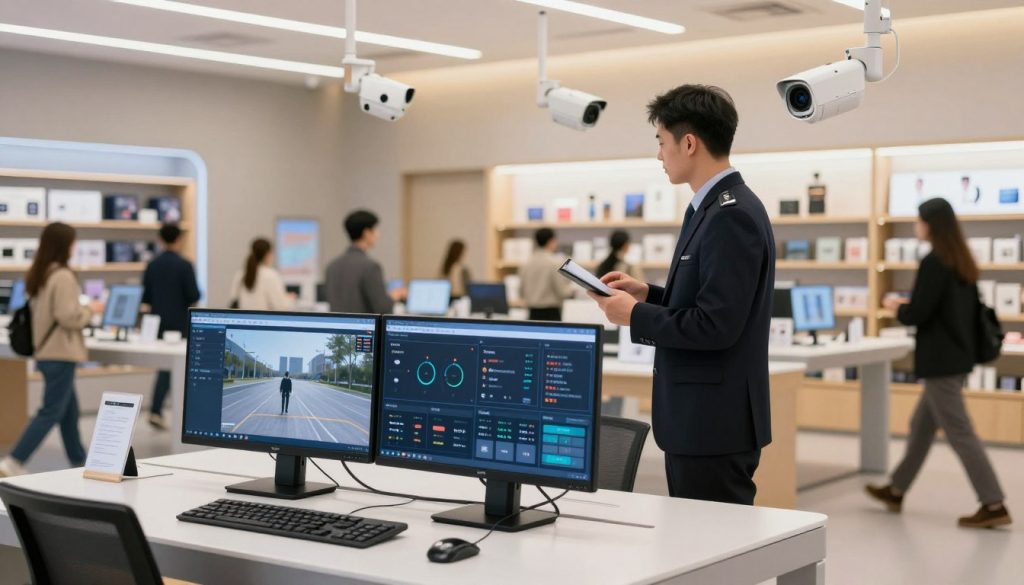
Selecting High-Performance Edge Computing Hardware
Processing Power Requirements for Real-Time Analytics
Our gear needs special chips for fast video analysis. These chips help our retail security systems work fast. Without enough power, they can’t keep up with thieves.
Network Connectivity and Latency Considerations
Good network links are vital. Our edge devices need to talk to the main system quickly. This helps us catch thieves fast, like Amazon does with its geofencing.
“The future of loss prevention lies in the ability to process visual data at the edge, turning passive cameras into active, intelligent observers.”
Integrating Computer Vision Models for Threat Detection
Training Algorithms to Recognize Group Aggregation
We use computer vision to spot certain behaviors. Our models learn to see when groups act together. This helps us catch organized theft groups early.
Detecting Rapid Exit Patterns and Pushout Tactics
Our models can spot quick, coordinated movements. When they see these, they act fast. Below is what we need to make this work.
| Component | Minimum Specification | Primary Function |
|---|---|---|
| Processor | Quad-Core 2.0GHz+ | Real-time video analysis |
| Memory | 8GB RAM | Model data buffering |
| Connectivity | Gigabit Ethernet | Low-latency alert transmission |
| Storage | 128GB SSD | Local event logging |
By choosing strong retail technology, we make places safer. Using computer vision helps us stay ahead of threats.
Implementing Edge-AI Solutions for Organized Retail Crime Prevention
Today’s retail world needs smart tech to fight off organized crime. Even though 80% of stores think laws are key to stop ORC, we also need to improve our retail technology. Good retail loss prevention means using digital tools well in our daily work.
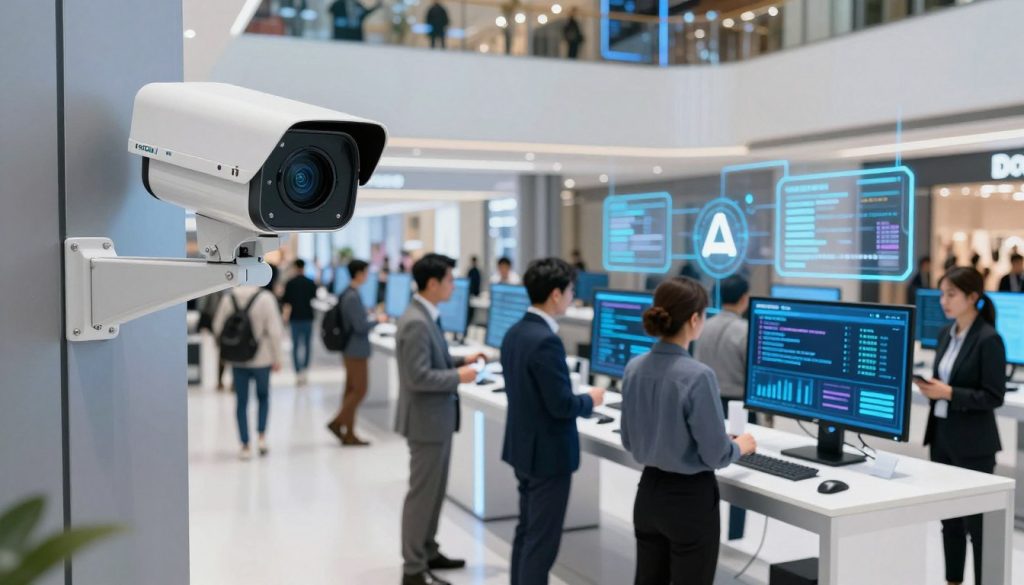
Configuring Camera Placement for Optimal Coverage
To make Edge-AI work best, we must place cameras wisely. We need clear views of busy areas and doors. Precision is key for good data.
Cameras should be at eye level near valuable items. This helps our computer vision spot problems early. The right angles help avoid blind spots that thieves use.
Establishing Automated Alert Thresholds
Our systems work well only if we set good rules for them. Clear rules mean alerts are only for real threats. This keeps staff focused on real dangers.
Defining Parameters for Suspicious Group Behavior
We program our system to spot certain behaviors. It looks for fast movement, big groups, or people near off-limits areas. These signs help catch trouble fast.
Integrating Alerts with Security Operations Centers
When trouble is spotted, we need to tell the SOC fast. We link alerts to dashboards for quick action. This lets security teams act fast to stop trouble.
Testing System Response Times in Simulated Scenarios
We can’t just guess how our systems will do. We test them in fake scenarios to see if they work. These tests help us learn from retail crime statistics and get better.
- Simulated Flash Mobs: Testing how quickly the system alerts staff to sudden group surges.
- Latency Checks: Measuring the time between detection and the alert reaching the SOC.
- Protocol Drills: Ensuring staff know how to react once an automated alert is triggered.
Optimizing Data Privacy and Regulatory Compliance in the United States
Today’s retailers must stop retail theft and keep data private. We use AI tools but must follow retail crime legislation. This is key to keeping our customers’ trust.
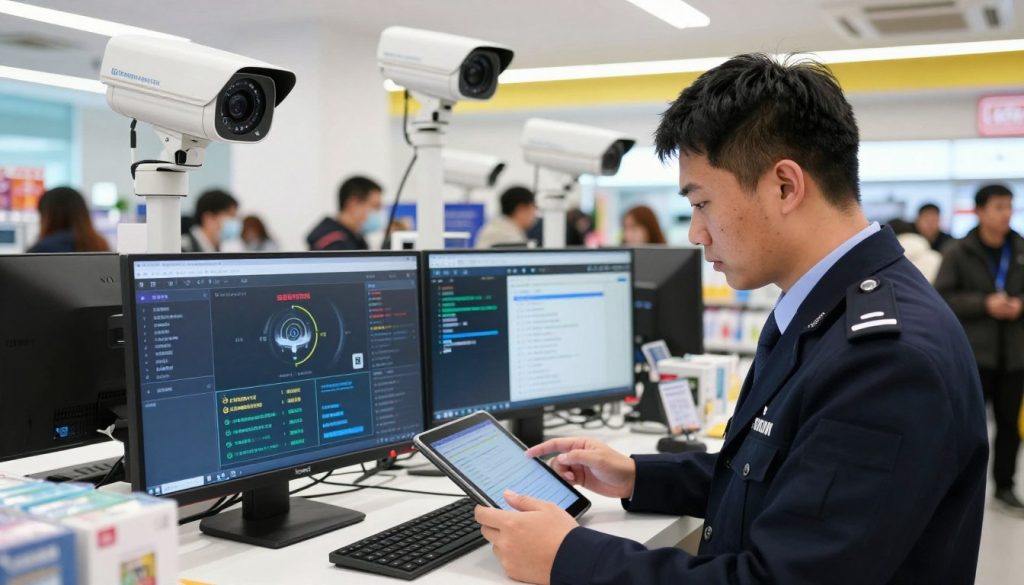
Adhering to State-Level Biometric Privacy Laws
Many states have strict rules on biometric data. Laws like the Illinois Biometric Information Privacy Act (BIPA) need consent for facial recognition. We make sure our AI systems don’t store personal biometric data.
“Privacy is not an option, and it should not be the price we pay for security. True innovation happens when we protect the individual while securing the enterprise.”
Ensuring Data Encryption and Secure Storage Protocols
The INFORM Consumers Act of 2022 sets new standards for data handling. We focus on retail security by encrypting all data. This makes data unreadable if it’s stolen.
Secure storage is also key for retail safety. We use edge storage that deletes data after a while. This keeps our data safe and reduces our risk.
Balancing Security Efficacy with Customer Experience
We’re worried that high-tech tools might scare off customers. But, when used openly, they make shopping safer. Here’s how we keep security high without hurting the customer experience.
| Strategy | Security Impact | Customer Experience |
|---|---|---|
| Anonymized Analytics | High (Threat Detection) | Neutral (Privacy Protected) |
| Visible Signage | Medium (Deterrence) | Positive (Transparency) |
| Real-time Alerts | High (Rapid Response) | Positive (Safety Assurance) |
| Data Purging | Low (Risk Reduction) | Positive (Trust Building) |
We focus on these areas to fight retail theft and follow retail crime legislation. Our goal is to keep our customers safe and secure.
Conclusion
The move to smart surveillance is changing the game. Edge-AI is key for stopping organized retail crime in the US.
Retailers need to focus on these advanced tools. They help keep staff and customers safe from sudden theft. Using strong strategies makes shopping safer for everyone.
We should do more than just install tech. Leaders should also push for laws that really tackle the problem.
Keeping retail safe means always staying alert and updating our methods. We want to hear about your experiences with these tools. Together, we can make the retail world safer for all.