Why Workplace Safety AI is Critical in Singapore’s Regulatory Landscape
Singapore’s Work Safety and Health (WSH) Act mandates proactive risk mitigation across construction, manufacturing, logistics, and high-risk industrial environments. With the Ministry of Manpower (MOM) intensifying audits and enforcement, organizations must move beyond reactive safety measures. Enter workplace safety AI Singapore — a strategic upgrade that enables continuous monitoring, automated alerts, and actionable insights.
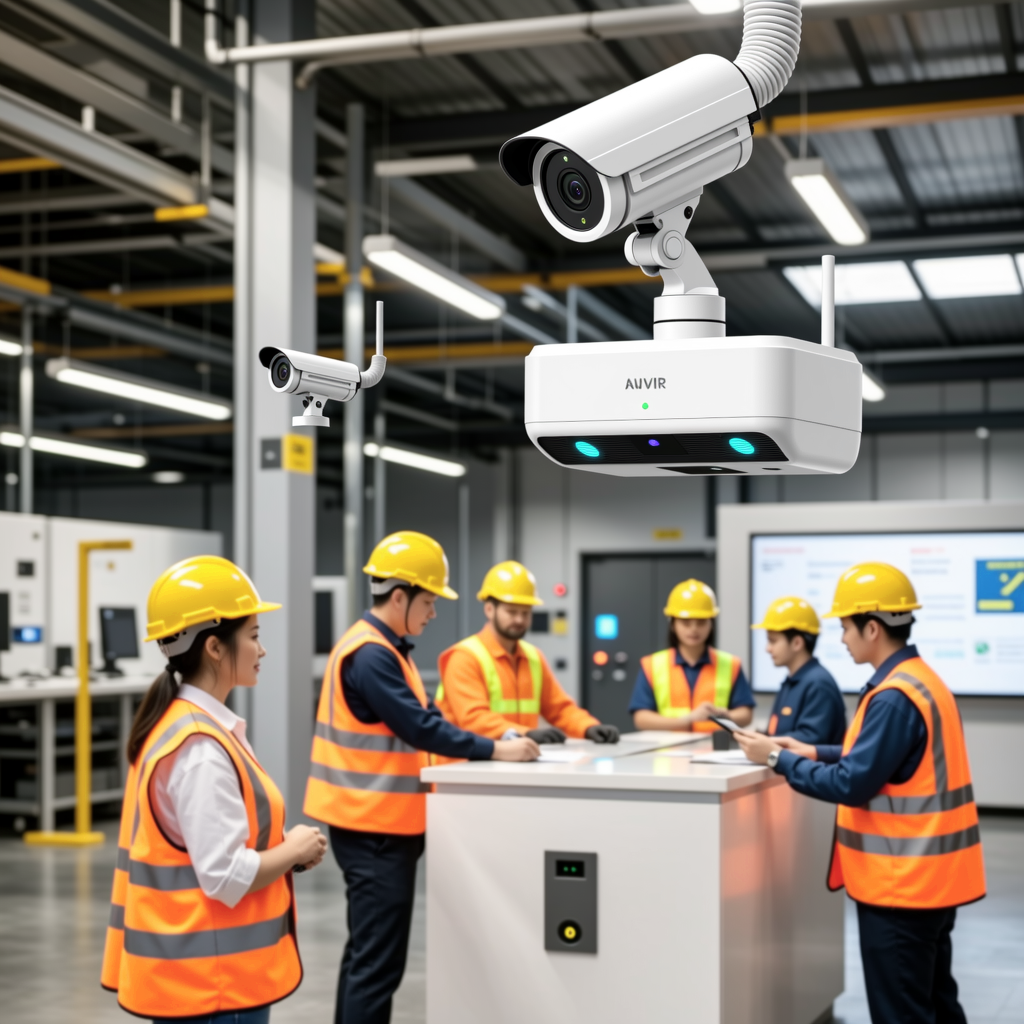
Traditional surveillance systems are limited to passive recording. In contrast, AI-driven video analytics transform static footage into dynamic safety intelligence. For Singapore-based HSE managers, this means detecting non-compliance with Personal Protective Equipment (PPE), unauthorized access to restricted zones, fire/smoke incidents, crowd density spikes, and worker distraction — all in real time.

How TensorVok AI Video Analytics Meets Singapore’s WSH & MOM Requirements
TensorVok AI Video Analytics is engineered specifically for Singapore’s regulatory environment. Unlike generic AI CCTV solutions, it integrates seamlessly with existing IP cameras and analog systems via RTSP retrofit — no need to replace your current infrastructure.
What sets TensorVok apart is its edge-based processing. Video data never leaves the premises; analysis happens locally on-site. This ensures full compliance with Singapore’s Personal Data Protection Act (PDPA) and data sovereignty laws — critical for government contractors, healthcare facilities, and industrial parks.
The system detects:
- PPE violations (e.g., missing hard hats, vests, or gloves)
- Restricted zone intrusions (e.g., unauthorised personnel in electrical rooms or crane zones)
- Fire and smoke detection using advanced thermal and visual pattern recognition
- Crowd density alerts during peak operations or emergency evacuations
- Distracted activity (e.g., phone use, drowsiness, or unsafe handling)
All detections are logged with timestamps, camera IDs, and event severity — generating audit-ready reports that align with MOM’s WSH inspection criteria. These reports can be exported directly for submission during site audits, reducing compliance overhead by up to 70%.
Key Features That Set TensorVok Apart for Singaporean HSE Teams
TensorVok AI Video Analytics isn’t just another AI tool — it’s a purpose-built safety engine calibrated for Singapore’s unique operational context:
- RTSP Retrofit Compatibility: Integrates with over 95% of existing CCTV/IP camera brands (Hikvision, Dahua, Axis, Bosch, etc.) without hardware changes.
- Edge Intelligence: On-premise AI inference ensures zero data leakage, ideal for sensitive sites like Changi Airport, Jurong Island, and Sembawang Industrial Park.
- MOM-Calibrated Algorithms: Designed with input from Singaporean safety experts and aligned with WSH guidelines, including those for construction, offshore platforms, and chemical plants.
- U.S.-Developed AI from BrightVox LLC: Leverages cutting-edge computer vision models trained on global datasets, delivered and supported locally by Huafa Solutions in Singapore.
- White-Label & OEM Ready: Security integrators and system vendors can rebrand the platform under their own name — ideal for SI firms serving the public sector and private industry.
Deployment Speed & Integration: From Days to Minutes, Not Months
Many AI video analytics platforms require months of planning, integration, and training. TensorVok AI Video Analytics cuts through complexity. With a plug-and-play setup, deployment takes days, not months.
Here’s how it works:
- Connect your existing RTSP-enabled cameras to a TensorVok Edge Gateway (small form-factor device).
- Configure detection rules via a simple web dashboard (e.g., “Alert if no hard hat in Zone A”).
- AI models auto-calibrate based on lighting, camera angle, and site layout.
- Real-time alerts appear on dashboards, mobile apps, or integrated with BMS/SCADA systems.
Organizations across Singapore — from Jurong Port terminals to NUS research labs — have gone live within 48 hours. No IT overhaul. No cloud dependency. Just immediate safety uplift.

FAQs on Workplace Safety AI in Singapore
1. Is TensorVok AI Video Analytics compliant with Singapore’s PDPA?
Yes. All video processing occurs at the edge — meaning raw footage never leaves your site. This satisfies PDPA requirements for data localization and minimizes privacy risks, especially in high-security zones like Changi Airport or PSA terminals.
2. Can TensorVok work with my existing CCTV system?
Absolutely. TensorVok AI Video Analytics supports RTSP streaming from virtually any IP or analog camera. You don’t need to replace your current cameras — just connect them to a TensorVok Edge Gateway. This makes it cost-effective for large-scale rollouts across factories, warehouses, and construction sites.
3. How does TensorVok ensure accuracy in detecting PPE and restricted zone breaches?
TensorVok uses deep learning models trained on thousands of real-world scenarios, including diverse uniforms, lighting conditions, and camera angles common in Singaporean workplaces. The system continuously learns from feedback loops and is regularly updated with new threat patterns. It also reduces false positives through contextual awareness — e.g., distinguishing between a worker in a safety vest and a visitor in casual wear.
4. Does TensorVok support MOM audit reporting?
Yes. TensorVok AI Video Analytics generates detailed, timestamped incident logs that map directly to MOM’s WSH checklist items. Reports include event type, location, duration, and evidence clips (with redaction options). These can be exported as PDFs or CSVs for inclusion in audit submissions — saving HSE teams hours of manual documentation.
5. Who provides local support for TensorVok in Singapore?
Huafa Solutions, a trusted technology partner in Singapore, delivers end-to-end implementation, training, and technical support for TensorVok AI Video Analytics. They operate across the island, including in Tampines, Woodlands, and Seletar, ensuring rapid response times and on-ground expertise.
6. Can I white-label TensorVok for my security clients?
Yes. TensorVok offers white-label and OEM licensing for system integrators (SIs), security vendors, and MSPs. You can brand the interface, dashboard, and reports under your company name while leveraging TensorVok’s proven AI engine and compliance framework.
7. What industries in Singapore benefit most from TensorVok AI Video Analytics?
Construction sites (e.g., Marina Bay Sands expansions), industrial parks (Jurong Island), logistics hubs (Tuas Mega Port), healthcare facilities (KK Women’s & Children’s Hospital), and education institutions (Nanyang Technological University) all use TensorVok to reduce incidents, meet audit standards, and improve safety culture.
8. How quickly can we deploy TensorVok AI Video Analytics on-site?
Most deployments are completed within 3–5 days, including site assessment, gateway installation, camera integration, rule configuration, and staff training. This speed is unmatched by legacy AI platforms that require cloud migration, API development, and extensive calibration.