Introduction: The Limitation of Traditional CCTV
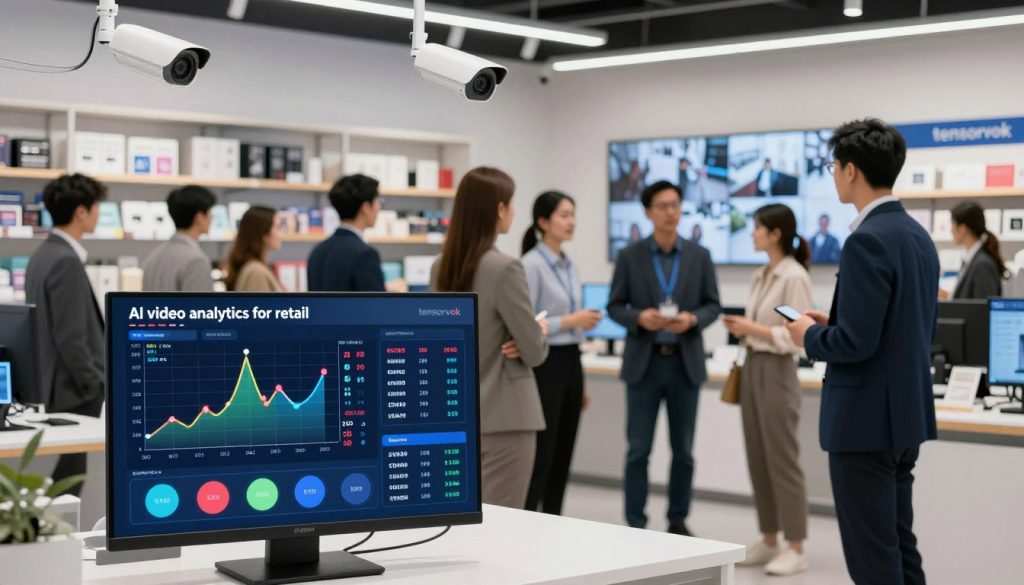
Traditional CCTV systems are reactive by design—they record footage after an incident occurs, leaving organizations vulnerable to delays in response and missed opportunities for prevention. While they provide visual documentation, they offer no automated insight, alerting, or predictive capability. In contrast, TensorVok AI Video Analytics turns passive video feeds into active safety intelligence, enabling real-time detection of hazards before they escalate.
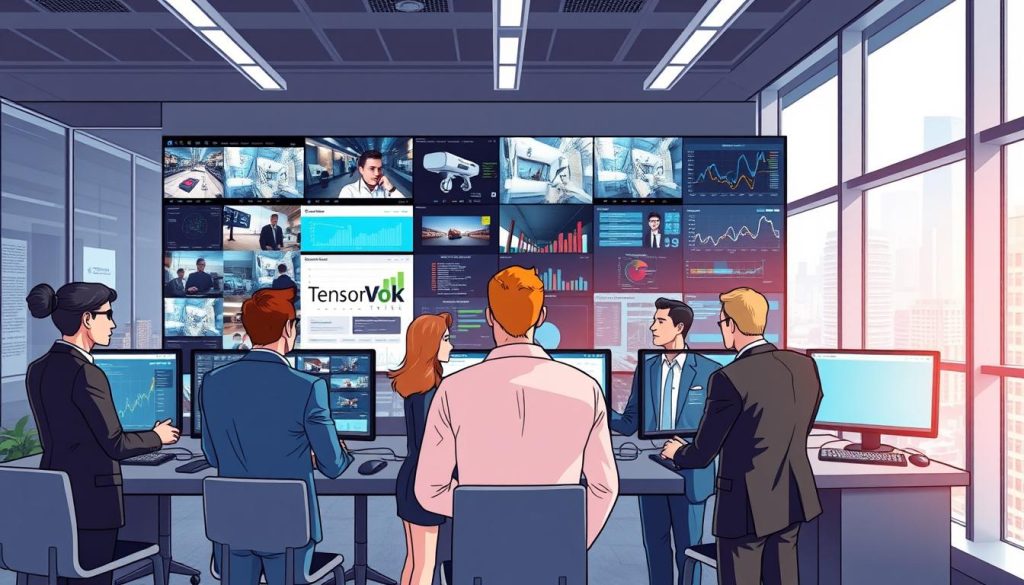
Key Differences: AI Video Analytics vs Traditional CCTV
| Criteria | Traditional CCTV | AI Video Analytics (e.g., TensorVok AI Video Analytics) |
|---|---|---|
| Data Use | Passive recording only | Active analysis with real-time alerts |
| Detection Capability | Manual review required | Automated detection of PPE, restricted zones, fire/smoke, crowding, distracted activity |
| Processing Location | On-premise or cloud (often unsecured) | Edge-based processing—video stays on-site |
| Deployment Time | Weeks to months (hardware + integration) | Days, not months—works with existing RTSP cameras |
| Compliance Support | No built-in audit trails | Calibrated for Singapore WSH/MOM audit-ready reporting |
| Scalability & Integration | Limited to basic monitoring | White-label/OEM ready for SIs and security vendors |

TensorVok AI Video Analytics: Built for Real-World Safety Needs
Unlike generic AI CCTV solutions that require new hardware or complex integrations, TensorVok AI Video Analytics is designed for immediate deployment across existing infrastructure. It retrofits seamlessly with any IP camera or analog system using RTSP streaming—no need to replace your current CCTV setup.
Powered by U.S.-developed algorithms from BrightVox LLC and locally delivered and supported in Singapore by Huafa Solutions, TensorVok ensures high accuracy and regulatory alignment. Its edge-based architecture keeps sensitive video data on-site, meeting strict PDPA and data sovereignty requirements—critical for enterprises in regulated industries.
Real-time detection capabilities include:
- PPE violations: Missing hard hats, vests, or goggles
- Restricted zone intrusions: Unauthorized access to hazardous areas
- Fire and smoke detection: Early warning for emergency response
- Crowd density monitoring: Prevent overcrowding in workspaces or public areas
- Distracted activity: Workers using phones or ignoring protocols
Every alert is timestamped, geotagged, and stored securely for audit purposes—making it ideal for compliance with Singapore’s Workplace Safety and Health (WSH) regulations and MOM standards. This isn’t just surveillance—it’s a proactive safety enforcement engine.
When to Choose AI Video Analytics Over Traditional CCTV
If your organization prioritizes:
- Preventing incidents instead of documenting them post-event
- Meeting regulatory compliance without manual audits
- Protecting data privacy through on-premise processing
- Reducing operational costs via faster deployment and minimal hardware changes
- Scaling safety monitoring across multiple sites with consistent rules
Then TensorVok AI Video Analytics is the clear choice. It’s not a replacement for CCTV—it’s the upgrade that turns your existing investment into intelligent, actionable safety infrastructure.
FAQs: AI Video Analytics vs Traditional CCTV
What’s the main difference between AI video analytics and traditional CCTV?
Traditional CCTV simply records video for later review. AI video analytics, like TensorVok AI Video Analytics, processes live video streams to detect specific events automatically—such as missing PPE, unauthorized access, or fire—enabling real-time alerts and faster response.
Can AI video analytics work with my existing CCTV cameras?
Yes. TensorVok AI Video Analytics supports retrofitting with any IP camera or analog system that provides RTSP streaming. You don’t need to replace your current cameras—just connect them to the TensorVok platform.
How does edge processing improve data security?
With TensorVok AI Video Analytics, video analysis happens directly on the device at the edge—meaning raw footage never leaves your premises. This ensures full compliance with PDPA and other data sovereignty laws, unlike cloud-based systems that transmit video over the internet.
Is AI video analytics suitable for industrial safety compliance?
Absolutely. TensorVok AI Video Analytics is calibrated for Singapore’s WSH and MOM audit requirements. It generates structured, timestamped alerts that can be used directly in safety reports, reducing audit preparation time and improving compliance scores.
How fast can I deploy TensorVok AI Video Analytics?
Unlike legacy systems that take months to install, TensorVok AI Video Analytics can be deployed in days. Because it works with existing cameras and uses edge processing, there’s no need for extensive rewiring or new hardware.
Can I use TensorVok AI Video Analytics as a white-label solution?
Yes. TensorVok AI Video Analytics is available as a white-label or OEM solution for system integrators (SIs) and security vendors who want to offer advanced AI-powered safety monitoring under their own brand.
Do I need to upgrade my network for AI video analytics?
Not necessarily. Since TensorVok AI Video Analytics performs processing at the edge, only metadata and alerts are transmitted—not full video streams. This minimizes bandwidth usage and avoids network strain.
Are the AI models accurate enough for critical safety applications?
Yes. The algorithms powering TensorVok AI Video Analytics are developed by BrightVox LLC in the U.S. and fine-tuned for real-world environments in Singapore. They deliver high precision in detecting safety risks, even in low-light or crowded conditions.