
Did you know industrial fires cost businesses billions every year? This is often because they were too late to catch. Traditional sensors wait for smoke or heat to reach a certain point. But by then, it’s too late to stop big damage.
Now, modern places use smart visual fire monitoring to change this. They use advanced cameras to spot flames or smoke right when they start.
This AI-driven fire safety way gives early hazard prevention that old methods can’t. Managers get real-time alerts. This lets them stop a small spark from becoming a big problem.
Key Takeaways
- Traditional sensors often fail to detect hazards until significant damage has occurred.
- Advanced camera systems provide instant identification of smoke and flames.
- AI-driven tools offer a proactive layer of protection for complex infrastructure.
- Immediate notifications allow for rapid response and reduced operational downtime.
- Visual data provides essential context for emergency teams during an incident.
The Fundamentals of Smart Visual Fire Monitoring
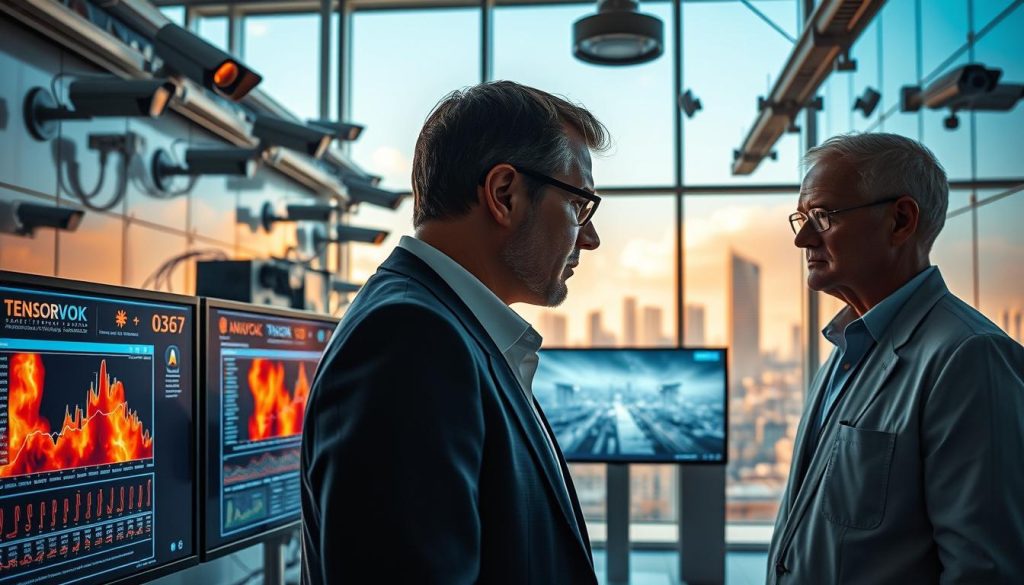
Smart visual fire monitoring is a big step up in fighting fires. It uses intelligent software to look at pictures in real time. This helps find dangers before they cause a big alarm.
Understanding Computer Vision in Fire Safety
Computer vision is key to this tech. It lets machines watch and understand videos. The system checks each picture for signs like flames or smoke.
It does this fast, much faster than old systems. The system gets better at spotting fires as it learns more. This makes fire detection systems more accurate over time.
Key Advantages Over Traditional Smoke Detectors
AI-driven fire safety finds fires by looking at pictures, not just waiting for smoke. Old detectors need smoke to reach a certain level before they sound the alarm. But visual systems spot fires early from far away.
Also, these systems are great at avoiding false alarms. They learn to ignore things like steam or shadows. This means fewer false alarms and less disruption. It makes smoke detection better in places like factories or big buildings.
Core Components of an AI-Driven Monitoring System
A good system needs good cameras and smart software. The cameras take clear pictures, which are then analyzed by a computer. This computer uses special programs to understand the pictures and send alerts.
| Feature | Traditional Detectors | AI-Based Monitoring |
|---|---|---|
| Detection Method | Physical Contact | Visual Analysis |
| Response Time | Delayed | Near-Instant |
| False Alarm Rate | High | Low |
| Data Insights | None | Detailed Logs |
Putting all these parts together makes a strong AI-based monitoring system. It gives safety teams the right info fast. This tech is a big help in keeping people and things safe.
Assessing Site Requirements and Hardware Selection
Preventing hazards early needs more than just software. It needs a strong hardware base for your industrial space. A good start is a detailed fire risk assessment to spot hot spots and fire risks. This helps build a strong AI-driven fire safety system that catches risks early.
Evaluating Environmental Conditions and Camera Placement
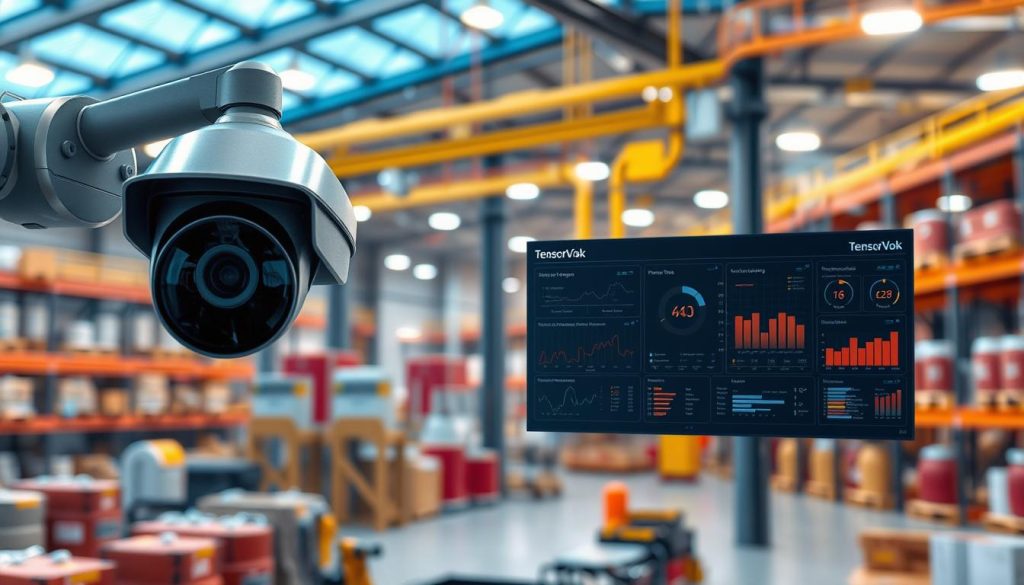
Every place has its own challenges, like very hot or dusty areas. Good AI-based monitoring needs cameras in the right spots. They must see clearly, even in tough conditions.
“The effectiveness of any safety system is only as good as the data it collects; precision in placement is the first step toward true situational awareness.”
Selecting High-Definition Thermal and Optical Sensors
Using top-notch thermal sensors lets systems spot heat changes that we can’t see. These sensors are key for predictive fire analytics, catching smoldering issues early. Together with clear video, they give a full view of safety.
- Thermal sensors find heat in dark or smoky places.
- Optical sensors help people see what’s happening during alerts.
- Edge processing units make sure responses are fast.
Criteria for Choosing Industrial-Grade Hardware
For industrial fire safety, pick durable equipment. It should handle moisture, shakes, and chemicals found in factories. Durable parts mean less upkeep and a reliable system for longer.
Optimizing Field of View for Maximum Coverage
To cover more, balance camera quality and lens length. Overlapping views helps avoid missing spots. This way, every part of your place is watched closely and smartly.
Configuring Vision AI Software for Hazard Detection
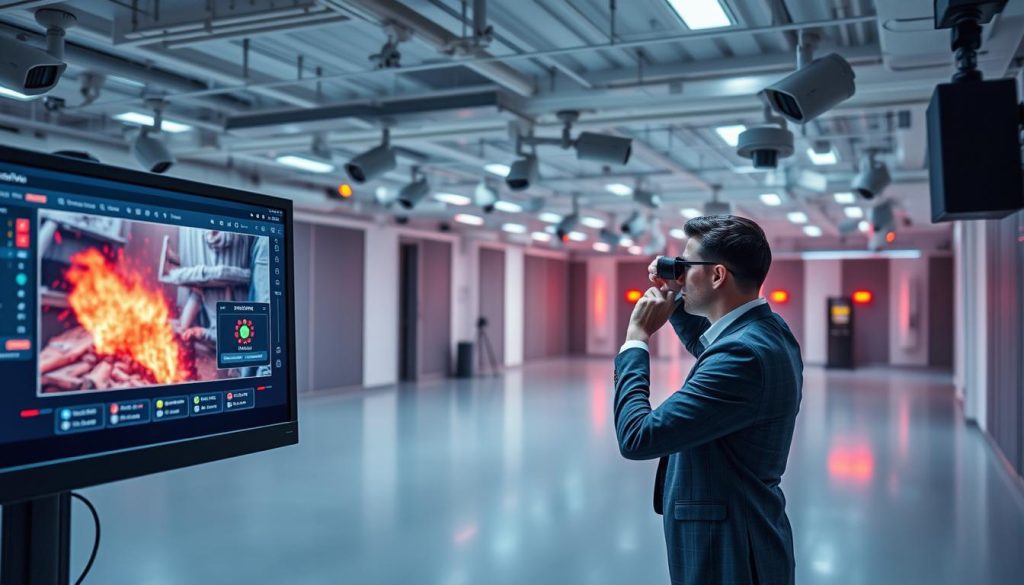
To get high accuracy in fire detection systems, you need to set up your software right. Using computer vision, you can turn video into useful info. This makes sure the system works well in different situations.
Establishing Baseline Visual Parameters
First, you need to know what’s normal in your area. Calibrate your software to see usual lighting, shadows, and background stuff. Adding data from thermal sensors helps set a temperature baseline for the area.
Training Algorithms to Distinguish Between Smoke and Steam
One big challenge is cutting down on false alarms in industrial fire safety. You need to teach algorithms to tell smoke from steam, dust, or fog. This false alarm mitigation is key to keeping things running smoothly.
Setting Sensitivity Thresholds for Early Warning
Adjusting sensitivity levels lets the system alert you early if there’s a problem. A good fire risk assessment sets these levels based on what’s in your facility. Precision is key to only alerting when it’s really needed.
Defining Zones of Interest for High-Risk Areas
It’s smart to pick out high-risk areas for the software to focus on. This means watching places like electrical panels or chemical storage closely. This way, your system works better.
Calibrating Motion Detection and Flame Recognition
Lastly, fine-tune the flame recognition settings so the system can spot fire right. Adding motion detection lets it track fire movement in real-time. Reliable detection comes from this careful setup.
Integrating Automated Alert Systems and Response Protocols
Modern industrial fire safety turns raw data into safety actions. It connects AI-based monitoring with facility systems. This way, places can go from watching to saving lives.
Connecting AI Outputs to Centralized Management Platforms
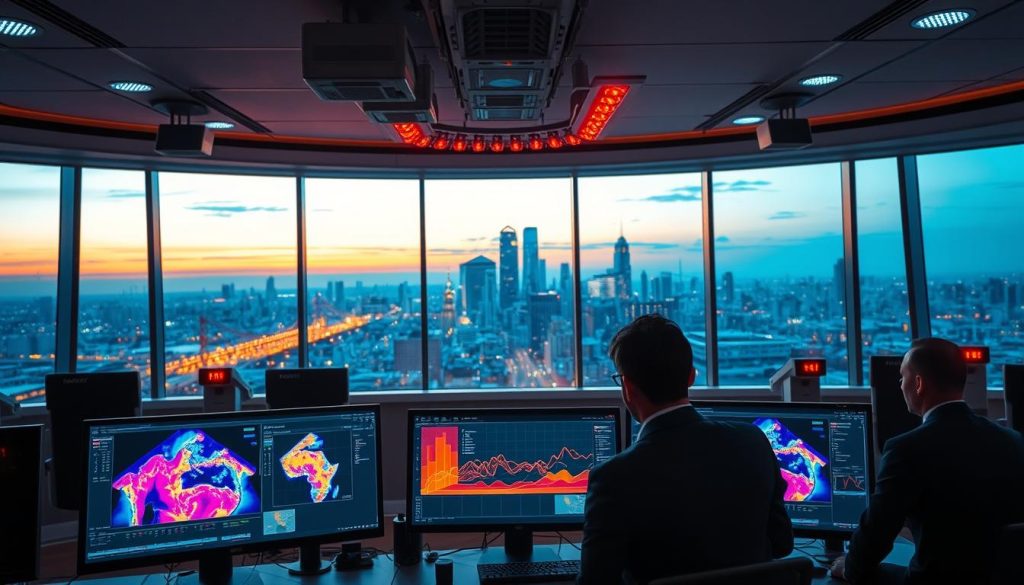
Today’s places use central management systems to watch over everything. Your AI software can send data to these systems using open APIs. This lets thermal sensors and cameras send updates to one place.
When a threat is found, the system sends details about where and how big it is. Security can see it on a digital map right away. Having everything in one place helps respond faster.
Establishing Real-Time Notification Workflows
Good real-time alerts make sure the right people know right away. A good plan sends messages based on how big the threat is. This keeps things clear and quick.
- Level 1: Automated SMS and email alerts to safety officers.
- Level 2: Push notifications to mobiles for managers.
- Level 3: Loud and bright alarms for everyone if it’s a fire.
Automating Emergency Shutdowns and Suppression Triggers
The goal is to stop problems before they get worse. By linking flame recognition with PLCs, the system can start automated suppression on its own. This is key in places where quick action is needed.
“Automation in fire safety is not about replacing human judgment, but about providing the speed necessary to prevent catastrophic loss in the first critical seconds of an emergency.”
The system can also shut down things like HVAC and gas lines. This stops smoke and fuel from spreading.
Testing System Reliability and False Positive Mitigation
Keeping your safety system trusted is key. You need to test it often to make sure it works right. This keeps it accurate as things change.
Using predictive fire analytics helps test the system. It simulates different situations to check if it works right. This keeps your place safe and running smoothly.
Conclusion
Smart visual fire monitoring is changing how we handle risk. Old hardware can’t keep up with today’s complex places. Modern computer vision adds a layer of protection for people and things.
Good flame recognition needs more than just cameras. It also needs to follow safety rules like NFPA and UL. These standards make sure your tech works right when it matters most.
Automated suppression makes detection and action happen fast. This quick action stops small problems from getting bigger. Every manager should see these tools as key to keeping their place safe.
Doing a fire risk assessment is the first step to safety. Predictive fire analytics help find and fix problems before they start. Start making your workplace safer today.