
“An ounce of prevention is worth a pound of cure,” Benjamin Franklin once said. This saying is very true today for keeping places safe.
Early fire warning vision AI is a big step up in protecting buildings. It finds fires fast, unlike old sensors that wait for heat or smoke.
These smoke detection systems use visual data. They tell safety teams about fires early, before old alarms go off. This means teams can stop fires before they get worse.
Now, smart systems help change how we handle emergencies. They let teams see and stop threats early, quickly, and well.
Key Takeaways of Early fire warning vision AI
- Advanced visual technology identifies combustion within 30 seconds.
- Visual data offers a significant advantage over traditional sensor methods.
- Real-time monitoring allows for faster emergency response times.
- Intelligent systems provide actionable insights to safety personnel.
- Modern facilities utilize these tools to prevent catastrophic damage.
Understanding the Mechanics of Early Fire Warning Vision AI
Modern early fire warning vision AI changes how we watch for dangers. It looks at pictures in real time to find threats. This is a big step up in keeping things safe.
How Computer Vision Identifies Combustion Signatures
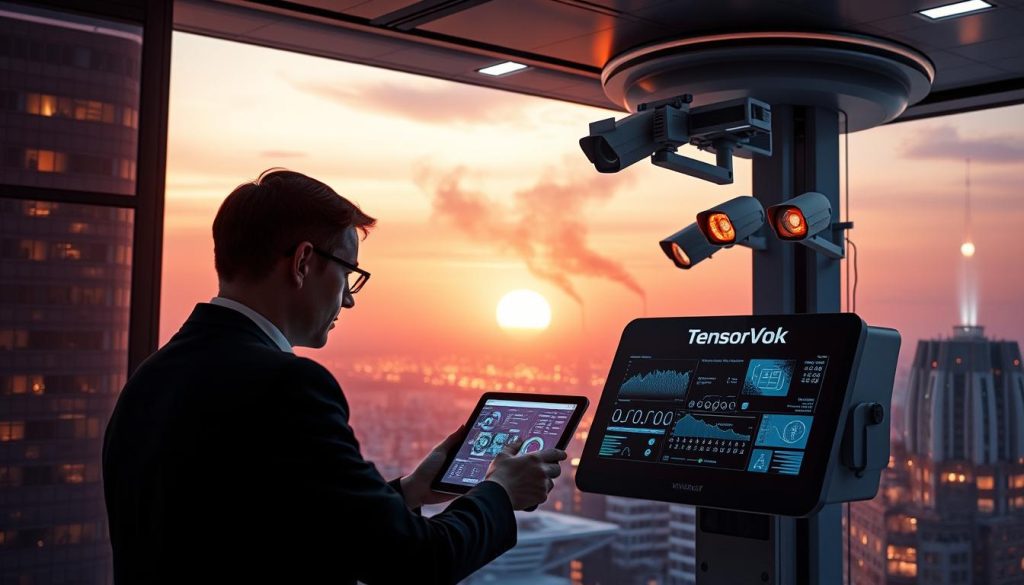
Advanced fire prevention technology uses smart learning to spot certain patterns. It finds flames before smoke hits a sensor. It checks for heat signs that show fire.
The system looks for flickering light, color changes, and fast growth. It finds fires fast by using these signs. This is better than old ways.
Distinguishing Between Smoke and Environmental Obstructions
Finding real fires is hard because of false alarms. Computer vision fire detection knows the difference. It cuts down on false alarms in busy places.
The system checks how particles move and look. If it’s not smoke, it ignores it. This means teams only go to real fires, saving time and effort.
| Feature | Traditional Sensors | Vision AI Systems |
|---|---|---|
| Detection Method | Particle Threshold | Pattern Recognition |
| Response Speed | Delayed (Smoke Travel) | Instant (Visual) |
| False Alarm Rate | High (Dust/Steam) | Low (Context Aware) |
| Data Output | Binary Alert | Visual Verification |
The Role of Real-Time Processing in Fire Prevention
Advanced vision systems turn video data into useful info fast. This quick action is key for fire risk mitigation in critical places. With AI-driven fire safety, places can go from just reacting to actively protecting themselves.
Latency Reduction in Automated Alert Systems
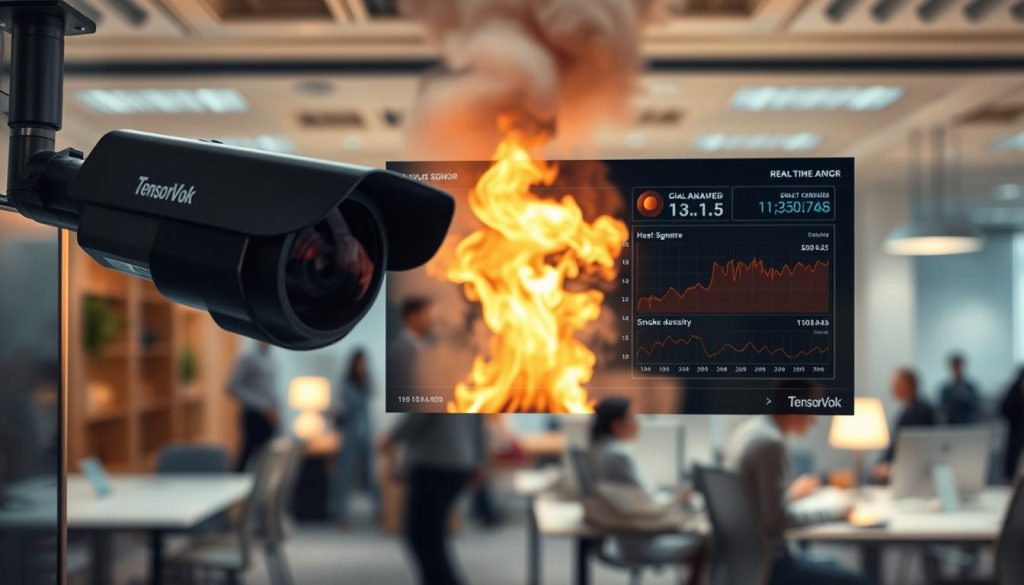
Modern detection’s big plus is quick alerts. Old systems wait too long because of smoke or sensor issues. But real-time flame detection spots danger signs right when they start.
These automated fire alerts tell emergency teams right away. This quick action stops small problems from getting worse. It’s the key to keeping things safe.
Integration with Existing Security Camera Infrastructure
Many businesses think they need new gear for smart safety. But, new software works with what they already have. This means they can use their current industrial fire monitoring setup better.
Adding AI software to their systems is easy and cheap. It makes their safety better without costing a lot. This way, they can watch over big areas without stopping work.
Key Advantages of AI-Driven Detection Over Traditional Sensors
AI-driven fire safety is a big step up for building safety. Old fire detection sensors need smoke or heat to work. This can cause delays in big spaces.
Overcoming Limitations of Point-Based Smoke Detectors
Old smoke detection systems need smoke to reach them. New systems use thermal anomaly detection to find heat before smoke shows. This keeps places safe, even when no one is there.
These systems watch for temperature changes and send automated fire alerts. This helps stop fires before they start. It also keeps equipment safe and cuts down on downtime.
Visual Verification for Emergency Response Teams
Vision-based tech gives teams clear pictures when alarms go off. They can see what’s happening before they get there. This helps them know what to expect.
Teams can see where and how big the fire is. Enhanced situational awareness means they can act faster. This saves lives and property.
Technical Requirements for Deploying Vision AI Systems
For vision-based safety systems to work well, you need the right hardware and connections. A strong setup is key for AI-driven fire safety to work right. This helps keep big fires from happening.
Hardware Specifications for Edge Computing
Computer vision fire detection needs fast hardware to process video quickly. It must use strong GPUs or AI chips to work fast. This is key to spot fires right when they start.
Good hardware also needs to handle high-quality camera feeds. Industrial fire monitoring systems need tough boxes to keep safe from dust and water. This keeps the system working well, even in tough places.
Data Connectivity and Bandwidth Considerations
Even with local processing, having a strong network is important. It helps manage the system and send alerts. A fast network is needed so many cameras can send data at once.
It’s smart to have backup networks too. This way, thermal anomaly detection alerts get to teams fast, even if the main network goes down. Also, setting up networks to focus on fire safety helps keep data flowing smoothly.
Optimizing Local Processing for Remote Locations
In places far from internet, edge computing fire safety is the main defense. It works on its own, without needing the cloud. This means it keeps working even when the internet is out.
To make these units better, you can tweak the software to use less power. Continuous monitoring is done by saving logs locally. Then, when the internet is back, it syncs with the main server. This makes it a strong way to protect places far from help.
Regulatory Standards and Safety Compliance in the United States
Understanding fire safety regulations is key for any group using new systems. Using fire prevention technology means following laws and safety rules. This makes sure new systems are safe for people and things.
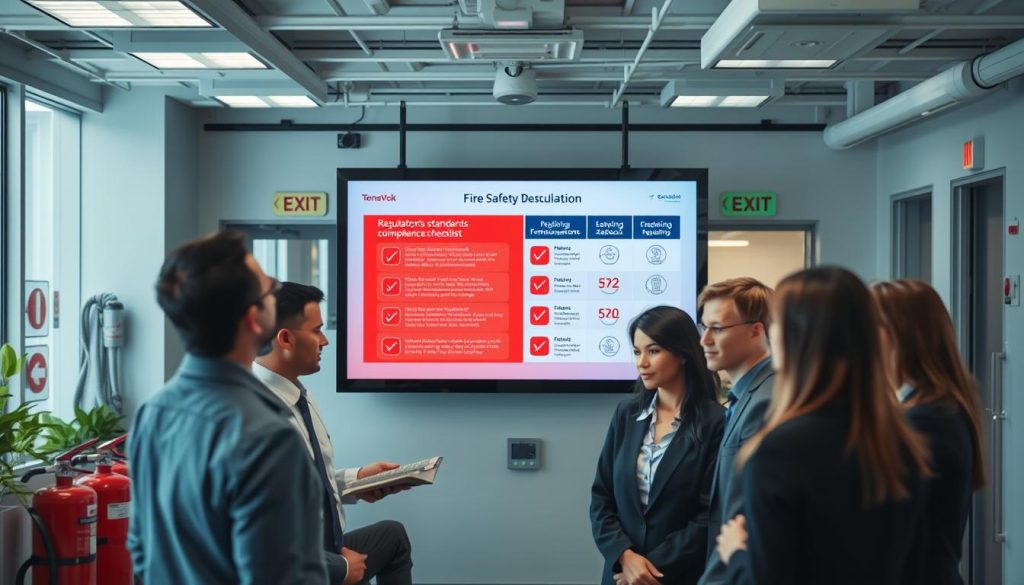
Adherence to NFPA Guidelines for Fire Safety Technology
The National Fire Protection Association (NFPA) sets top standards for fire safety in the U.S. Companies must make sure their industrial fire monitoring fits these strict rules. This means their fire detection sensors work well in big places.
These rules help systems detect fires fast and well. They make sure alerts work right to call for help. Following these rules helps keep places safe and lowers risks.
Data Privacy and Ethical Considerations in Surveillance
Using cameras for safety raises big questions about privacy and right use. Groups must be open about how they use and keep video data. It’s important to have clear rules to keep people’s privacy safe while keeping places secure.
Being ethical means only letting certain people see data. With strong rules, companies can use new tools safely. It’s all about finding a balance between safety and keeping people’s privacy.
Common Challenges in Implementing Vision-Based Fire Detection
Real-world places have special problems for fire safety systems. These tools are advanced but need to know the site well. Managers must find the right balance to keep the system working well.
Managing False Positives in Complex Environments
One big problem is dealing with false alarms. Places like factories have steam, dust, or moving parts that look like fire. Edge computing fire safety helps by checking data right where it is. This way, it knows the difference between real danger and normal stuff.
“The true measure of a safety system is not just its ability to detect a fire, but its capacity to remain silent when the environment is safe.”
To make computer vision fire detection work, you need to fine-tune it. When it’s set up for certain areas, it works better. This means fewer false alarms and less time lost.
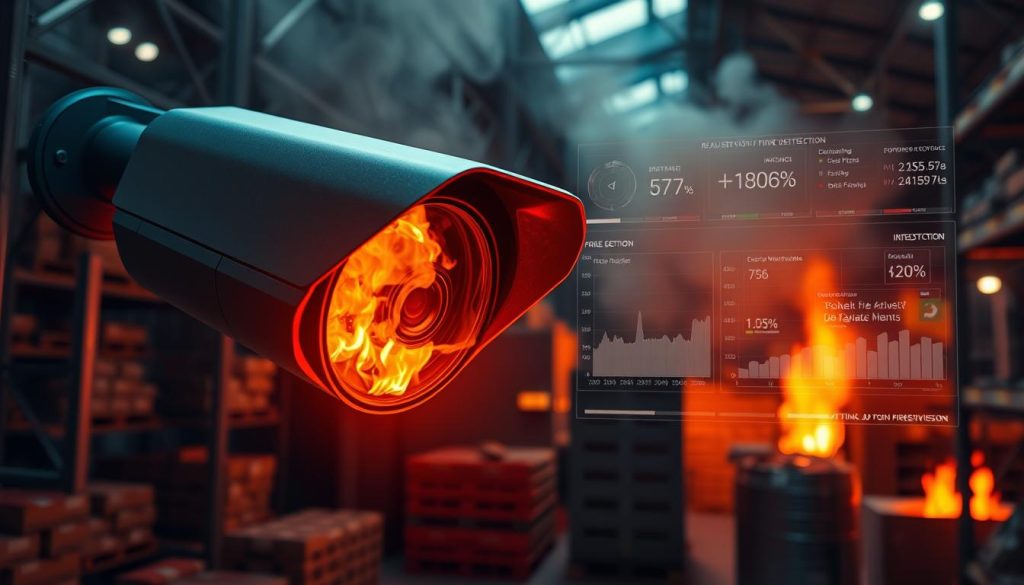
Environmental Factors Affecting Camera Performance
Things outside can really affect how well smoke detection systems work. Weather, light, and things in the way can mess up the picture. It’s important to keep the view clear for the software to work right.
| Factor | Impact Level | Mitigation Strategy |
|---|---|---|
| Heavy Dust | High | Regular lens cleaning |
| Steam Clouds | Medium | Algorithm filtering |
| Direct Sunlight | High | Hardware shielding |
Mitigating Glare and Low-Light Visibility Issues
Glare from shiny things or windows can mess with real-time flame detection. To fix this, cameras are set up right and special sensors are used. This helps the system see well even when it’s bright or dark.
Places that are always dark are hard for regular sensors. But, edge computing fire safety uses infrared to keep watching. This way, places can have strong smoke detection systems that work in any light.
Conclusion
Modern buildings need better protection. Early fire warning vision AI is a strong defense. It stops fires before they get big.
This new tech changes how we handle risks. It makes places safer for people and saves important things. Leaders who use it show they care about safety and doing things right.
Automated fire alerts help teams act fast in emergencies. They give clear pictures that help make quick decisions. Using this tech keeps businesses safe and follows all fire safety rules.
Dealing with fire safety laws is tough. Companies that use smart monitoring tools lead in keeping safe. Talk to security experts to see how these systems can help your safety plan.