
Did you know that global retailers lose over $100 billion each year because of missing items? This huge loss shows a big problem in today’s stores. Old ways of watching stores don’t catch smart thieves in time.
As we move to more automated shopping, stopping theft gets harder. Just watching stores isn’t enough to keep our profits safe. We need to act faster to keep our businesses going strong.
Using advanced technology is the smart next step for store owners. With self-checkout AI security, we can spot odd behavior early. This change is key for keeping stores safe in today’s world.
Key Takeaways
- Retailers face massive financial losses from inventory gaps every year.
- Standard camera systems often lack the precision to stop modern theft.
- Automated store environments require smarter, proactive monitoring tools.
- Advanced technology helps identify suspicious behavior in real-time.
- Investing in modern protection is essential for maintaining healthy profit margins.
The Limitations of Traditional CCTV in Modern Retail
Older surveillance technology has big gaps in today’s retail loss prevention plans. Many stores have spent a lot on outdated hardware. But these systems can’t keep up with today’s theft methods.
These tools were made for a different time. Now, they leave stores open to new threats.
Why Passive Monitoring Fails to Prevent Theft
Most old systems just record for later. They don’t act fast. By the time security checks the footage, the thief is gone.
This slow approach doesn’t work against organized retail crime. It needs quick action.
These systems don’t send alerts in real-time. So, they can’t stop retail fraud as it happens. Looking into incidents after they happen is expensive and often fails to recover stolen items. Today’s stores need to stop theft before it happens.
The Blind Spots of Static Camera Angles
Static cameras have fixed views, leaving blind spots. Thieves know how to hide in these spots. This is a big problem for retail loss prevention.
Even with many cameras, they can’t track people well. High-risk areas, like self-checkout kiosks, are often not watched closely. This lets opportunistic theft happen.
Human Error in Real-Time Surveillance
Modern stores have too much data for people to watch everything. Security staff get overwhelmed by too many screens. They can’t catch every sign of retail fraud.
Trying to watch dozens of feeds makes spotting organized retail crime hard. We think tech should help, not replace, people. Relying only on traditional CCTV makes it hard for staff to keep up.
Core Components of Self-Checkout AI Security
Advanced AI is changing how stores fight loss at checkout. They use a mix of technologies to stop retail shrinkage and keep shopping smooth. These systems quickly spot problems that old methods miss.
Computer Vision and Object Recognition
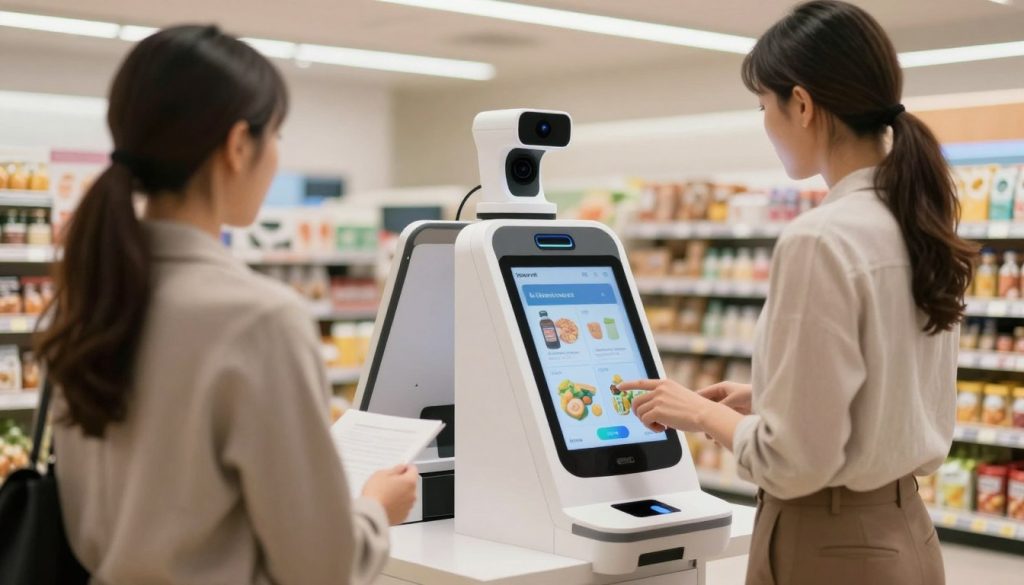
At the core of self-checkout AI security is high-definition computer vision. It watches the scanning area for scan avoidance and barcode manipulation. These are when shoppers try to cheat the system.
“The future of retail security is not in watching recordings, but in understanding the intent behind every movement in real time.” — Industry Security Analyst
These systems use edge processing to check video feeds right on the device. This means they can spot items fast and alert staff or stop the sale. They match what they see with the item database for accuracy.
Weight-Based Verification Systems
Weight sensors add a key layer of check. They compare the item’s actual weight with what’s in the POS integration database. If they don’t match, the sale stops to prevent retail fraud.
| Feature | Function | Benefit |
|---|---|---|
| Vision AI | Visual Recognition | Detects label swapping |
| Weight Sensors | Mass Verification | Prevents item substitution |
| POS Link | Data Sync | Ensures price accuracy |
Behavioral Analytics for Fraud Detection
Behavioral analytics watches how shoppers act. It looks for odd patterns, like quick or hesitant movements. These signs help catch suspicious activity early.
By combining these three, stores build a strong defense. This approach keeps the store safe without annoying honest shoppers. We think this is the best way to protect stores today.
Implementing AI Detection Systems in UK Stores
Setting up AI detection systems is more than just adding cameras. It needs a detailed plan. First, check your loss prevention strategy to find weak spots at checkout. This way, new tech can boost your store’s security.
Assessing Your Current Hardware Infrastructure
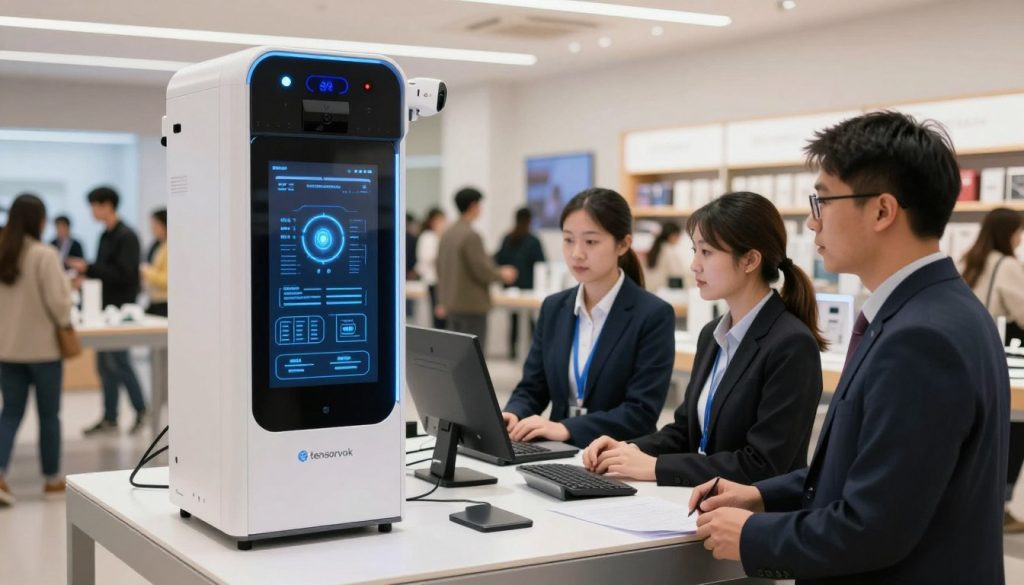
Before adding new software, check your camera network. Many stores use traditional CCTV that’s not sharp enough for today’s tech. Make sure your cameras can handle the fast data needed for computer vision.
Also, think about edge processing to cut down on delays. Processing data right at the checkout unit saves bandwidth. This means alerts can pop up fast, helping stop theft right away.
Integrating AI Software with Existing POS Systems
Smooth POS integration is key for success. Your AI software must talk to the POS system as items are scanned. This lets it check the visual data against the transaction log quickly.
- Make sure the AI platform and your POS system can talk through APIs.
- Test how data moves to avoid slowdowns during busy times.
- Set up a safe way to send all transaction data.
Training Staff to Respond to AI Alerts
Good tech needs a good team to use it. Staff should know how to handle alerts without scaring off customers. Focus on keeping customers happy when an alert comes up.
Managing False Prompts and Customer Experience
Every system will sometimes get it wrong. When an alert happens, staff should talk to customers in a friendly way. Customer service is always first, even when the system thinks there’s a problem.
Optimizing Alert Thresholds for High-Risk Items
Not all items need the same watch. Set your system to focus on high-risk items that thieves often target. This way, you can avoid too many false alarms for cheaper items.
“The goal of intelligent retail security is to create a frictionless environment where technology supports staff, not replaces their judgment.”
Addressing Privacy and Compliance in the UK Market
Protecting your store from organized retail crime is more than cameras. It’s about following UK laws. We use advanced tools while respecting shopper rights. This balance is key to a good loss prevention strategy.
Navigating GDPR and Data Protection Regulations
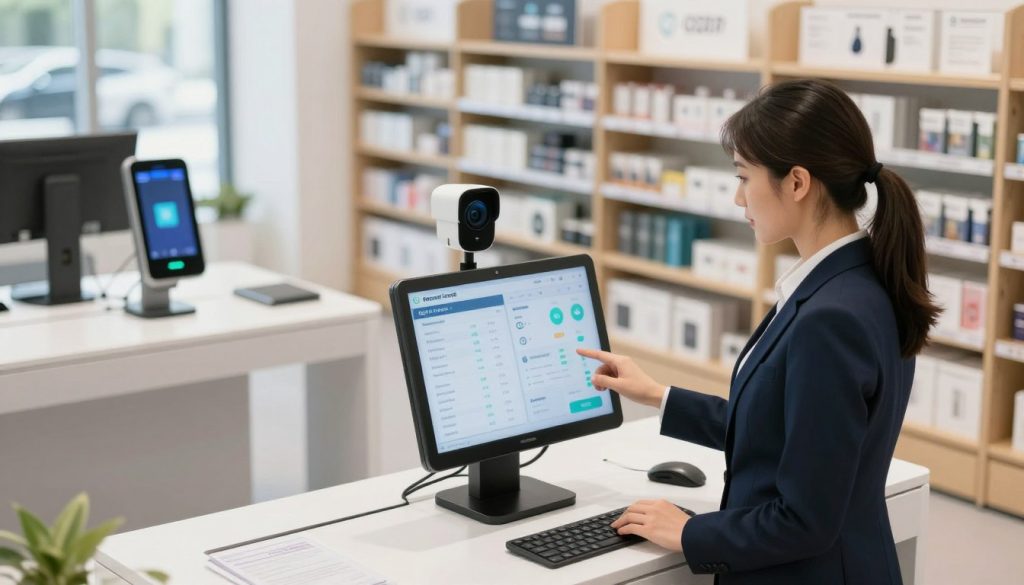
In the UK, our AI surveillance must meet GDPR compliance standards. We do a Data Protection Impact Assessment (DPIA) before starting new software. This helps us spot privacy risks and fix them early.
We follow data minimization to stay compliant. We only collect what’s needed to spot suspicious activity. This way, we don’t store too much personal data. By focusing on behavioral patterns, we lower our regulatory load.
Ensuring Transparency with In-Store Signage
Being open is key to keeping trust and stopping crime. We use clear signs to tell shoppers about AI monitoring. This helps deter organized retail crime and keeps our policies clear.
Signs are at entry points and near self-checkouts. They reassure shoppers about privacy and show our security efforts. When shoppers know our tech’s purpose, they feel safer.
Ethical AI Deployment and Bias Mitigation
AI can pick up biases if not trained well. We check our algorithms to ensure fairness for all. This fairness is part of our loss prevention strategy.
Ethical AI deployment also needs human checks. This stops automated mistakes and keeps security fair. Keeping humans involved is essential for GDPR compliance and a good retail reputation.
Conclusion
Modern stores need smarter tech to keep their assets safe. Switching to AI detection systems is key for retailers wanting to cut down on theft. This move helps protect their profits.
Going from old, reactive methods to new, smart tools is essential. It helps stores fight off advanced theft strategies. This change makes the store safer for everyone.
Getting there requires a careful plan. Managers should pick solutions that follow strict GDPR rules and work well. Keeping customer data safe is as important as guarding the store’s goods.
The right tech and a skilled team make a store safer. We encourage you to check your security plan. See where adding smart automation can help. Contact our team to talk about how these tools can improve your store’s performance now.