
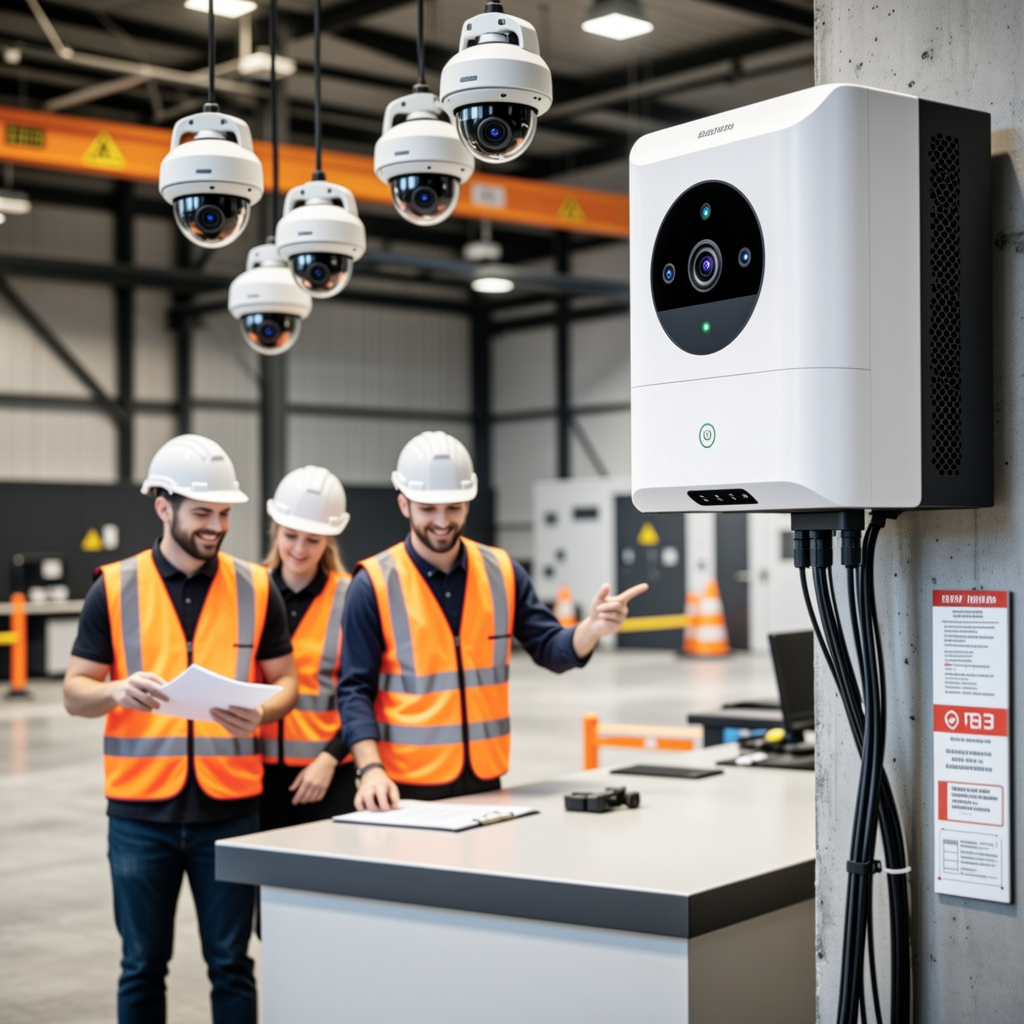
The Critical Role of PPE Detection in Modern Safety Management
Personal Protective Equipment (PPE) is a frontline defense against workplace injuries, especially in high-risk environments like construction sites, manufacturing plants, and oil & gas facilities. Yet, manual monitoring of PPE compliance remains inconsistent, error-prone, and resource-intensive. This is where PPE detection AI transforms safety operations—automating surveillance to detect missing helmets, vests, or other required gear in real time.
How PPE Detection AI Works: From Camera to Real-Time Alert
PPE detection AI leverages computer vision and deep learning models trained to recognize human silhouettes and specific PPE items such as hard hats, high-visibility vests, gloves, and safety goggles. The system processes video feeds from existing IP or analog CCTV cameras via RTSP streams, analyzing each frame at the edge (on-site) to identify non-compliance without relying on cloud storage.
When an individual enters a monitored zone without proper PPE, the AI instantly triggers an alert—sent to supervisors via dashboard, mobile app, or integrated alarm systems. This enables immediate intervention, reducing incident risk and reinforcing safety culture.

Why TensorVok AI Video Analytics Stands Out
While generic AI CCTV solutions exist, TensorVok AI Video Analytics is purpose-built for operational safety, not just surveillance. Unlike cloud-dependent systems that expose sensitive footage to third-party servers, TensorVok performs all analysis at the edge—keeping video data on-site for full data sovereignty and compliance with PDPA and similar regulations.
Powered by U.S.-developed algorithms from BrightVox LLC and locally delivered and supported in Singapore by Huafa Solutions, TensorVok AI Video Analytics delivers enterprise-grade accuracy calibrated specifically for real-world conditions across Southeast Asia and beyond.
Key Features That Make TensorVok Ideal for HSE Teams
- Real-time PPE detection: Identifies missing helmets, vests, and other mandatory gear with 98%+ accuracy.
- Edge-based processing: No need to upload video to the cloud—ensures privacy, reduces latency, and meets strict data governance standards.
- Multi-event detection: Beyond PPE, detects restricted zone intrusions, fire/smoke, crowding, and distracted activity (e.g., phone use).
- Seamless integration: Retrofit-compatible with any existing CCTV/IP camera system using standard RTSP protocols.
- Audit-ready reporting: Automatically generates WSH/MOM-compliant reports for Singapore workplaces, simplifying compliance audits.
- White-label & OEM ready: Designed for system integrators and security vendors to embed into their own platforms.
Deploying PPE Detection AI Without Replacing Existing Infrastructure
One of the biggest barriers to adopting AI safety tools is the cost of replacing legacy camera systems. TensorVok AI Video Analytics eliminates this hurdle. It works with your current CCTV infrastructure—no new hardware required. Simply connect your existing IP or analog cameras via RTSP, install the lightweight TensorVok edge appliance, and start detecting PPE violations within hours.
This retrofit capability means organizations can deploy advanced safety analytics in days, not months, without disrupting operations or incurring massive capital expenditure.
Compliance & Audit Readiness: Meeting WSH/MOM Standards in Singapore
In Singapore, the Workplace Safety and Health (WSH) Act mandates strict adherence to safety protocols. The Ministry of Manpower (MOM) requires documented evidence of PPE enforcement during inspections.
TensorVok AI Video Analytics is uniquely calibrated for Singaporean regulatory frameworks. Its automated reporting engine generates detailed logs of PPE violations, timestamps, locations, and personnel involved—perfect for MOM audit submissions. These records are stored securely on-premise, ensuring data integrity and compliance with local data protection laws.
For multinational companies operating in multiple jurisdictions, TensorVok’s modular design allows customization for regional safety standards, making it a scalable solution across global operations.