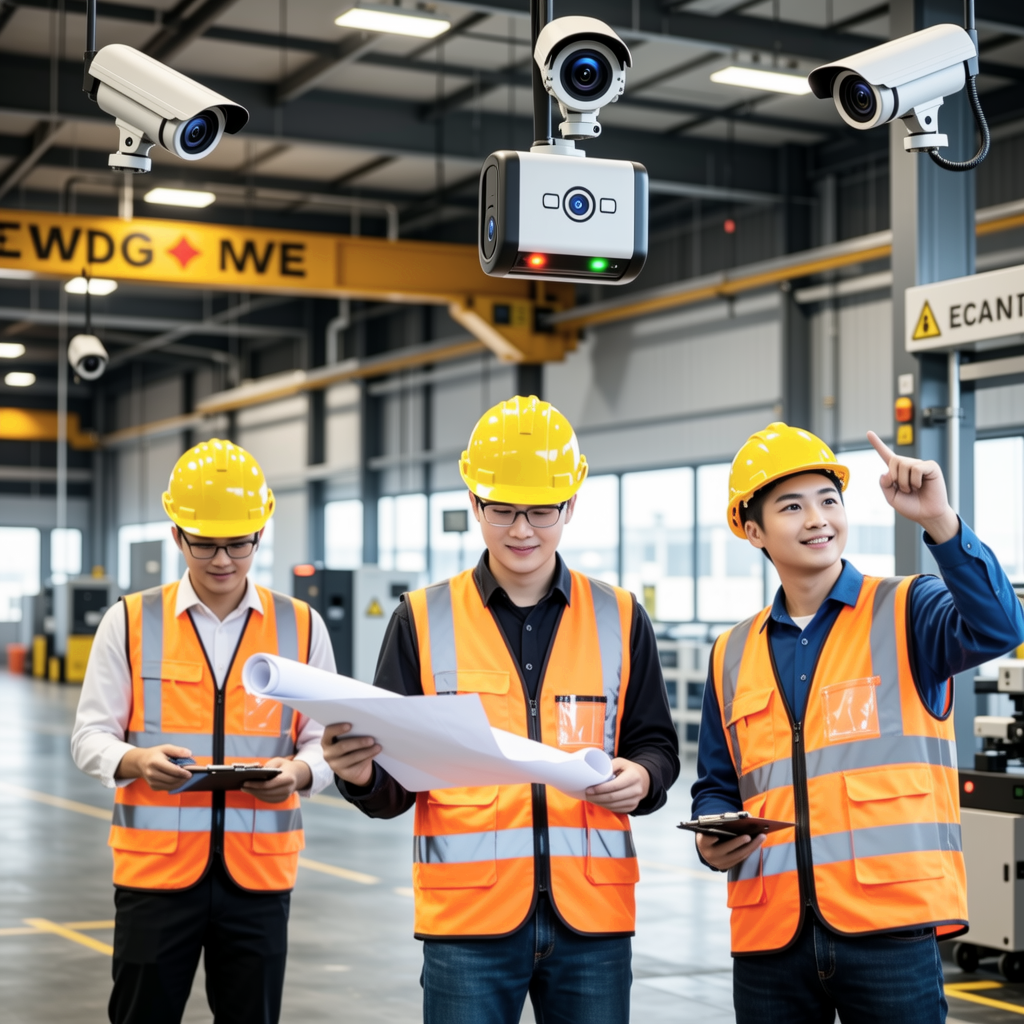
Why AI PPE Monitoring Is Critical for Singapore Workplaces
In Singapore’s high-density industrial and construction environments, workplace safety is governed by strict regulations under the Workplace Safety and Health (WSH) Act and enforced by the Ministry of Manpower (MOM). Manual PPE checks are time-consuming, inconsistent, and prone to human error — especially during shift changes or in large sites like Jurong Island, Changi Airport, or the Downtown Core construction zones.
This is where AI PPE monitoring Singapore becomes essential. Real-time, automated detection of hard hats, high-visibility vests, safety goggles, and other required personal protective equipment ensures continuous compliance without relying solely on site supervisors. The integration of AI into existing CCTV systems allows companies to turn passive video feeds into active safety enforcement tools — a must for any organization aiming for MOM audit readiness.
How TensorVok AI Video Analytics Meets Singapore’s WSH & PDPA Requirements
TensorVok AI Video Analytics is engineered specifically for the Singapore regulatory landscape. Unlike generic AI CCTV solutions that process data in the cloud, TensorVok performs all analytics at the edge — meaning video footage never leaves your premises. This ensures full compliance with Singapore’s Personal Data Protection Act (PDPA), which mandates data sovereignty and minimizes privacy risks.
Moreover, TensorVok AI Video Analytics is calibrated to detect PPE violations according to MOM’s WSH guidelines. It identifies non-compliance in real time across multiple camera feeds, triggering alerts to site managers via dashboard or mobile notification. All incident logs are timestamped, geo-tagged, and stored securely — ready for submission during MOM inspections or internal audits.
Backed by U.S.-developed algorithms from BrightVox LLC and locally delivered and supported in Singapore by Huafa Solutions, TensorVok combines global innovation with regional expertise. This hybrid model ensures accuracy, low latency, and rapid response to safety incidents — critical in fast-paced environments like offshore platforms or manufacturing hubs in Tuas or Sengkang.
Key Features of TensorVok AI Video Analytics for PPE Detection
- RTSP Retrofit Compatibility: No need to replace existing IP cameras. TensorVok integrates seamlessly with legacy CCTV systems using standard RTSP protocols — saving costs and reducing deployment time.
- Edge-Based Processing: All AI analysis runs on local hardware (NVIDIA Jetson or similar), keeping sensitive video data within the facility and meeting PDPA and corporate data governance policies.
- Real-Time PPE Detection: Automatically detects missing or incorrect use of hard hats, vests, gloves, and safety footwear across multiple zones simultaneously.
- Multi-Threat Detection: Beyond PPE, the system also monitors restricted access zones, fire/smoke, crowd density, and distracted activity (e.g., phone use near machinery).
- Audit-Ready Reporting: Generates MOM-compliant reports with incident timelines, location tags, and evidence clips — ideal for pre-inspection preparation.
- White-Label & OEM Support: System integrators and security vendors can rebrand TensorVok AI Video Analytics as their own solution, enabling scalable delivery across construction firms, logistics operators, and industrial parks.
Deployment in Days, Not Months — Why It Matters for Singapore Businesses
Many organizations hesitate to adopt AI video analytics due to long implementation cycles, complex integrations, and high upfront costs. With TensorVok AI Video Analytics, deployment takes just days — not months. The plug-and-play architecture means minimal disruption to operations, even during peak production periods.
For example, a major construction contractor in Kallang deployed TensorVok across five site locations in under 72 hours. By leveraging existing cameras and installing lightweight edge devices, they achieved full PPE monitoring coverage before their next MOM audit. The system paid for itself within six months through reduced safety incidents and fewer compliance penalties.
This speed-to-value is vital in Singapore’s competitive business environment, where downtime equals lost revenue and reputational risk.
FAQs: AI PPE Monitoring in Singapore
1. What is AI PPE monitoring, and why is it important in Singapore?
AI PPE monitoring uses artificial intelligence to automatically detect whether workers are wearing required personal protective equipment — such as hard hats, high-visibility vests, and safety goggles — in real time. In Singapore, this is crucial for compliance with the WSH Act and MOM’s safety standards. Automated monitoring reduces human error, ensures consistent enforcement, and prepares organizations for surprise audits.
2. Can I use TensorVok AI Video Analytics with my current CCTV system?
Yes. TensorVok AI Video Analytics supports RTSP retrofit integration with most existing IP cameras and DVR/NVR systems. You don’t need to replace your entire surveillance infrastructure — just connect your cameras to a TensorVok edge device, and you’re ready to monitor PPE compliance instantly.
3. Does TensorVok AI Video Analytics comply with PDPA and data sovereignty laws in Singapore?
Absolutely. TensorVok performs all AI processing at the edge, meaning video data never leaves your site. This ensures full adherence to Singapore’s PDPA and corporate data governance policies. Your footage remains secure, private, and under your control at all times.
4. How does TensorVok AI Video Analytics help with MOM WSH audits?
TensorVok generates detailed, timestamped incident reports showing PPE violations, locations, and supporting video clips. These logs are structured to meet MOM’s audit requirements, allowing you to demonstrate proactive safety management. The system also tracks trends over time, helping identify recurring issues and improve training programs.
5. Is TensorVok AI Video Analytics suitable for construction, manufacturing, and industrial sites in Singapore?
Yes. TensorVok AI Video Analytics is widely used across construction sites (e.g., in Tampines, Woodlands, and Seletar), manufacturing plants (like those in Pasir Ris and Sengkang), and industrial estates (such as Jurong Industrial Estate). Its ability to detect PPE, restricted zone breaches, and hazardous behaviors makes it ideal for high-risk environments.
6. Who develops the AI algorithms behind TensorVok AI Video Analytics?
The core AI models are developed by BrightVox LLC in the United States, known for precision in computer vision. These algorithms are then customized, tested, and delivered through Huafa Solutions in Singapore — ensuring local relevance, language support, and technical responsiveness.
7. Can I white-label TensorVok AI Video Analytics for my clients?
Yes. TensorVok offers white-label and OEM licensing for system integrators, security vendors, and technology partners. You can brand the platform as your own, enabling you to offer advanced AI safety solutions without building the underlying tech.
8. How quickly can I deploy TensorVok AI Video Analytics on my site?
Most deployments take just 2–5 days from order to full operation. With pre-configured edge devices and simple setup guides, even non-technical teams can install and start monitoring PPE compliance rapidly — ideal for urgent safety upgrades or pre-audit preparations.