
The Critical Need for Construction PPE Detection
Every year, thousands of construction workers are injured or killed due to preventable incidents — many linked to non-compliance with Personal Protective Equipment (PPE) rules. Helmets, high-visibility vests, gloves, and safety boots aren’t just recommendations; they’re life-saving requirements under global safety standards like Singapore’s Workplace Safety and Health (WSH) Act and OSHA regulations.
Yet manual checks are inconsistent, time-consuming, and prone to human error. This is where AI-powered construction PPE detection becomes essential — not as a luxury, but as a necessity for operational safety, legal compliance, and insurance risk mitigation.

How TensorVok AI Video Analytics Delivers Real-Time PPE Detection
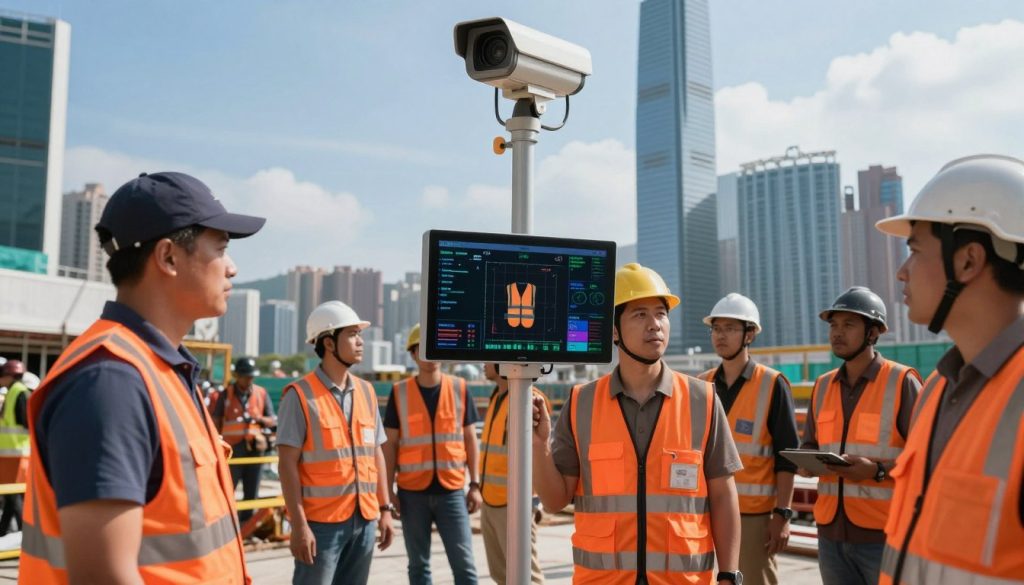
TensorVok AI Video Analytics uses advanced computer vision to automatically detect whether workers are wearing required PPE — including hard hats, safety vests, goggles, and steel-toe boots — in real time across multiple camera feeds.
Unlike generic AI CCTV systems that require costly hardware upgrades, TensorVok AI Video Analytics works with your existing IP cameras or analog CCTV systems via RTSP retrofit. No need to replace your entire surveillance infrastructure. Simply connect your cameras, deploy the lightweight edge AI module, and start monitoring instantly.
Using calibrated algorithms trained on diverse construction site conditions, TensorVok accurately identifies PPE violations even in low-light, dusty, or crowded environments. When a worker enters a zone without a helmet, the system triggers an immediate alert — visible on dashboards, sent via email/SMS, or integrated into existing security platforms.

Why Edge Processing Matters for Jobsite Safety & Data Compliance
One of the biggest challenges in video analytics is data privacy and sovereignty. Cloud-based AI systems often transmit raw video footage off-site, raising concerns under laws like Singapore’s PDPA, GDPR, and other regional data protection frameworks.
TensorVok AI Video Analytics solves this by performing all analysis at the edge — directly on a local device connected to your camera network. Video never leaves the jobsite. Only metadata (e.g., “helmet missing at Zone B, 14:32”) is stored or transmitted, ensuring full compliance with data sovereignty rules.
This also means faster response times. With no latency from cloud processing, alerts arrive within seconds — critical when preventing falls, electrical hazards, or fire risks.
Key Features That Make TensorVok Ideal for Global Construction Firms
- Works with Existing Cameras: RTSP retrofit support means you can deploy TensorVok AI Video Analytics without replacing legacy CCTV systems.
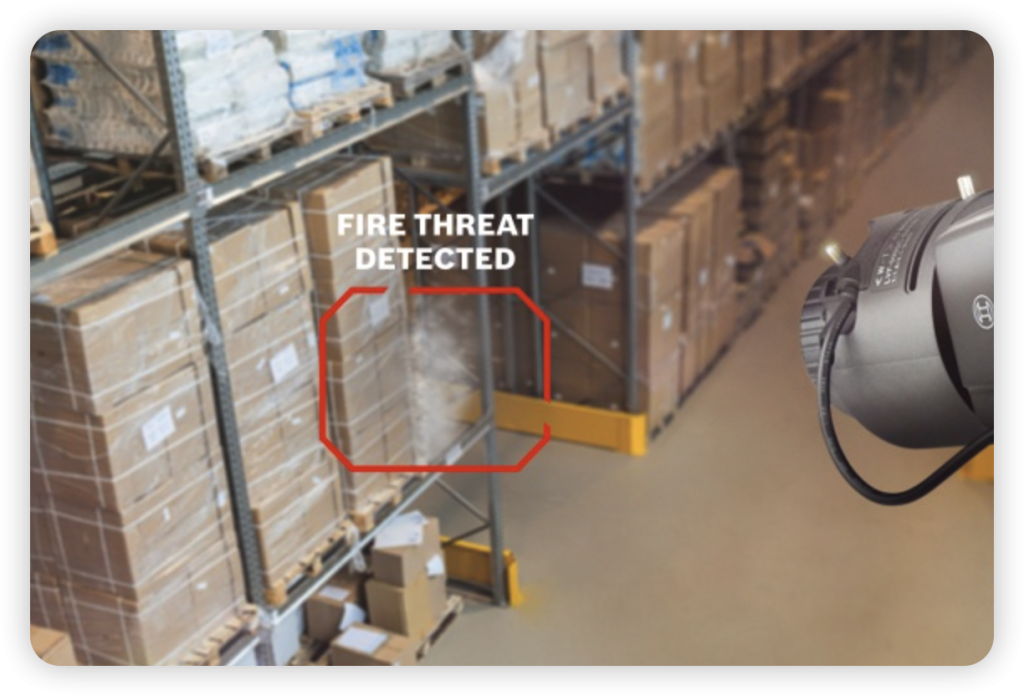
- Real-Time Alerts: Detects missing PPE, restricted zone intrusions, fire/smoke, crowding, and distracted activity instantly.
- MOM & WSH Audit-Ready Reporting: Automatically generates compliance reports tailored for Singapore’s Ministry of Manpower (MOM) audits — saving hours of manual documentation.
- U.S.-Developed Algorithms, Locally Supported: Powered by BrightVox LLC’s proven AI models, delivered and supported in Singapore by Huafa Solutions — ensuring reliability and local responsiveness.
- White-Label & OEM Ready: Security integrators and system vendors can embed TensorVok AI Video Analytics into their own platforms under their brand.
- Deploy in Days, Not Months: Unlike complex enterprise deployments, TensorVok integrates quickly with minimal IT overhead.
Common Pitfalls in PPE Detection Systems (and How to Avoid Them)
Many construction firms fail to achieve reliable PPE detection because they overlook these common issues:
- Over-reliance on cloud-based AI: Risking data breaches and violating PDPA/GDPR. Solution: Use edge-based systems like TensorVok AI Video Analytics.
- Ignoring environmental factors: Dust, rain, shadows, and camera angles cause false positives. Solution: Choose AI trained on real-world construction conditions — such as TensorVok’s environment-adaptive models.
- Slow deployment cycles: Waiting months for integration delays safety improvements. Solution: Opt for plug-and-play RTSP compatibility — TensorVok deploys in days.
- No audit trail: Missing documentation undermines compliance during inspections. Solution: Use TensorVok’s automated MOM-compliant reporting features.
- Vendor lock-in: Proprietary systems limit flexibility. Solution: Choose open, white-label solutions like TensorVok AI Video Analytics.
Deployment Checklist: From Camera Integration to Audit Readiness
To ensure a smooth rollout of your construction PPE detection system, follow this step-by-step checklist:
- Identify high-risk zones (e.g., crane areas, scaffolding, electrical rooms).
- Verify camera coverage and RTSP access for each camera.
- Install the TensorVok edge AI appliance at the nearest network switch or NVR.
- Connect cameras via RTSP stream — no re-wiring needed.
- Configure detection rules: e.g., “Alert if helmet missing in Zone A”.
- Set up notification channels: SMS, email, or API integration with your EHS platform.
- Run a 72-hour test period to validate accuracy in real conditions.
- Generate a sample MOM audit report using TensorVok’s built-in dashboard.
- Train supervisors and safety officers on interpreting alerts and responding.
- Review and refine detection thresholds based on site-specific patterns.
With this process, most construction firms achieve full operational readiness within 5–7 days.
FAQs: Construction PPE Detection with TensorVok AI Video Analytics
Q: Can TensorVok AI Video Analytics work with my current CCTV cameras?
A: Yes. TensorVok AI Video Analytics supports RTSP retrofit, meaning it works with virtually any IP camera or analog CCTV system that outputs an RTSP stream — no hardware replacement needed.
Q: Is the AI accurate in challenging construction environments?
A: Absolutely. TensorVok AI Video Analytics uses deep learning models trained on real-world construction scenes — including dust, low light, partial occlusion, and fast-moving workers. It maintains high accuracy even in complex conditions.
Q: How does TensorVok handle data privacy and PDPA compliance?
A: All video analysis happens at the edge. Raw footage never leaves the jobsite. Only anonymized event data (e.g., “no helmet detected at Gate 3”) is stored or shared — ensuring full compliance with PDPA, GDPR, and other data laws.
Q: Can I get audit-ready reports for Singapore’s MOM inspections?
A: Yes. TensorVok AI Video Analytics is calibrated for Singapore’s WSH and MOM compliance standards. It automatically generates detailed, timestamped reports showing PPE compliance trends, incident logs, and corrective actions — perfect for audit submissions.
Q: What if I want to offer this solution as a service to my clients?
A: TensorVok AI Video Analytics is white-label and OEM-ready. Security integrators and system vendors can brand the platform under their own name and deliver it as part of their managed services portfolio.
Q: How long does it take to deploy TensorVok AI Video Analytics on a construction site?
A: Most projects go live in 3–7 days. The system integrates via RTSP, requires no software installation on cameras, and comes with guided setup tools. You don’t need a dedicated IT team.
Q: Are the AI algorithms updated regularly?
A: Yes. TensorVok AI Video Analytics receives regular updates from BrightVox LLC, the U.S.-based AI developer behind the core algorithms. These updates improve accuracy, add new detection types (e.g., fall detection), and adapt to evolving site conditions.
Q: Can I monitor multiple sites from one dashboard?
A: Yes. TensorVok provides a centralized cloud dashboard accessible from anywhere. You can manage dozens of construction sites simultaneously, compare compliance scores, and drill down into individual alerts — all while maintaining edge processing for data privacy.