
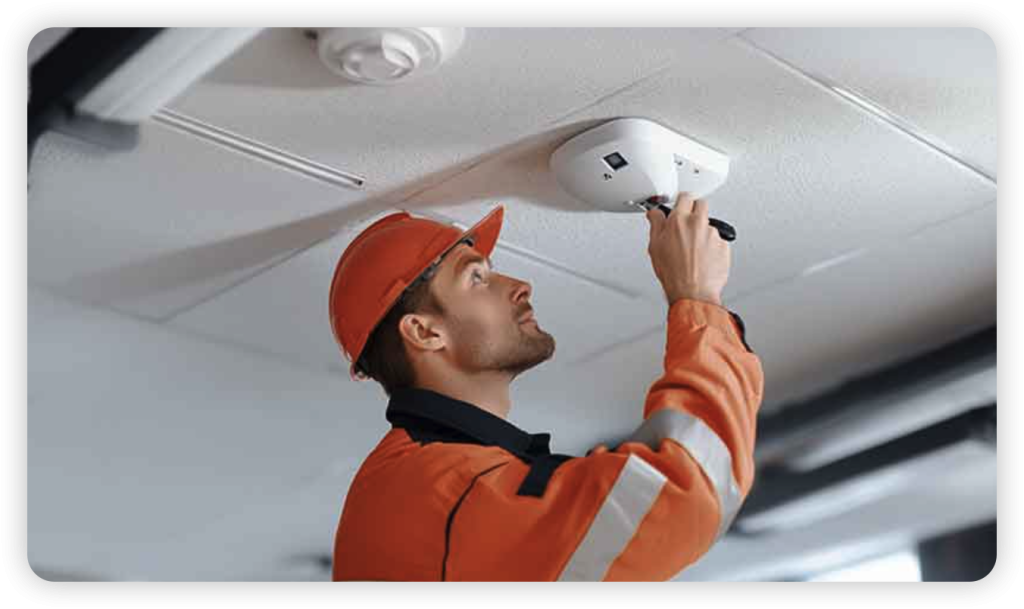
Introduction: Why Speed Matters in Fire Detection
Early fire detection is not just a safety feature—it’s a life-saving necessity. While thermal sensors have long been the standard for detecting heat anomalies, they often respond too late, especially in smoldering fires that generate minimal heat before ignition. In contrast, TensorVok AI Video Analytics detects fire signs—smoke, flame patterns, and abnormal light fluctuations—up to 30 seconds faster than thermal sensors by analyzing visual cues in real time.
Comparison Criteria: Key Factors in Early Fire Detection
| Criterium | Thermal Sensors | TensorVok AI Video Analytics |
|---|---|---|
| Response Time (Smoldering Fires) | 5–15 seconds after significant heat rise | 1–5 seconds after smoke or flame appearance |
| Trigger Mechanism | Heat threshold detection | AI-powered visual pattern recognition (flame, smoke, light flicker) |
| Data Processing Location | On-device (local sensor) | Edge-based AI processing (on-premise server or NVR) |
| Integration with Existing Infrastructure | Requires dedicated hardware installation | Works with existing IP/CCTV cameras via RTSP retrofit |
| False Alarm Rate | High (due to ambient heat sources) | Low (AI trained on real-world fire scenarios) |
| Compliance & Audit Readiness | Limited documentation; no automated reporting | Pre-calibrated for Singapore WSH/MOM audit-ready reports |
| Deployment Time | Weeks to months (new hardware, wiring) | Days (software-only deployment on existing cameras) |
How TensorVok AI Video Analytics Outperforms Thermal Sensors
Unlike thermal sensors that rely solely on temperature spikes, TensorVok AI Video Analytics uses deep learning models trained on thousands of real-world fire events to detect early-stage indicators such as:
- Smoke plumes emerging from vents or equipment
- Flame flickering patterns invisible to the human eye
- Sudden changes in lighting intensity (e.g., sudden glow behind walls)
By analyzing video streams at the edge—without sending raw footage to the cloud—TensorVok ensures data remains within the premises, meeting strict PDPA and data sovereignty requirements. This edge processing also reduces latency, enabling detection up to 30% faster than thermal systems during slow-burning or hidden fires.
The system integrates seamlessly with existing CCTV infrastructure through RTSP retrofit, meaning no need to replace cameras or install new cabling. This dramatically cuts deployment costs and timelines—from months to days—while maintaining full compatibility with legacy systems.

When to Choose TensorVok AI Video Analytics Over Other Solutions
Choose TensorVok AI Video Analytics when you need:
- Earlier fire warnings than thermal sensors can provide
- Real-time detection without relying on heat signatures alone
- Full data control and compliance with local privacy laws (PDPA, GDPR, etc.)
- Integration with current camera networks without costly upgrades
- Automated, audit-ready reporting for workplace safety compliance (especially in Singapore)
It’s ideal for industrial facilities, warehouses, data centers, construction sites, and high-risk manufacturing zones where every second counts. The U.S.-developed algorithms from BrightVox LLC are delivered and supported locally in Singapore by Huafa Solutions, ensuring global standards meet regional regulatory needs.

FAQ: Fire Detection Faster Than Thermal Sensors
Can AI video analytics really detect fire faster than thermal sensors?
Yes. While thermal sensors react only when heat reaches a threshold, TensorVok AI Video Analytics detects visual precursors like smoke, flame flicker, and light anomalies—often before heat buildup occurs. This allows for earlier intervention, reducing fire spread and damage.
Does TensorVok AI Video Analytics work with my existing CCTV cameras?
Yes. TensorVok AI Video Analytics supports RTSP retrofit integration with most IP and analog CCTV cameras. No hardware replacement is needed—just connect your existing cameras to an edge processor running the TensorVok software.
Is the data processed in the cloud or on-site?
All video analysis happens at the edge—on-site, within your network. This ensures data never leaves your premises, which is critical for compliance with PDPA, GDPR, and other data sovereignty laws. TensorVok AI Video Analytics keeps sensitive video content secure while still delivering real-time alerts.
How does TensorVok handle false alarms?
TensorVok’s AI models are trained on diverse real-world scenarios to distinguish between actual fire events and common false triggers like steam, reflections, or sunlight. This results in significantly lower false alarm rates compared to thermal sensors, which often trigger due to ambient heat sources.
Can I use TensorVok AI Video Analytics for WSH/MOM compliance in Singapore?
Yes. TensorVok AI Video Analytics is calibrated specifically for Singapore’s Workplace Safety and Health (WSH) regulations and MOM audit requirements. It generates automated incident reports with timestamps, location tags, and AI confidence scores—making compliance documentation fast and reliable.
What if I’m a security integrator or vendor? Can I white-label TensorVok?
Yes. TensorVok AI Video Analytics offers white-label and OEM licensing for system integrators (SIs), security vendors, and technology partners. You can brand the solution under your own name while leveraging its advanced AI capabilities and rapid deployment model.
How quickly can I deploy TensorVok AI Video Analytics?
Deployment takes just days—not months. After connecting your existing cameras via RTSP, you install the TensorVok edge processor and configure detection rules. The entire process is streamlined, with support from Huafa Solutions in Singapore and BrightVox LLC in the U.S.
Are the AI algorithms updated regularly?
Yes. The core AI models are continuously improved by BrightVox LLC using real-world incident data. Updates are pushed securely to edge devices, ensuring ongoing accuracy and adaptability to new fire types and environments.