
What Is AI Video Analytics? A Modern Safety Imperative
AI video analytics is the use of artificial intelligence to automatically analyze video feeds from security cameras in real time. Unlike traditional surveillance, which relies on human monitoring, AI video analytics detects specific events—such as missing personal protective equipment (PPE), unauthorized access to restricted zones, fire or smoke, overcrowding, or distracted behavior—without constant human oversight.
For safety directors and system integrators (SIs), this technology is no longer optional. With rising regulatory demands, increasing workplace hazards, and the need for proactive risk mitigation, AI video analytics offers a scalable, automated way to enforce safety protocols across construction sites, manufacturing plants, warehouses, and office environments.
How TensorVok AI Video Analytics Works: Edge Intelligence at Scale
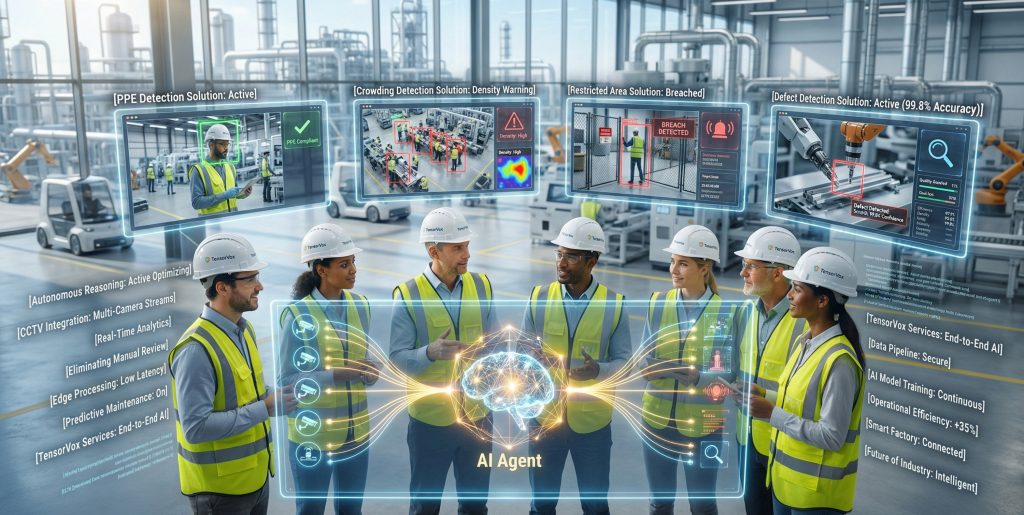
TensorVok AI Video Analytics leverages edge AI processing to deliver real-time insights directly on-site, without sending raw video to the cloud. This means every camera feed is analyzed locally—on a device connected to your existing CCTV or IP camera system—using RTSP retrofit integration.
Here’s how it works:
- RTSP Integration: TensorVok AI Video Analytics works with virtually any existing CCTV or IP camera that supports RTSP streaming—no need to replace hardware.
- Edge-Based Inference: AI models run on local edge devices, ensuring low latency, high reliability, and zero data exposure beyond the premises.
- Real-Time Detection: The system continuously monitors for predefined safety events—PPE violations, trespassing, fire/smoke, crowd density spikes, and distraction—triggering instant alerts via dashboard, email, or API.
- Automated Logging: All detected events are timestamped, geotagged, and stored securely on-site for audit trails and incident review.
This architecture ensures performance even during network outages and meets strict data governance requirements—especially critical under Singapore’s PDPA and global privacy laws.
Key Use Cases: From PPE Detection to Crowding Alerts
TensorVok AI Video Analytics is engineered for practical, high-impact safety outcomes. Its core capabilities include:
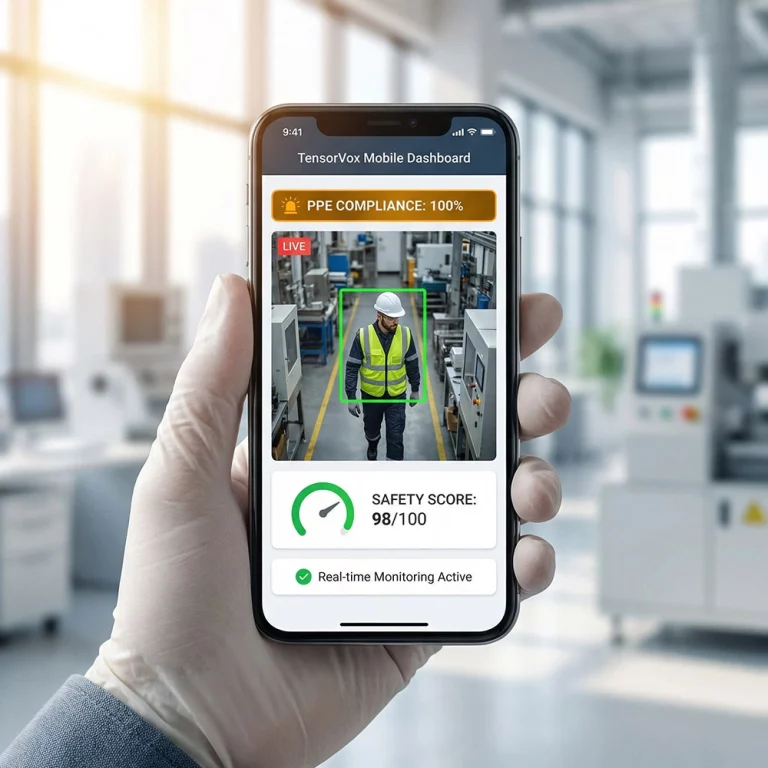
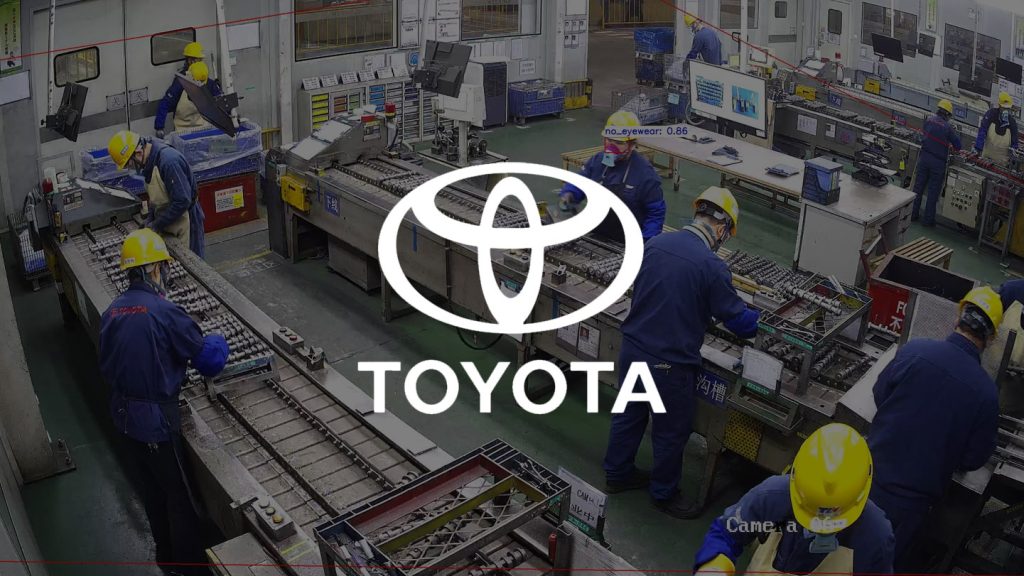
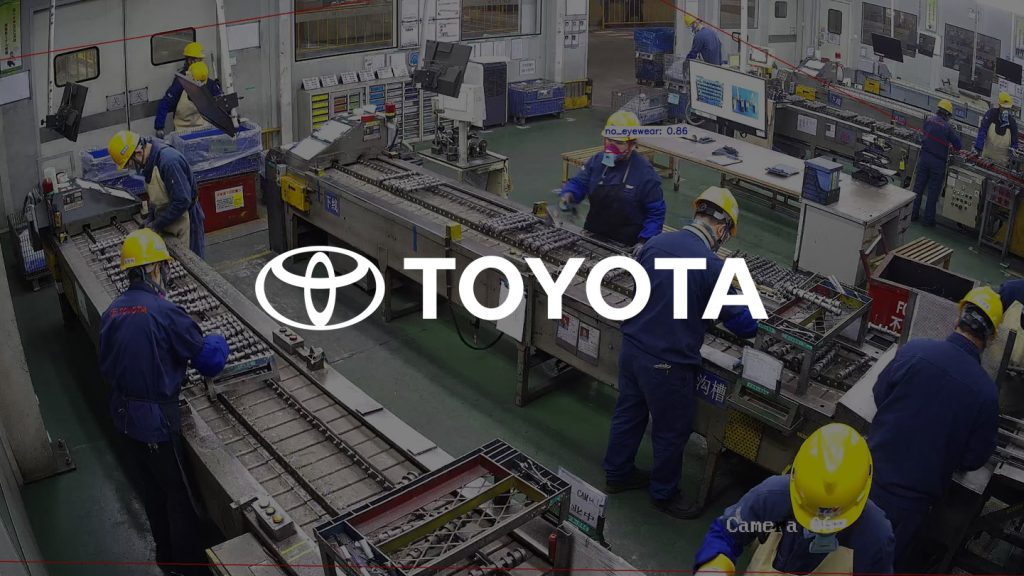
- PPE Detection: Automatically flags workers without helmets, vests, gloves, or safety goggles in high-risk zones.
- Restricted Zone Intrusion: Alerts when personnel enter hazardous areas like electrical rooms, confined spaces, or machinery zones.
- Fire and Smoke Detection: Uses advanced computer vision to identify early signs of fire or smoke, often faster than human operators.
- Crowd Density Monitoring: Detects overcrowding in workspaces, stairwells, or emergency exits—critical for pandemic response and evacuation planning.
- Distracted Activity Recognition: Identifies unsafe behaviors such as phone use, horseplay, or fatigue-related slumping.
These detections aren’t just alerts—they’re actionable intelligence that enables immediate intervention, reducing incident rates and improving safety culture.
Why Edge Processing Matters: Data Sovereignty & PDPA Compliance
One of the biggest challenges with cloud-based video analytics is data residency. Transmitting sensitive video footage over the internet raises compliance risks—especially under Singapore’s Personal Data Protection Act (PDPA) and similar regulations worldwide.
TensorVok AI Video Analytics solves this by performing all analysis at the edge. Video data never leaves the site. Only metadata—event timestamps, object classifications, and alert summaries—are transmitted if needed, ensuring full control over sensitive information.
This makes TensorVok ideal for government facilities, industrial plants, healthcare centers, and enterprises where data sovereignty is non-negotiable.
Singapore-Ready: Audit-Ready Reporting for WSH and MOM Compliance
For organizations operating in Singapore, compliance with the Workplace Safety and Health (WSH) Act and Ministry of Manpower (MOM) standards is mandatory. TensorVok AI Video Analytics is calibrated specifically for these requirements.
The platform generates structured, timestamped reports that can be used during audits. These include:
- Number of PPE violations per shift
- Frequency of restricted zone breaches
- Incident logs with video snippets (stored on-site)
- Heatmaps of high-risk zones over time
These reports are exportable in formats accepted by MOM and WSH auditors, turning passive surveillance into active compliance documentation.
Deploy Faster Than Ever: From Legacy Cameras to Live Insights in Days
Unlike legacy systems that require months of planning, procurement, and installation, TensorVok AI Video Analytics can be deployed in days.
Here’s why:
- No Hardware Replacement: Integrates with existing RTSP-enabled cameras—no new cameras required.
- Plug-and-Play Edge Devices: Small, ruggedized AI boxes connect to your network and start analyzing video immediately.
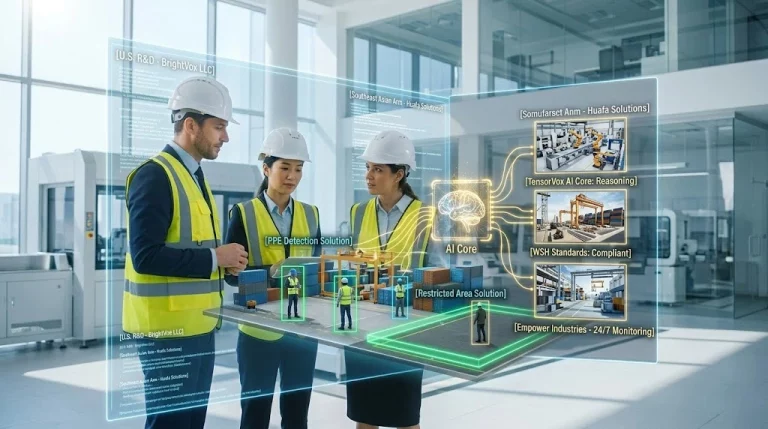
- Pre-Trained Models: Built-in algorithms from BrightVox LLC (U.S.) are optimized for industrial and urban environments.
- Local Support: Delivered and supported in Singapore by Huafa Solutions, ensuring rapid troubleshooting and customization.
Whether you’re upgrading a single site or rolling out across a national portfolio, TensorVok AI Video Analytics scales seamlessly without disrupting operations.
FAQs About AI Video Analytics and TensorVok AI Video Analytics
1. What exactly does AI video analytics do?
AI video analytics uses machine learning to automatically detect and classify specific events in live or recorded video streams—such as missing PPE, people entering restricted zones, fire/smoke, or excessive crowding—enabling real-time safety interventions.
2. Can I use AI video analytics with my current CCTV system?
Yes. TensorVok AI Video Analytics works with any existing CCTV or IP camera that supports RTSP streaming. No camera replacement is needed—just connect the edge processor to your network and start analyzing video instantly.
3. How does edge AI differ from cloud-based video analytics?
Edge AI processes video data locally on-site, minimizing latency, ensuring data privacy, and maintaining functionality during network outages. Cloud-based systems send video to remote servers, which increases bandwidth use, latency, and compliance risks—especially under PDPA and GDPR.
4. Is TensorVok AI Video Analytics compliant with Singapore’s WSH and MOM standards?
Yes. TensorVok AI Video Analytics is calibrated for Singapore’s WSH and MOM audit requirements. It generates structured, timestamped reports with event logs and video evidence (stored on-site), making it easy to demonstrate compliance during inspections.
5. Who develops the AI algorithms used in TensorVok AI Video Analytics?
The core AI models are developed by BrightVox LLC (U.S.), a leader in industrial-grade computer vision. These algorithms are delivered and supported in Singapore by Huafa Solutions, ensuring local expertise and responsiveness.
6. Can I white-label TensorVok AI Video Analytics for my clients?
Yes. TensorVok offers white-label and OEM licensing for system integrators (SIs) and security vendors. You can brand the platform as your own, integrate it into your service offerings, and deliver turnkey safety solutions to your customers.
7. How quickly can I deploy TensorVok AI Video Analytics?
Deployment typically takes just days—not months. After connecting your existing cameras to the edge device, the system begins detecting safety events immediately. Most installations are completed within 3–7 business days.
8. Does TensorVok AI Video Analytics protect my data privacy?
Absolutely. All video processing happens at the edge. Raw footage never leaves your premises. Only anonymized event metadata is transmitted if required—ensuring full compliance with PDPA, GDPR, and other data protection laws.