
Imagine a seasoned plant manager on the production floor during a rush. He uses checklists and his eyes to find dangers. Yet, a small leak behind a tank is missed.
This shows the risks of relying only on humans in dangerous places. We think safety should never be a gamble. With AI Vision Analytics for HAZWOPER, leaders can do more than just react.
This tech turns cameras into smart guards that watch all the time. It’s a proactive defense that keeps your site safe.
Our method for stopping chemical spills uses edge AI safety. It works by processing data right where it’s needed. This makes your site a place where safety is always the top priority.
We turn safety into a steady, reliable process. It keeps your team and the environment safe.
Key Takeaways of AI Vision Analytics for HAZWOPER
- Automated monitoring replaces error-prone manual safety inspections.
- Real-time detection identifies leaks before they escalate into major incidents.
- Edge computing ensures data privacy and low-latency response times.
- Proactive systems foster a culture of continuous safety compliance.
- Data-driven insights empower managers to optimize facility operations effectively.
The Role of AI Vision Analytics for HAZWOPER
Manual inspections for hazardous waste management are no longer enough today. Humans can get tired and can’t be everywhere at once. AI Vision Analytics for HAZWOPER helps facilities stay safe all the time.
Understanding the Intersection of AI and Hazardous Waste Safety
Modern systems can “sense, think, and act” fast. They use advanced algorithms to spot things humans might miss. This industrial hazard monitoring works 24/7.
These systems do more than just detect movement. They check if workers are wearing the right automated PPE detection. This helps keep everyone safe in dangerous areas.
Key Benefits of Proactive Spill Detection
Intelligent monitoring brings big benefits for site managers who care about safety. It changes how teams handle dangerous materials:
- Instant Leak Identification: Finds spills right when they start.
- Reduced Response Time: Sends alerts fast to stop spills from spreading.
- Enhanced Compliance: Offers clear proof for safety checks.
- Worker Protection: Makes sure automated PPE detection is always followed.
Regulatory Alignment with OSHA Standards
Following OSHA 1910.120 standards is key for us. We know your team’s safety and legal standing depend on it. Our AI Vision Analytics for HAZWOPER makes it easier to meet these rules every day.
With industrial hazard monitoring, facilities can focus on safety all the time. This tech makes sure your hazardous waste management rules are followed. AI Vision Analytics for HAZWOPER helps your team keep a safer, more compliant workplace every day.
Assessing Site Vulnerabilities and Camera Placement
We start by identifying high-risk areas in your facility. This ensures our AIoT safety systems work well. A detailed site assessment is key for any industrial hazard monitoring solution. It helps us spot risks early and prevent emergencies.
Identifying High-Risk Chemical Storage Zones
Not every area in a facility is equally dangerous. We focus on places where volatile chemicals are stored, moved, or processed. These areas are most at risk for leaks and spills.
Good workplace safety technology needs to know the risks well. We sort these zones by chemical danger, amount, and how close people are. This way, our monitoring tools are where they’re most needed.
Optimizing Camera Angles for Maximum Coverage
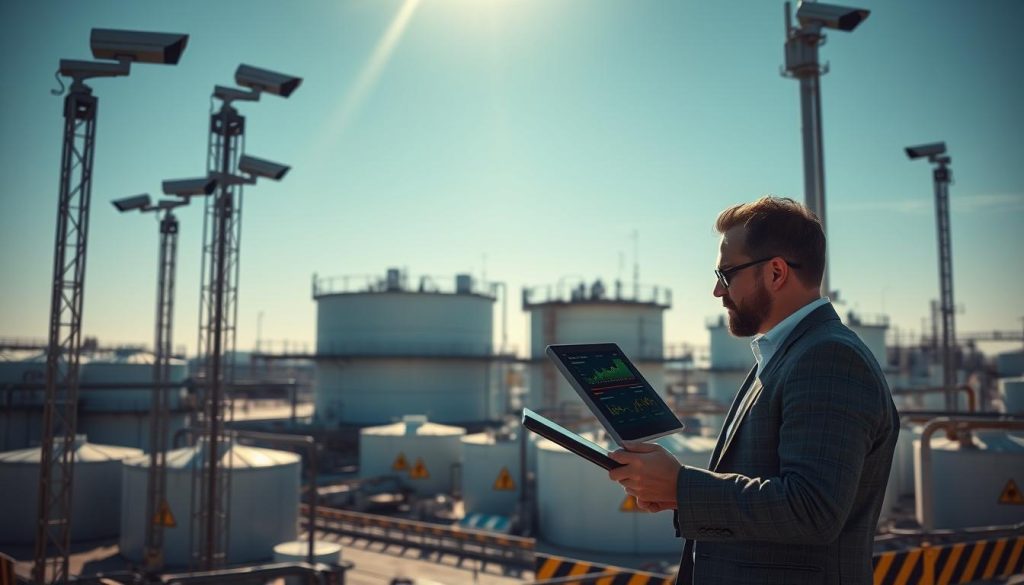
Even top software can’t spot a spill if it can’t see it. We check every angle to make sure there are no hidden spots. This helps us catch early signs of trouble.
We place cameras carefully to get clear images of the whole area. By overlapping views, we make sure we always watch the important parts. This creates a strong safety net.
Selecting Hardware for Harsh Industrial Environments
Regular cameras don’t last in places with bad gases and extreme heat. We pick special hardware that can handle these tough conditions. This keeps your industrial site security strong and running smoothly.
Below is a table showing what hardware you need for different areas in your facility:
| Zone Type | Hardware Requirement | Protection Rating |
|---|---|---|
| Corrosive Storage | Stainless Steel Housing | IP69K |
| Outdoor Perimeter | Thermal Imaging | IP67 |
| High-Traffic Loading | Wide-Angle Lens | IK10 |
| Confined Spaces | Explosion-Proof | ATEX/IECEx |
Configuring Computer Vision Models for Leak Detection
To master real-time leak detection, we first teach algorithms to spot what humans might overlook. We focus on the visual signs of dangerous chemicals. This turns regular surveillance into a strong tool for chemical spill prevention.
Training Algorithms to Recognize Liquid Discoloration and Vapor Clouds
We train deep learning models on huge datasets of chemical leaks. We program them to spot small color changes and vapor cloud patterns.
This computer vision for safety method catches even tiny leaks or gas releases right away. It teaches AI to tell real leaks from harmless shadows. This adds a strong layer of protection to your facility.
Setting Sensitivity Thresholds to Minimize False Positives
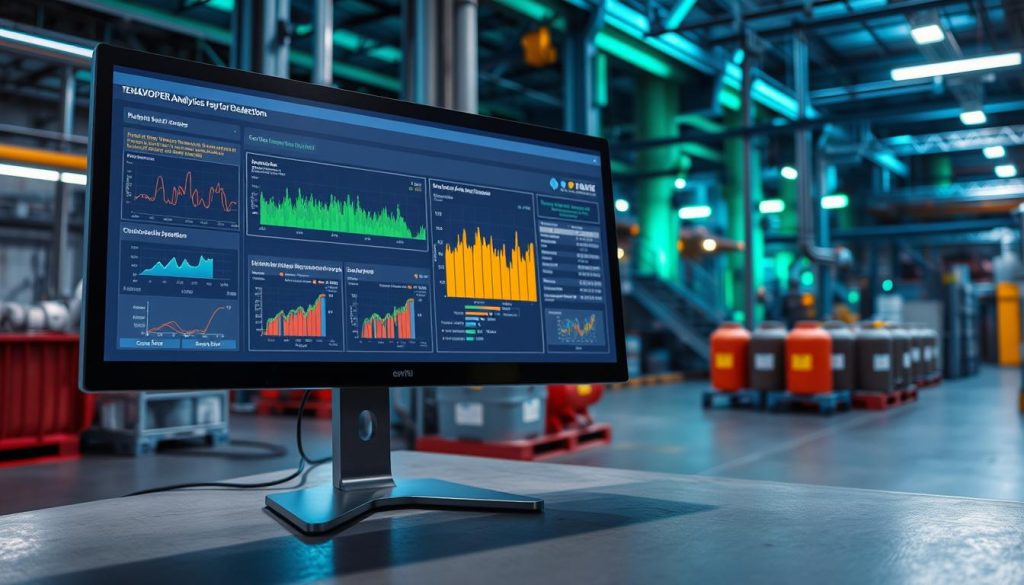
One big challenge in industrial monitoring is false alarms. We solve this by setting exact sensitivity levels. These levels consider things like lighting changes or steam from machines.
These settings are key for predictive maintenance and keeping things running smoothly. By adjusting these parameters, we make sure your team only deals with real threats. This keeps the system trustworthy.
Implementing Edge Computing for Instant Processing
We focus on edge AI safety for fast data processing on the device itself. This setup avoids the delays of cloud-based systems, giving almost instant alerts.
Keeping data local also boosts security and reliability in remote areas. This AI Vision Analytics for HAZWOPER system keeps your safety plans working, even without internet.
Integrating Real-Time Alerts with Emergency Response Protocols
When a chemical leak happens, every second is critical. We think edge AI safety is about quick, smart actions. It connects watching for problems with acting fast to keep places safe.
“Safety is not a static state, but a continuous process of vigilance and rapid response that defines the resilience of our modern industrial infrastructure.”
Establishing Automated Notification Chains
Our systems send alerts quickly to important people when danger is spotted. These messages go straight to phones and control rooms. This way, the right people get the right info fast, without needing to call anyone.
Linking Vision Systems to Facility Shutdown Mechanisms
Good real-time leak detection means more than just warning. It means acting fast. We link our tech with shutdown systems to stop leaks right away. This stops bad stuff from spreading and keeps everyone safe.
Coordinating AI Insights with On-Site HAZMAT Teams
The best part of AIoT safety systems is how they help people. They give HAZMAT teams clear info and exact locations. This mix of AI and human skills is key to quick, effective emergency response protocols.
- Instant spotting of spills or leaks.
- Quick action to close safety valves and open vents.
- Live data to emergency teams on the ground.
Automating PPE Compliance Monitoring in Hazardous Zones
We’re moving from manual checks to smart, automated monitoring in industrial safety. Human checks alone can miss important details, which is risky in places where Level A or B gear is needed. Computer vision for safety adds a steady eye that never gets tired.
Detecting Improper Use of Respirators and Chemical Suits
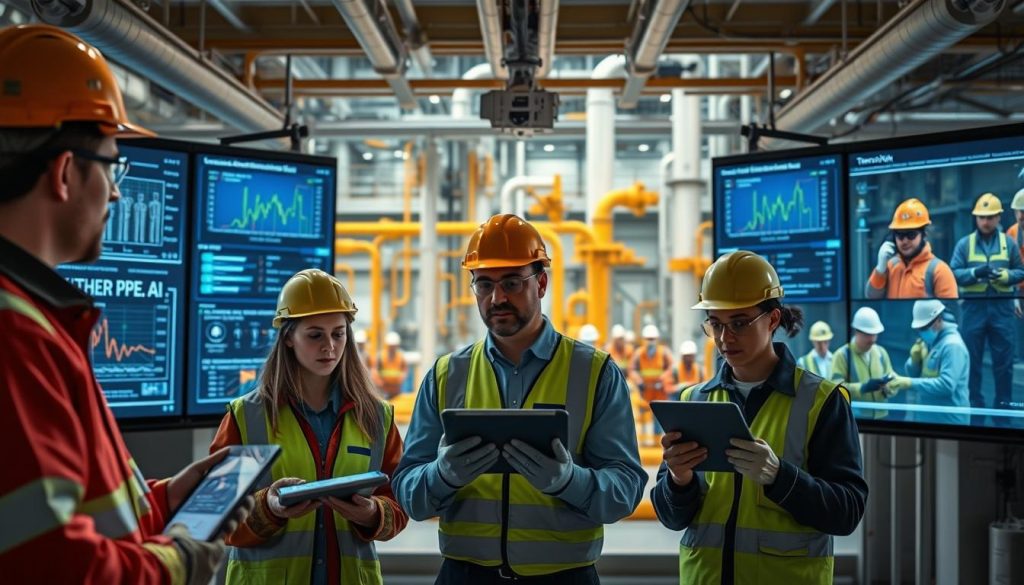
Our systems use smart algorithms to check if workers are wearing the right gear. They scan for specific markers, like respirator seals or chemical-resistant suit integrity. Precision is key when dealing with dangerous materials, as small mistakes can be very harmful.
If a worker isn’t wearing the right gear, the system alerts supervisors right away. This lets them stop a possible exposure before it happens. By making these checks digital, we keep safety standards the same for every shift.
Enforcing Restricted Access Zones via Virtual Fencing
Keeping industrial site security tight means controlling who goes into risky areas. We use virtual fencing to set digital boundaries that alert if someone unauthorized tries to enter. This tech acts as a silent protector, keeping people safe from dangerous areas.
These digital fences can be changed easily based on site conditions. If a zone becomes too dangerous, we can update the fence quickly. This flexibility is key to keeping a safe and secure place.
Generating Compliance Reports for Safety Audits
Keeping records is key to following rules. Our system makes safety audit automation easier by logging every check and event in real-time. This data helps make OSHA compliance easier during inspections.
Safety managers can make detailed reports quickly instead of spending hours on manual logs. These reports help spot and fix problems before they cause serious harm. Here’s how our smart approach compares to old methods.
| Feature | Manual Monitoring | Automated AI Monitoring |
|---|---|---|
| PPE Verification | Inconsistent/Periodic | Continuous/Real-time |
| Access Control | Physical Signage | Virtual Fencing Alerts |
| Audit Preparation | Time-consuming/Manual | Instant/Automated |
| Response Time | Delayed | Immediate |
Establishing Data Logging for Regulatory Compliance
Industrial safety relies on the data you collect today. At TensorVok, we know keeping accurate records is key for OSHA compliance and managing risks. We capture detailed visual data to keep your facility ready for any regulatory check.
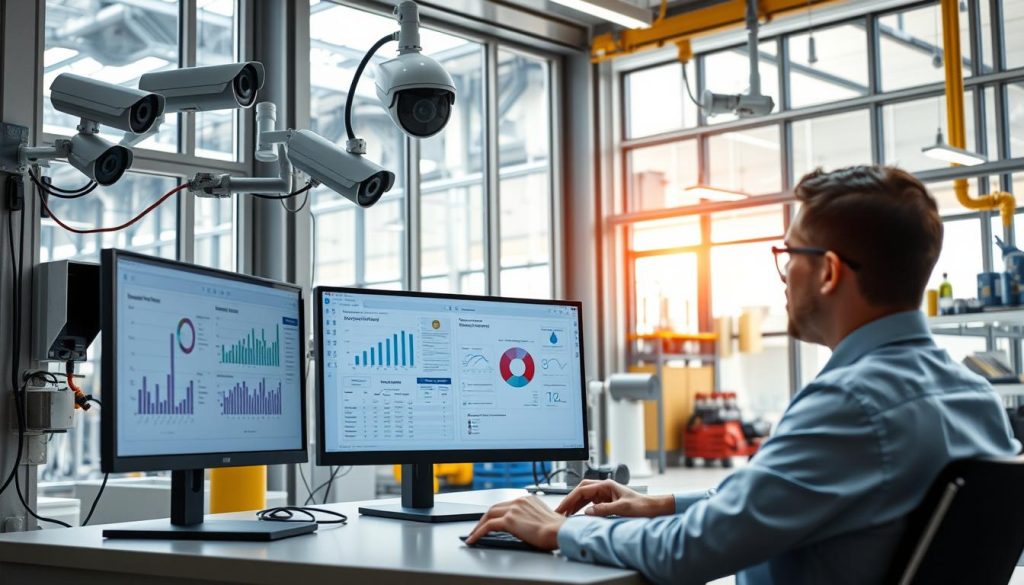
Archiving Incident Footage for Post-Spill Analysis
Our systems save critical footage when a hazard is spotted. This immediate documentation lets safety managers do deep post-spill analysis. They can find the incident’s cause and improve their response plans.
Having a clear, visual record of events is vital for internal reviews. It shows how a spill happened and if protocols were followed. This detail turns cleanup efforts into chances to learn and improve.
Maintaining Audit Trails for OSHA Inspections
We make documentation easier with safety audit automation. Our platform logs every alert, system action, and human step in real-time. These logs prove your facility is watching hazardous areas closely.
During an inspection, digital evidence saves time and reduces stress. You can show clear proof of your safety efforts, showing you’re serious about regulatory excellence. This openness builds trust with inspectors and shows you’re a safety-focused company.
Leveraging Historical Data to Predict Future Risks
Our AI uses long-term data for predictive maintenance. It spots trends in equipment or environmental changes to prevent spills. This approach focuses on preventing problems before they happen.
Historical data guides your safety investments. It shows which areas or processes need more attention. Using this info wisely keeps your facility safe and ahead of risks.
Training Personnel to Respond to AI-Generated Insights
AI needs a team ready to act on its insights. We know that workplace safety technology works best when people use it every day. Training helps ensure every alert leads to the right action.
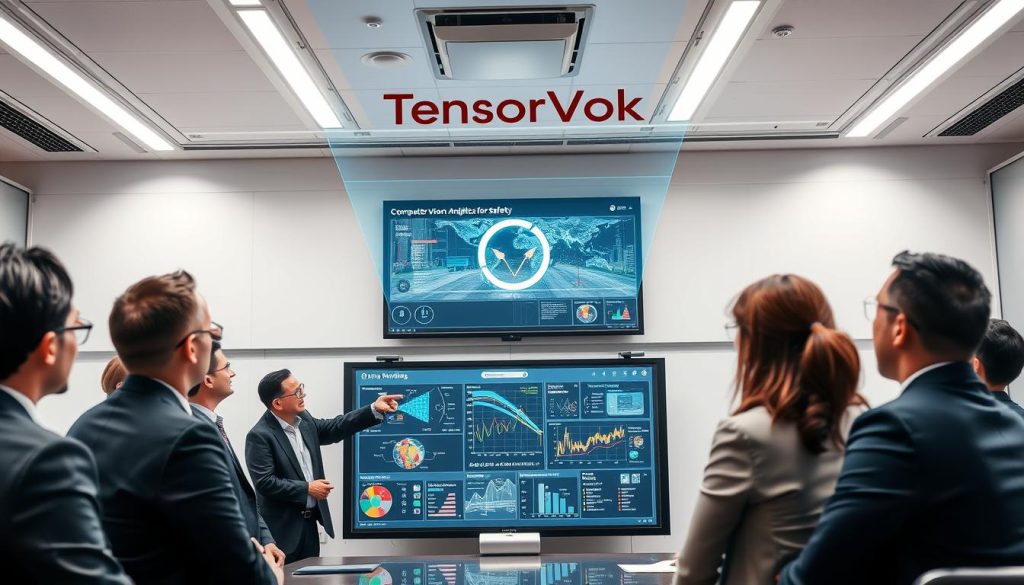
Interpreting Dashboard Alerts and Visual Data
Modern dashboards offer lots of info, but it can be too much without training. We teach staff to spot important alerts quickly. Clear communication of visual data helps them make quick decisions.
Understanding computer vision for safety makes staff more confident. This knowledge helps them act fast in emergencies. It turns data into a trusted tool for daily tasks.
Conducting Drills Based on AI-Simulated Scenarios
Drills are key for any safety team. We suggest doing regular drills with AI-simulated scenarios. These tests help staff practice in a safe way.
Drills mimic real threats to find any weak spots. They help the team respond smoothly in real emergencies. Regular practice makes them more effective.
Bridging the Gap Between Technology and Human Intervention
Technology should help workers, not push them away. We make sure staff knows automated PPE detection is for their safety. When they see the benefits, they use these tools every day.
Adding safety audit automation to your work makes everyone accountable. We encourage talking between management and staff about system insights. This teamwork makes technology a bridge between human and AI skills.
Maintaining and Calibrating Vision Systems for Reliability
Your investment in AI-driven safety depends on the quality of your hardware and software. To keep chemical spill prevention effective, treat your vision systems like living things that need care. If you ignore them, you might miss important signs during emergencies.
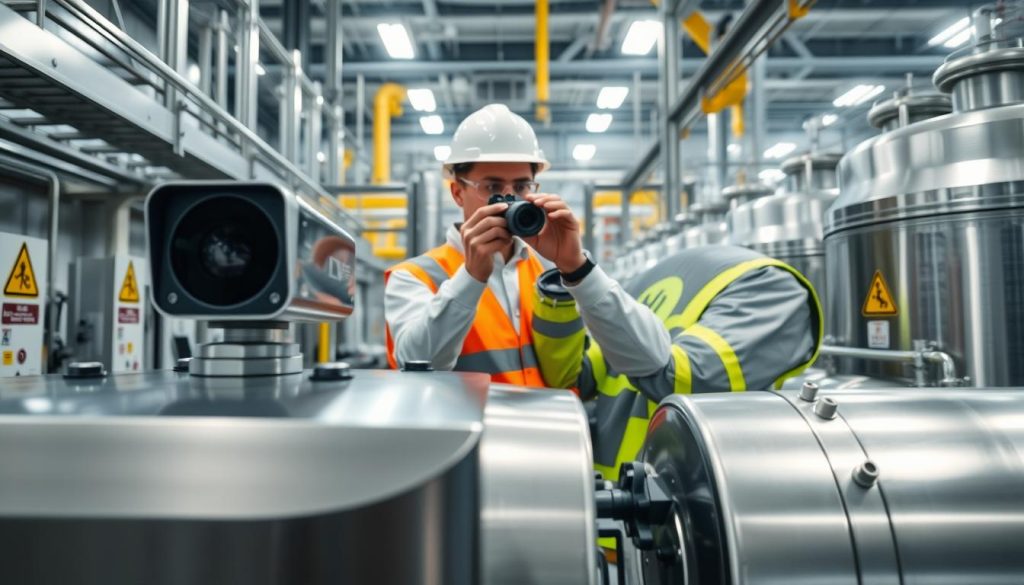
Routine Cleaning and Lens Maintenance in Corrosive Atmospheres
In places where chemicals are made, dust and harmful gases can harm camera images. Use gentle, anti-static cleaners to keep lenses clear. Clear optics are the eyes of your AI, and even a little dirt can cause false alarms in industrial hazard monitoring.
“Safety is not a static goal but a continuous process of vigilance and technical refinement.”
Software Updates and Model Retraining Cycles
AI tools need regular updates to stay effective. They must adapt to changes in your facility. Predictive maintenance for your software is key. This includes retraining models for new containers or lighting changes. Keeping your system up to date also protects against security threats.
- Schedule quarterly audits of all vision model performance metrics.
- Retrain algorithms whenever significant changes occur in the storage layout.
- Apply security patches immediately to protect against network vulnerabilities.
Troubleshooting Connectivity Issues in Remote Facilities
For real-time leak detection to work, your system must stay connected. In distant areas, signal problems or worn-out equipment can be a big issue. Use automated checks to quickly spot any connection issues.
By tackling these technical challenges, you keep your safety systems running smoothly all the time. A well-kept system means you can trust that your facility is always protected with the most accurate data.
Conclusion
Modern chemical facilities need to mix digital smarts with physical safety. This is key to protecting their most valuable assets. We think it’s essential to use advanced workplace safety tech in high-risk places.
TensorVok gives global industries the power of private, precise edge AI. Our tech makes sure your site follows strict rules and keeps every worker safe.
Using AIoT safety systems means moving from just reporting hazards to preventing them. This change saves lives and cuts costs in your whole facility.
Your team can now improve emergency plans with real-time data. This makes your site smarter and safer, adapting fast to new situations.
Check out https://tensorvok.com/ to see how our tech changes your safety approach. We’re here to help you build a safer industrial future today.