

Why Helmet and Goggle Detection AI Matters in Industrial Settings
In high-risk environments like optical lens production lines and automotive assembly plants, head and eye protection isn’t optional—it’s mandatory. Yet human error, fatigue, or oversight can lead to serious injuries. That’s where helmet and goggle detection AI comes in. By automating the verification of personal protective equipment (PPE), this technology ensures that every worker entering a hazardous zone is properly protected—24/7, without exception.
How TensorVok AI Video Analytics Detects PPE in Real Time
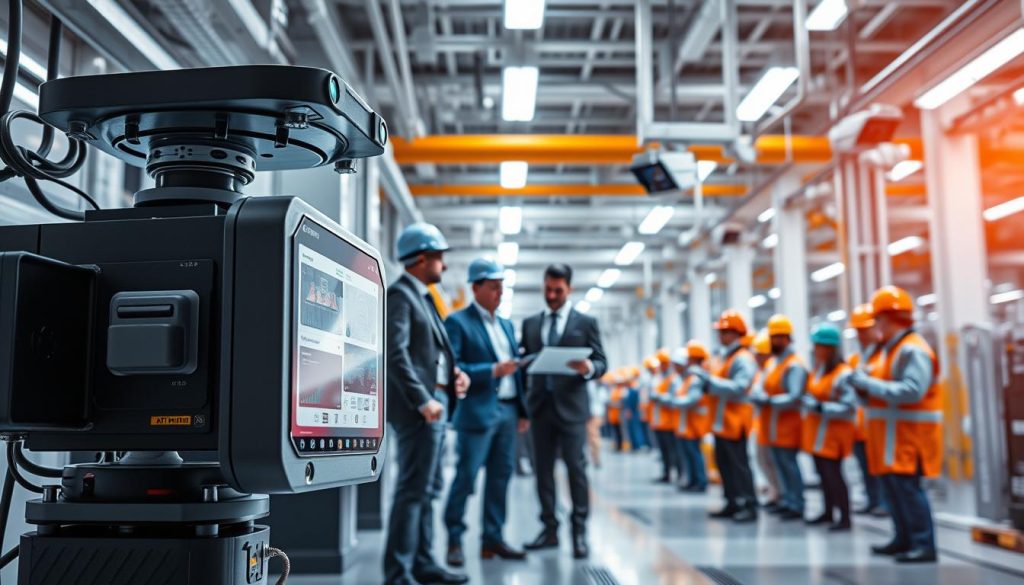
TensorVok AI Video Analytics uses advanced computer vision models trained specifically to detect helmets, goggles, face shields, and other head/eye PPE across diverse lighting, angles, and motion conditions. Unlike generic AI CCTV systems, TensorVok’s algorithms are calibrated for industrial environments and optimized for accuracy under real-world variability.
Using edge processing, TensorVok analyzes video streams directly at the camera or local server—never sending raw footage to the cloud. This means:
- Real-time alerts when a worker enters a restricted area without proper PPE
- Immediate detection of missing goggles during precision grinding or chemical handling
- Continuous monitoring even in low-light or reflective environments
The system doesn’t just flag violations—it logs them with timestamp, location, and visual evidence, enabling immediate corrective action and long-term trend analysis.
Key Benefits of Edge-Based AI for PPE Compliance
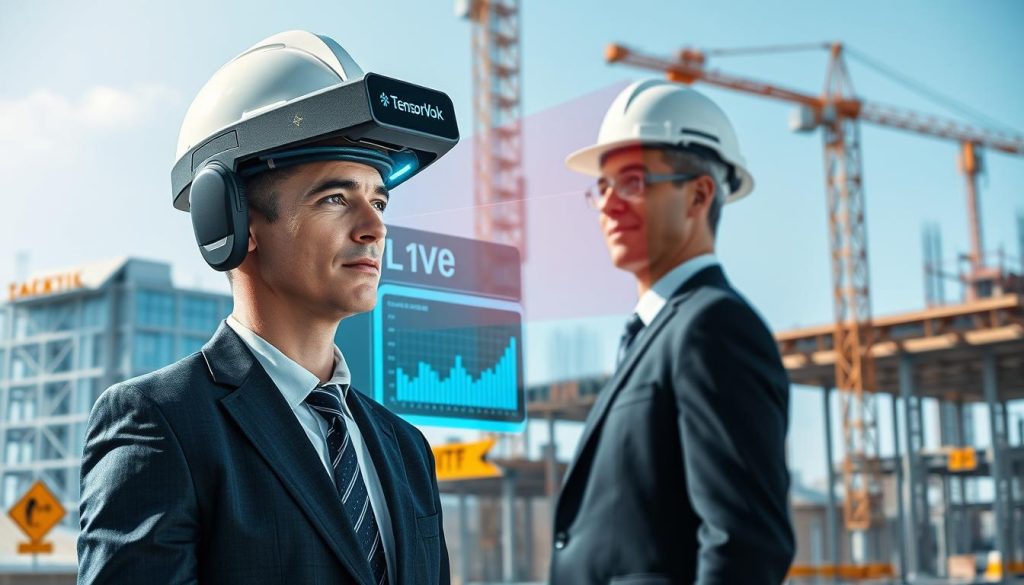
Many organizations hesitate to adopt AI due to privacy concerns, latency, or integration complexity. TensorVok AI Video Analytics solves these issues through its edge-first architecture:
- Data sovereignty guaranteed: Video remains on-site. No third-party cloud storage. Fully compliant with PDPA and GDPR.
- Zero latency: Alerts trigger within seconds—critical for preventing accidents in fast-paced production zones.
- Works with existing infrastructure: No need to replace your current IP cameras. Simply retrofit via RTSP feed integration.
- Scalable and secure: Deploy across multiple sites with centralized dashboards while keeping sensitive data local.
Deployment Made Simple: Retrofitting Existing CCTV Systems
One of the biggest barriers to adopting AI video analytics is cost and disruption. TensorVok AI Video Analytics eliminates both. You don’t need new cameras, new cabling, or months of downtime.
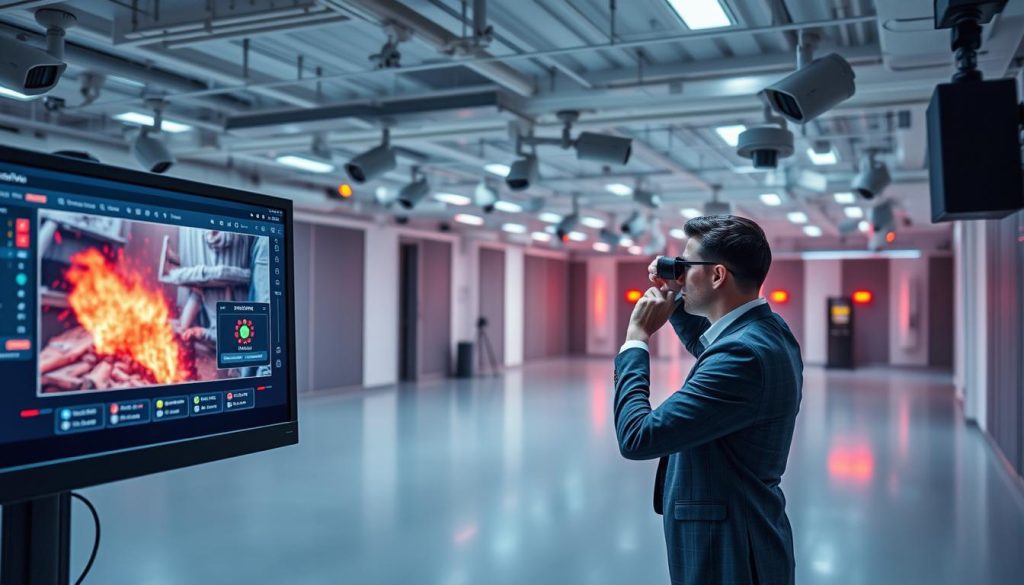
Just connect your existing IP cameras (RTSP-enabled) to a TensorVok edge device. The system automatically begins analyzing video feeds for PPE compliance. Within days—not months, you’ll have live monitoring of helmet and goggle usage across your facility.
This plug-and-play approach makes it ideal for large-scale rollouts in multi-floor optical plants or sprawling auto manufacturing campuses.
Audit-Ready Reporting for WSH and MOM Compliance
Singapore’s Workplace Safety and Health (WSH) regulations require documented proof of PPE enforcement. With TensorVok AI Video Analytics, compliance isn’t an afterthought—it’s built-in.
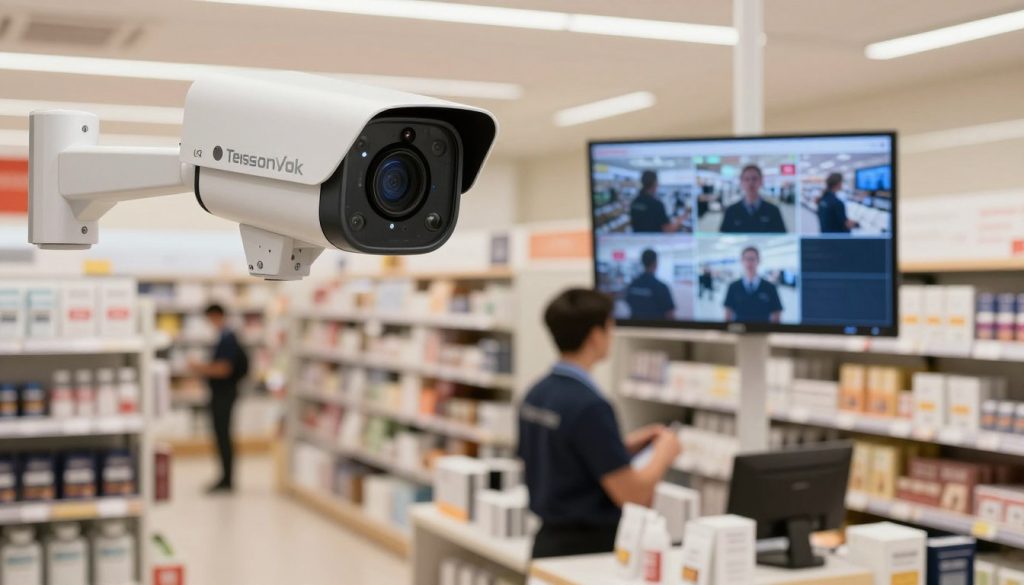
The platform generates automated, time-stamped reports that include:
- Number of PPE violations per shift
- Location and time of each incident
- Video clips of non-compliant behavior (with anonymized faces)
- Weekly/monthly compliance trends
These reports are pre-formatted for submission to MOM and are accepted as valid evidence during audits. No manual logging. No guesswork.
Common Pitfalls and How to Avoid Them
Even the best AI systems fail if deployed poorly. Here are common mistakes—and how TensorVok helps avoid them:
Pitfall 1: Over-reliance on cloud-based AI
Cloud AI introduces latency, bandwidth costs, and data privacy risks. TensorVok’s edge processing keeps everything local, ensuring faster response times and full control over sensitive video data.
Pitfall 2: Poor camera placement
AI needs clear line-of-sight. Place cameras at 90° angles to work zones, avoiding reflections from glass or metal surfaces. TensorVok’s setup guide includes optimal positioning tips based on plant layout.
Pitfall 3: Ignoring algorithm calibration
Generic AI models struggle with variations in helmet styles, lighting, or worker movement. TensorVok’s algorithms are fine-tuned for industrial settings using U.S.-developed models from BrightVox LLC, delivered and supported locally by Huafa Solutions in Singapore.
Pitfall 4: No training or feedback loop
AI improves over time. TensorVok allows operators to label false positives, helping the system learn and reduce errors. This continuous improvement ensures long-term reliability.
FAQ: Helmet and Goggle Detection AI Explained
What is helmet and goggle detection AI?
Helmet and goggle detection AI is a form of computer vision that automatically identifies whether workers are wearing required head and eye protection in industrial environments. It uses deep learning models to analyze video feeds in real time and alert supervisors when PPE is missing.
Can TensorVok AI Video Analytics detect different types of helmets and goggles?
Yes. TensorVok AI Video Analytics is trained to recognize a wide range of PPE types—including hard hats, safety goggles, face shields, and welding masks—across various industries, including optics and automotive manufacturing.
Is TensorVok AI Video Analytics compatible with my existing CCTV system?
Yes. TensorVok AI Video Analytics supports RTSP feeds from most IP cameras, allowing seamless retrofitting of existing surveillance systems without replacing hardware.
How does TensorVok ensure data privacy and compliance with PDPA?
TensorVok uses edge processing, meaning video data never leaves your premises. All analysis happens locally. Only metadata (e.g., violation timestamps, locations) is stored or transmitted, ensuring full compliance with Singapore’s PDPA and global data protection laws.
Can I use TensorVok AI Video Analytics for MOM and WSH audit reporting?
Yes. TensorVok AI Video Analytics generates detailed, timestamped compliance reports that meet Singapore’s WSH and MOM audit requirements. These reports include violation logs, video evidence (anonymized), and trend analysis—ready for submission.
How quickly can I deploy TensorVok AI Video Analytics?
Most installations are complete in days, not months. After connecting your cameras via RTSP, the system is configured, tested, and operational with minimal IT involvement.
Does TensorVok offer white-label or OEM solutions?
Yes. For system integrators and security vendors, TensorVok offers white-label and OEM licensing options. You can brand the solution as your own while leveraging TensorVok’s proven AI engine and local support from Huafa Solutions in Singapore.
Who develops the AI algorithms used in TensorVok AI Video Analytics?
The core AI models are developed by BrightVox LLC in the United States and adapted for industrial use. They are delivered, maintained, and supported locally in Singapore by Huafa Solutions, ensuring low latency and responsive service.