
Benjamin Franklin once said, “An ounce of prevention is worth a pound of cure.” This is very true today for keeping your team safe.
At TensorVok, we think workplace safety compliance goes beyond just barriers. We use edge AI of No Access Zones detection to make places smarter and more responsive.
Our system uses AIoT technology in a “sense, think, act” way. This helps us spot dangers early and stop accidents before they start.
We aim to keep your team safe with new ideas. Our smart systems make your place both safe and efficient.
Key Takeaways of No Access Zones detection
- Proactive safety systems prevent accidents before they happen.
- TensorVok utilizes a “sense, think, act” framework for real-time protection.
- Edge AI allows for immediate, local processing of critical safety data.
- AIoT technology bridges the gap between physical barriers and digital intelligence.
- Prioritizing compliance reduces operational risks and protects your workforce.
The Role of AI in Modern Industrial Safety
We’re seeing big changes in how places like factories handle occupational health and safety. For a long time, safety teams used old reports and eyes-on-the-ground checks. Now, AI safety tools give us the tools to stop accidents before they start.
Shifting from Reactive to Proactive Safety Measures
Moving to proactive safety is key for any place wanting to cut downtime and keep workers safe. Old ways only fix problems after they happen. Smart systems, on the other hand, spot risks as they happen.
This smart way lets us do more than just follow rules. We can use No Access Zones detection to:
- Find safety gaps before they become problems.
- Watch over risky areas without needing people all the time.
- Send out alerts fast when someone shouldn’t be there.
The Limitations of Traditional Physical Barriers
Old barriers like fences and gates used to be the norm for industrial safety. But they don’t keep up with today’s fast-changing workspaces. They give a false sense of safety and miss important safety spots.
These old barriers face big problems:
- Inflexibility: They can’t change with the site or temporary setups.
- Maintenance Costs: They wear out and need constant fixing and replacing.
- Operational Friction: They can slow down work and make things riskier.
By going for proactive safety, we swap out old, stiff barriers for smart, virtual ones. This change makes safety as flexible as the work it protects. It leads to better incident prevention all over the place.
Understanding No Access Zones detection Technology
The move to smart monitoring starts with knowing how No Access Zones detection works. It goes beyond just warnings. It adds a layer of protection that changes with the speed of today’s places.
How Computer Vision Identifies Restricted Areas
Our systems use computer vision to understand what it sees right away. It doesn’t just look for movement. It spots specific things, like people or machines, in certain areas.
This lets it tell the difference between someone who should be there and someone who shouldn’t. The AI can handle complex situations well. It keeps hazard detection right even when it’s busy.
The Mechanics of Real-Time Alerting Systems
When a possible problem is found, the system acts fast to stop accidents. This real-time monitoring is key for keeping industrial safety high.
Warnings go out quickly to those in charge or to the people involved. This quick action is why AI safety tools are so good at stopping risks before they cause harm.
Sensor Fusion and Data Processing
We use sensor fusion to mix data from different sources. It combines visual information with depth sensors and maps. This gives a full view of the area.
This way of processing data helps the AI stay aware of its surroundings. It ignores distractions, focusing only on important safety issues.
Latency and Response Time Requirements
In dangerous places, every second is crucial to avoid accidents or unauthorized entry. We focus on low-latency processing to make sure alerts come fast.
Our setup can handle lots of data without slowing down. This focus on high-performance edge computing means your safety plans are reliable.
Step-by-Step Implementation of AI-Powered Safety Zones
Turning your facility into a smart, safe place takes careful planning. We focus on a step-by-step plan to make sure AI safety works well. This way, you can smoothly add smart tech to your daily work.
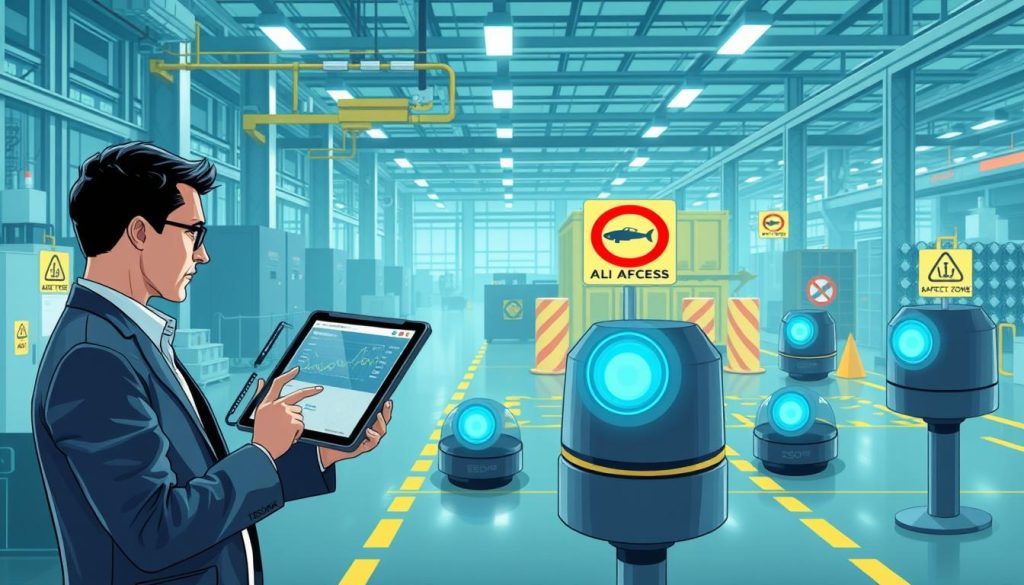
1. Conducting a Comprehensive Site Risk Assessment
First, we find out where dangers are most likely. A detailed check helps us spot busy areas and hidden dangers. This step is key to focusing on the biggest risks first.
2. Selecting Appropriate Camera Hardware and AI Software
The quality of your system starts with good data and strong processing. We suggest using high-quality cameras that can mix visual data with other inputs. The right hardware lets the software understand complex scenes well.
3. Defining Virtual Perimeters and Exclusion Zones
After setting up cameras, we create digital boundaries. These virtual fences alert us if someone crosses them. We make these zones specific to keep the system alert but not too sensitive.
4. Configuring Alert Thresholds and Notification Protocols
Setting up real-time monitoring needs precision. We set alerts that only go off for real dangers. This way, your team gets alerts only when they need to act fast, avoiding too many false alarms.
5. Training Staff on New Safety Protocols
Technology works best when people know how to use it. We make sure your team knows the new safety protocols and sees the AI as a help. This way, your team works better with AI for a safer, more efficient place.
Integrating Computer Vision with Existing Infrastructure
High-level workplace safety compliance starts with how well new AI tools work with old systems. Industrial facilities have complex networks that can’t be changed quickly. We create a bridge between your current hardware and the next intelligent monitoring.
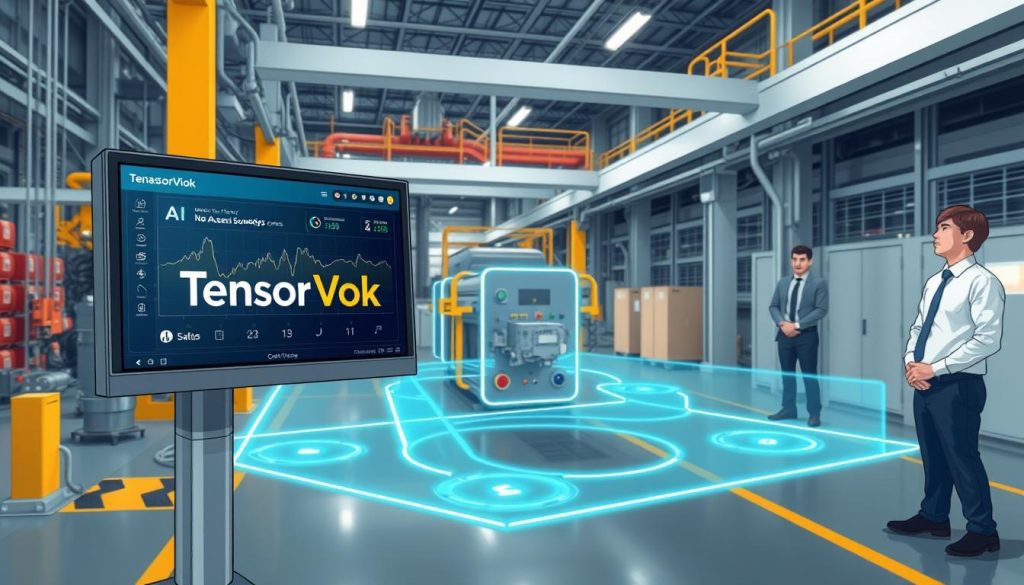
Compatibility with Industrial IoT Ecosystems
Modern AIoT technology must work well with your current setup. We design our computer vision solutions to talk to your safety management infrastructure. This makes sure data moves smoothly without changing your hardware too much.
We use open standards to work with your sensors and PLCs. This gives you a complete view of your facility. Every data point helps make your safety net stronger. We make sure your operations keep running smoothly during the change.
Cloud-Based vs. Edge Computing Deployments
Choosing the right deployment model depends on your needs and bandwidth. Edge AI processes data locally, which is fast and keeps data inside your facility. This is good for real-time, high-stakes situations.
Cloud-based deployments offer more scalability and management for many sites. We have flexible options for balancing local speed with global oversight. Our team helps you pick the best architecture for your operational goals.
Ensuring Data Privacy and Regulatory Compliance
Keeping sensitive information safe is as important as keeping your workers safe. We use strict data privacy measures to keep video processing secure and follow industry standards. This supports your occupational health efforts by building trust with staff and stakeholders.
Our systems follow changing safety protocols and regional rules. We automate compliance reporting to ease your team’s workload. We give you the tools to show your safety commitment in a regulated world.
Overcoming Common Challenges in Zone Monitoring
We know that keeping safety zones safe is hard. No Access Zones detection systems are great, but real-world sites have their own problems. By knowing these challenges, we can make sure your incident prevention plans work well.
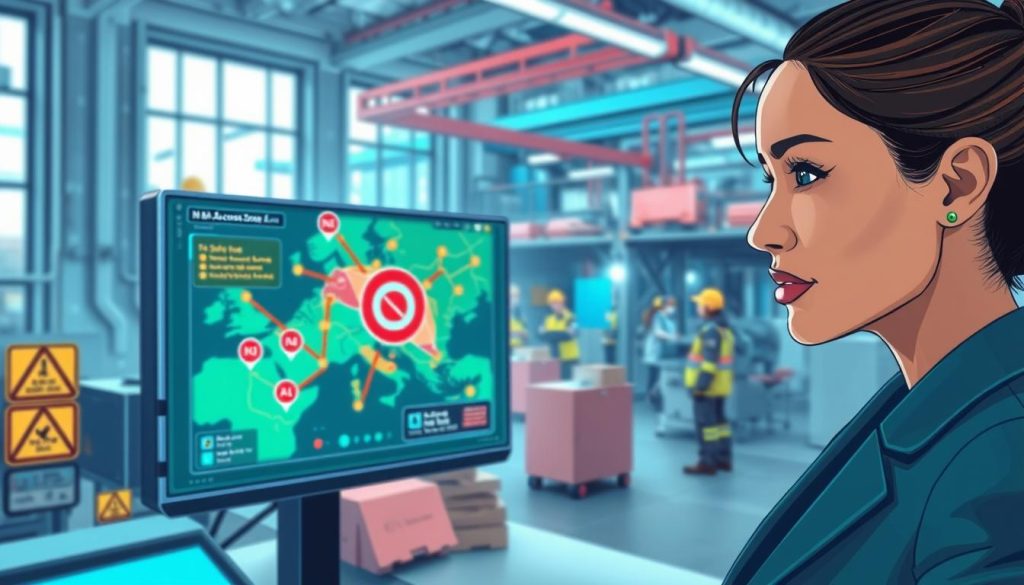
Managing False Positives in High-Traffic Environments
Busy areas can make it hard for computer vision to work right. Too many people near a no-go zone can cause too many alerts. We fix this by adjusting how sensitive the system is and figuring out who’s really a danger.
Adapting to Changing Lighting and Environmental Conditions
Industrial places are always changing, with shadows, glare, and dust affecting what we can see. To keep No Access Zones detection working, we use sensor fusion. This mixes visual data with other sensor info. It keeps your hazard detection sharp, no matter the time or weather.
Maintaining System Accuracy Through Regular Calibration
Technology needs updates to stay good. That’s why regular checks are key. We keep your computer vision gear in top shape. With sensor fusion, we make sure your incident prevention plans are always ready.
| Challenge | Impact | Mitigation Strategy |
|---|---|---|
| High Traffic | False Positives | Threshold Tuning |
| Variable Lighting | Reduced Visibility | Sensor Fusion |
| System Drift | Accuracy Loss | Regular Calibration |
Measuring the Impact on Workplace Safety Metrics
Turning safety data into useful information is key for leaders. We think workplace safety compliance should be checked as carefully as other important areas. With advanced analytics, companies can stop guessing and use solid facts to keep their workers safe.
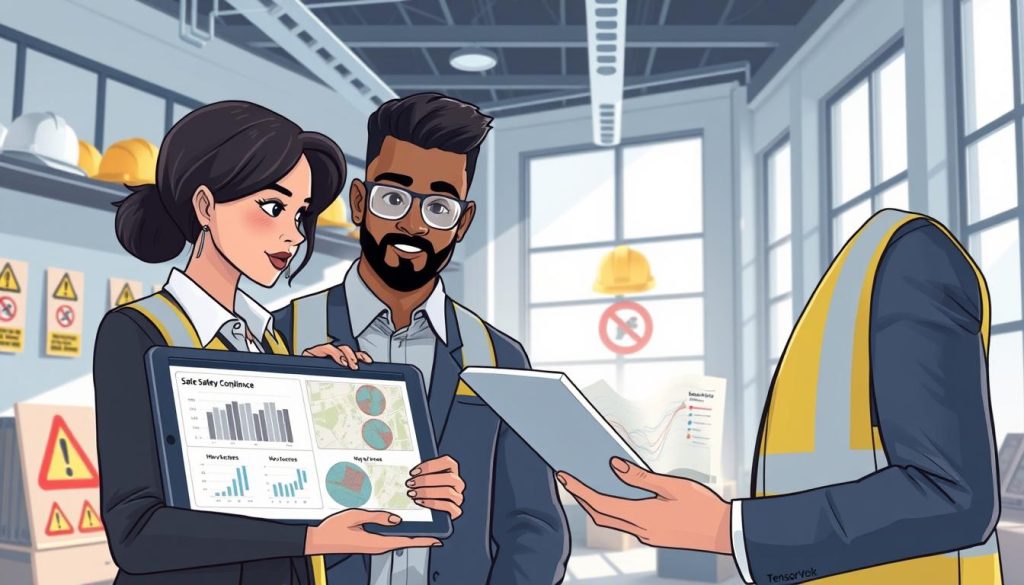
Tracking Near-Miss Incidents and Compliance Rates
Real-time monitoring shows its worth by catching data before accidents happen. Old ways of reporting often have mistakes and delays. Our systems track near-miss events automatically, showing patterns that were hard to see before.
By focusing on proactive safety, we can stop risky behaviors before they cause harm. Keeping track of how well safety rules are followed makes sure they’re part of everyday work. This lets supervisors act fast when safety rules are broken.
Calculating the Return on Investment for Safety Technology
Investing in AI systems is a smart money move that goes beyond saving on insurance. Good incident prevention cuts down on big costs from accidents, like lost time, legal bills, and damaged equipment. Looking at safety metrics shows why updating is worth it financially.
The table below shows how new tech changes the focus from just fixing problems to creating lasting value:
| Metric Category | Traditional Approach | AI-Driven Approach | Financial Impact |
|---|---|---|---|
| Incident Reporting | Manual/Delayed | Automated/Instant | Reduced Administrative Cost |
| Risk Identification | Reactive/Post-Event | Proactive/Real-Time | Lower Insurance Premiums |
| Compliance Audits | Periodic/Sampling | Continuous/Full-Coverage | Minimized Regulatory Fines |
| Operational Uptime | Interrupted by Accidents | Optimized/Stable | Increased Revenue Potential |
By using these systems, companies can show how safety leads to profit. We give you the tools to make safety a key advantage for your business.
Conclusion
Intelligent monitoring is key for a safe industrial world. Edge AI helps protect people and makes work better.
AIoT changes how we see risks. It makes places safer and more active. This keeps your place up to date with new rules.
Good data leads to success. Knowing safety numbers helps fix problems before they start. This makes work safer for everyone.
TensorVok is here to help you use new tech. Visit https://tensorvok.com/ to see how we can help. Let’s make your workplace safer together.