
Did you know over 2.8 million non-fatal workplace injuries happen every year in the United States? This number shows a big problem in how places of work handle risks. We think that proactive protection is the best way to keep your team safe.
Today’s work places need more than just people watching to stay safe. As we get closer to 2026, companies are using new monitoring tools. With AI PPE Detection Software, they can spot dangers before accidents happen.
At TensorVok, we aim to give your operations top-notch tech. We want to help you go from just reacting to safety to a world of consistent, automated safety. This change means every worker can go home safely after their shift.
Key Takeaways of ai ppe detection software
- Over 2.8 million workplace injuries occur annually in the US, necessitating better oversight.
- Manual safety monitoring is no longer sufficient for modern industrial standards.
- Automated systems provide real-time alerts to prevent preventable hazards.
- TensorVok offers high-precision tools to ensure regulatory adherence.
- Adopting smart technology fosters a proactive culture of worker protection.
The Evolution of Workplace Safety and AI PPE Detection Software
We are seeing a big change in how companies keep workers safe. For a long time, they used manual checks and spot audits to follow industrial safety rules. But these methods often missed what was really happening on the job site.
Keeping workers safe is tough, as 75% of companies find it hard to get them to wear PPE all the time. Even with safety plans in place, the gap between what’s supposed to happen and what does happen is big. Continuous, automated watchfulness is now a must for keeping operations safe.
New PPE monitoring systems give managers the real-time data they’ve always needed. With computer vision, we can spot safety issues right away. This change helps teams focus on proactive, data-driven insights to stop accidents before they start.
Building a strong safety culture is more than just signs and training. It means using technology to support workers all day. When we use smart automation for industrial safety, we show that keeping workers safe is a top priority, not just a rule.
The growth of safety culture depends on using new tools. By using AI, we make sure every worker goes home safely. This is the future of safety, and it begins with better PPE monitoring visibility.
Key Regulatory Standards for PPE Compliance in the United States
Federal inspectors are few, making automated compliance key for businesses. With one inspector for every 80,014 workers, manual checks are not enough. Companies must go beyond the basics to meet and beat federal standards.
Dealing with OSHA standards is tough for safety managers. From October 2023 to September 2024, OSHA found 1,814 eye and face protection violations. This shows a big gap between rules and real-world actions.
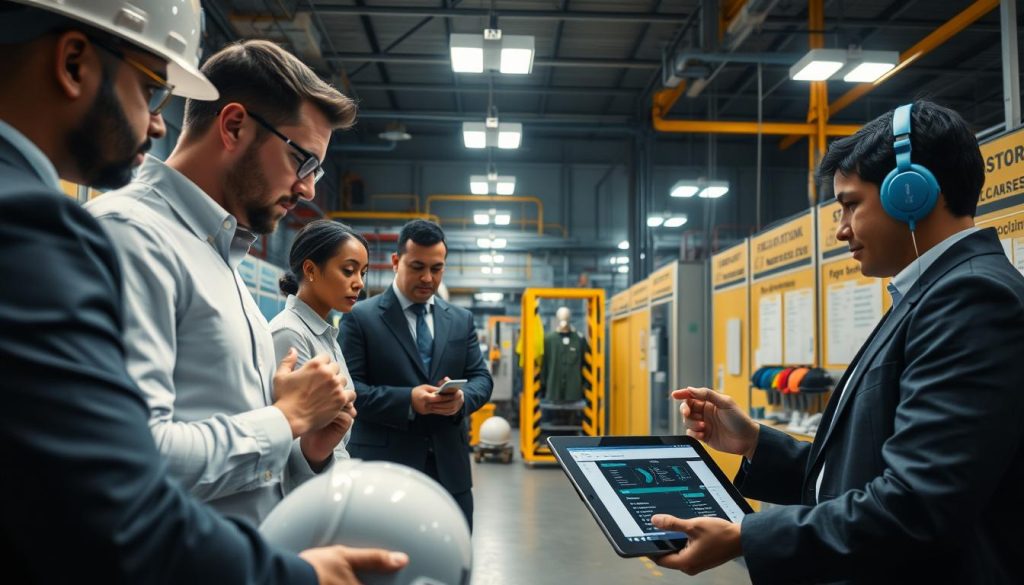
“Safety is not a gadget but a state of mind, yet the right tools provide the foundation upon which that culture is built.”
We see meeting these rules as just the start, not the end, of workplace injury prevention. Using smart systems helps companies stay in line and lower risks. Here’s why automated compliance is key for risky places.
| Feature | Manual Monitoring | Automated AI Systems |
|---|---|---|
| Detection Speed | Reactive/Delayed | Real-time/Instant |
| Coverage | Limited/Spotty | Continuous/Total |
| Data Accuracy | Subjective/Human Error | Objective/Consistent |
| Compliance Reporting | Manual/Time-consuming | Automated/Audit-ready |
To prevent injuries, we need to act before accidents happen. Following OSHA standards with tech lets teams work on big improvements, not just fixing problems. When safety is automated, everyone wins with a safer, more efficient work place.
How Real-Time Computer Vision Enhances Industrial Safety
Computer vision is changing how we keep the factory floor safe. It acts as an automated watchful eye. This technology lets us quickly spot and act on risks.
It’s like having eyes for our safety systems. This means we can catch hazards fast, without relying on people getting tired or making mistakes.
When someone doesn’t wear the right PPE, the system spots it right away. This quick action is key to keeping everyone safe. It makes sure safety rules are followed every day, not just in theory.
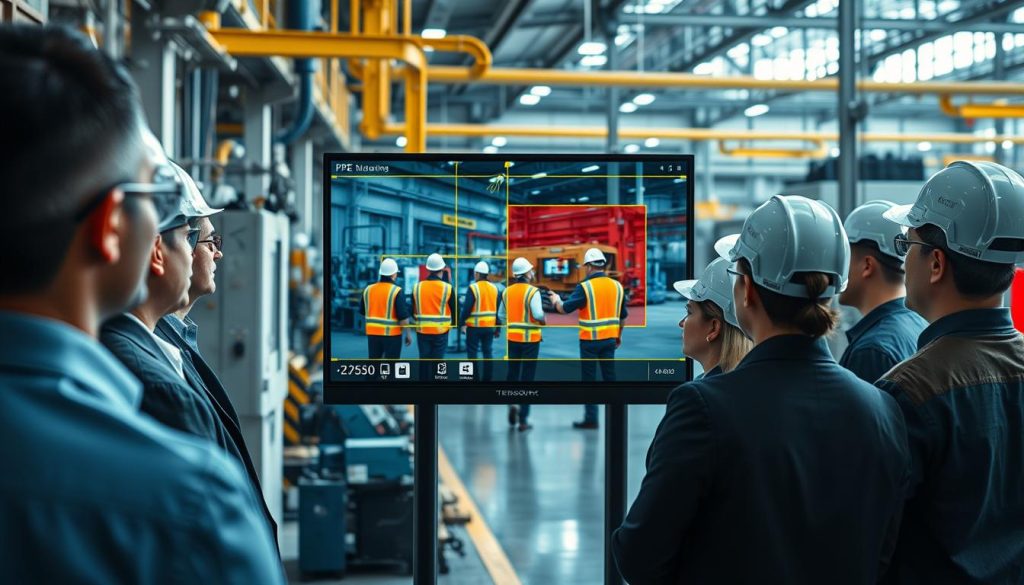
This tech sends out real-time safety alerts as soon as it sees a danger. These alerts help us act fast, stopping small mistakes from becoming big problems. In 2024, U.S. factories saw a 12.4% drop in accidents thanks to this tech.
It’s a big help in cutting down on mistakes that lead to accidents. By catching PPE issues early, teams can focus on preventing problems instead of just reporting them. This makes the workplace safer for everyone.
With computer vision, we have a constant cycle of sensing, thinking, and acting. This ensures real-time safety alerts are given exactly when and where they’re needed. It helps protect the most important thing: our people.
Top AI PPE Detection Software Solutions for 2026
We’ve looked at the top AI PPE detection software solutions changing workplace safety in the U.S. Choosing the right platform is key for your safety and efficiency. These systems use AIoT technology to spot trends and improve compliance without big hardware changes.
These tools have a big impact. For example, the NSG Group cut safety vest incidents by 62% in 30 days with AI monitoring. This shows how smart tech makes workplaces safer and more efficient for everyone.
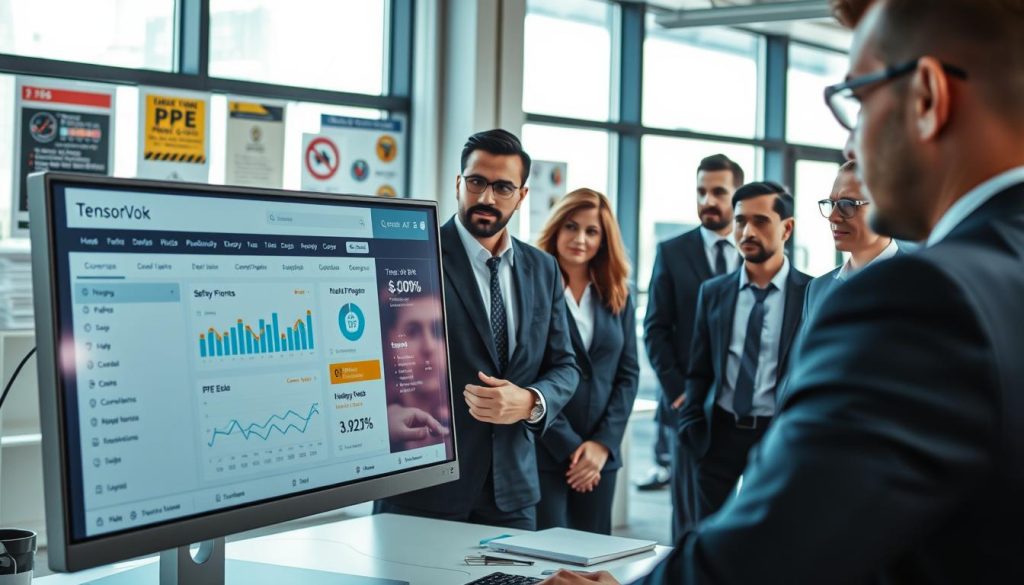
IntelliSite Safety Suite
Overview
IntelliSite is a big system for industrial monitoring. It connects many sensors into one dashboard.
Pros
- It’s great for big operations across many sites.
- It works well with cameras you already have.
Cons
- It needs a lot of setup at first.
- It’s pricey for small places.
Features
It uses computer vision to watch PPE use in real-time. It also has safety analytics reports you can customize.
Voxel AI Safety Platform
Overview
Voxel aims to prevent accidents by checking video feeds for unsafe actions.
Pros
- It’s easy for floor managers to use.
- It can start working fast.
Cons
- It doesn’t work with old cameras well.
- Its subscription model can be expensive.
Features
It checks PPE and ergonomics with special algorithms. It sends alerts to supervisors right away if it finds a problem.
StrongArm Tech PPE Monitoring
Overview
StrongArm focuses on wearable tech for safety. It connects worker movement with safety awareness.
Pros
- It’s good for tracking worker movement and posture.
- It’s all about preventing injuries.
Cons
- Workers have to wear devices.
- There are privacy worries about tracking.
Features
It combines wearable data with computer vision for a full view of safety. It shows detailed maps of risky areas.
Landing AI Visual Inspection Tools
Overview
Landing AI is flexible and focuses on data for custom safety models. It’s tailored for specific industrial needs.
Pros
- It’s very accurate for special PPE items.
- It has a low-code development environment.
Cons
- It needs your team to train models.
- It’s not as ready-to-use as some.
Features
It can learn to recognize your facility’s unique safety gear. It uses safety analytics to get better over time.
Actuate AI Safety Analytics
Overview
Actuate turns security cameras into smart safety tools. It’s a cost-effective choice for many businesses.
Pros
- It works with most IP cameras.
- It has a fast and reliable alert system.
Cons
- It depends on camera placement and lighting.
- It’s not great for complex environments.
Features
It watches PPE and social distancing in real-time. It has strong automated compliance logs for easy reporting.
Integrating Edge Computing for Low-Latency Safety Alerts
Edge computing is changing how we get real-time safety alerts on the factory floor. It lets our systems work right where they are, which is key for industrial safety. This way, important info stays on-site, helping stop accidents before they start.
This method cuts down on bandwidth needs and keeps detection sharp. For example, the Voxel platform can start up in 48 hours with your current cameras. It spots things like hard hats and safety vests fast, without the wait of cloud processing.
Edge computing changes the game for fast places. When it spots missing PPE, it alerts you right away. This quick response is at the heart of keeping workers safe in busy, complex places.
“In the realm of workplace safety, the speed of information is the speed of survival. Localized processing is no longer a luxury; it is a fundamental requirement for any facility that values its workforce.”
With this model, growing your safety checks across many sites is easy. Keeping the system close to the action means real-time safety alerts are always ready and useful. Here’s why this shift is key for your operations:
| Feature | Cloud Processing | Edge Computing |
|---|---|---|
| Latency | High (Variable) | Ultra-Low (Instant) |
| Bandwidth Usage | Heavy | Minimal |
| Data Privacy | External Storage | Local/Private |
| Reliability | Dependent on Internet | Autonomous |
Choosing these advanced systems is more than just updating tech. It’s about building a culture of safety first. We’re committed to giving your team the tools to keep industrial safety high in our automated world.
Overcoming Implementation Challenges in Manufacturing Environments
Improving workplace safety is more than just adding cameras. It’s about changing how teams see protection. When we bring in PPE monitoring, staff might feel their freedom is being taken away. It’s key to tackle these worries early to make sure the tech helps, not watches.
The 2025 PPE Pain Points Study shows 56% of workers skip wearing gear because they don’t want to. This shows a big problem that’s not just about ignoring rules. We need to stop seeing it as a punishment and start building a proactive safety culture.
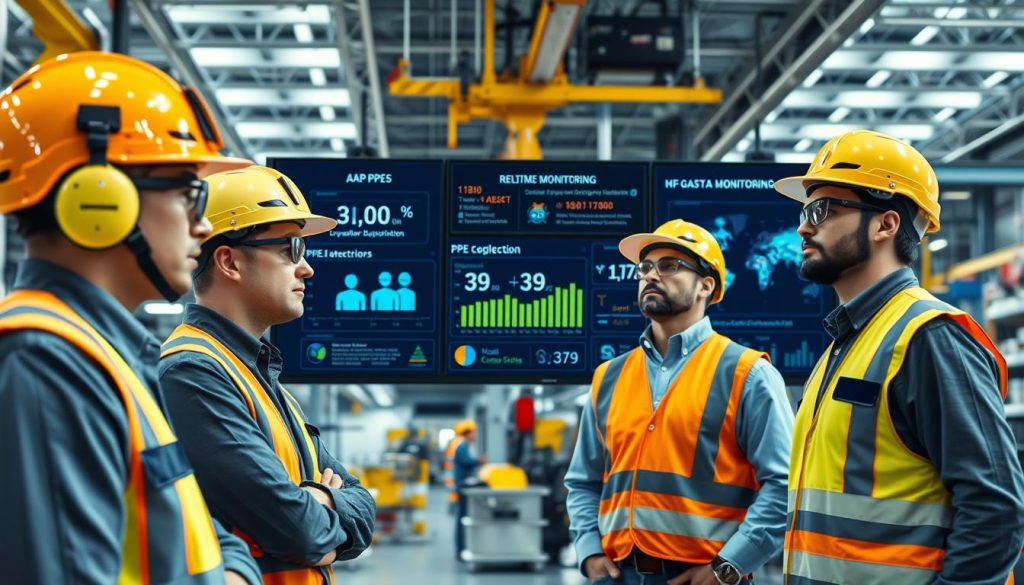
Using data for coaching instead of punishment is a good idea. When there’s a PPE violation, see it as a chance to learn. Showing workers that the system is for their safety helps them see wearing gear as important for their health.
Following OSHA standards helps keep the place safe and builds trust. When staff see management using tech to protect them, they’re more open to change. Our aim is to make a place where everyone feels safe and valued.
Seeing PPE monitoring as a plus can turn a problem into a win. A strong safety culture is based on openness and respect. Treating every PPE violation as a chance to get better leads to a safer workplace that meets all OSHA standards confidently.
Data Privacy and Ethical Considerations in AI Surveillance
In 2022, 5,486 workers lost their lives on the job in the United States. This shows how important workplace injury prevention is. Technology can help, but we must use it ethically. Protecting workers means more than just spotting dangers; it’s about respecting their dignity.
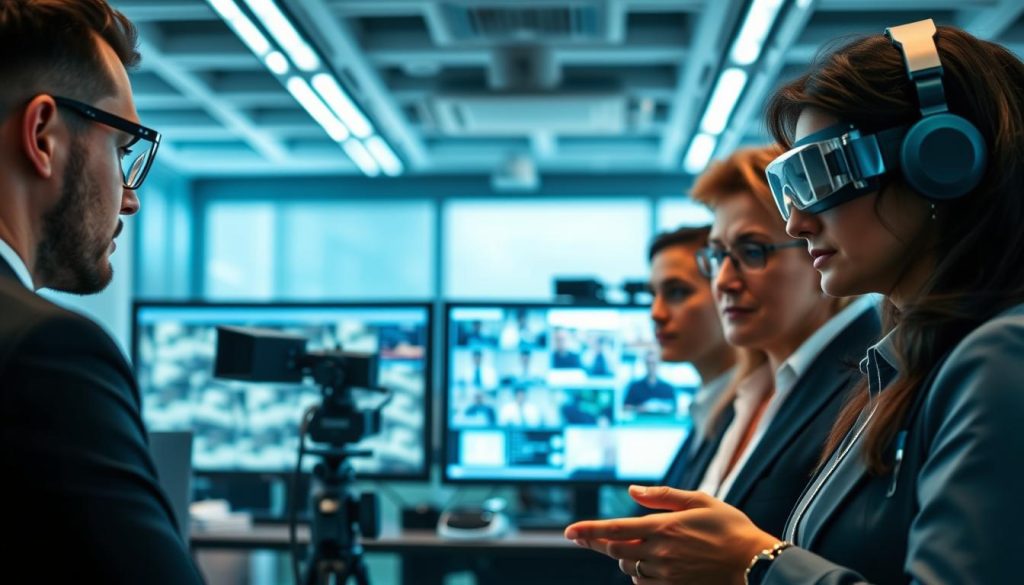
At TensorVok, we believe in privacy first when using computer vision. We blur faces and bodies by default. This way, our safety analytics focus on patterns, not watching individuals. It helps avoid the feeling of being constantly watched, which is key in many workplaces.
“True safety is built on a foundation of mutual trust, where technology serves the worker, not the other way around.”
For workplace injury prevention to work, people need to trust the technology. If they see it as a protector, not a spy, they’ll support it. We make sure our systems are seen as safety helpers, not monitors.
To keep ethics high, follow these steps for AI monitoring:
- Default Anonymization: Always blur faces and features automatically.
- Purpose Limitation: Use safety analytics only for finding hazards and improving.
- Transparent Communication: Tell workers what data is collected and what’s not kept.
Keeping worker privacy is key, not just a law. By using computer vision that respects privacy, we make workplaces safer and more productive. Ethical safety systems are a welcome addition to any industry.
Future Trends in Automated Safety Compliance Technology
The world of industrial safety is changing fast. We’re moving from simple monitoring to advanced predictive hazard detection. This change means systems can spot risks before they cause injuries.
The Worker PPE Compliance AI market is growing fast. It’s expected to grow by 17.2% each year. By 2033, it could be worth $5.72 billion. This growth is thanks to more use of AIoT technology in work.
Edge computing is getting better. We’ll see quicker, more flexible solutions for all businesses. These systems can alert workers fast, which is key in dangerous places. This change makes safety systems more responsive and adaptable.
We’re entering a time where technology is always watching over workers. Safety is not just about following rules; it’s about preventing problems. With edge computing, companies can keep a close eye on things without losing speed or privacy.
Conclusion
Investing in AI PPE Detection Software is a smart move to protect your team and business. It helps avoid costly injuries and builds a culture of safety. This approach saves money and ensures everyone’s safety.
Your safety setup needs an update. Edge-based AI solutions offer top-notch protection for your team. TensorVok is here to guide you through these changes carefully.
Now is the time to change your facility with new tech. Look at your safety plans and see how AI can improve them. By acting now, you’ll keep your workplace safe and efficient for the future.