
Have you ever thought about if your current surveillance system really stops accidents, or just records them after they happen? In today’s fast world, just watching isn’t enough to keep your team and stuff safe.
We’re moving towards proactive risk management. With ai video analytics, businesses can spot dangers early, before they turn into big problems.
For integrators, this is a big chance to offer valuable solutions. By using a white label warehouse ai safety platform, you can give top tech under your brand. This makes your services better and keeps warehouse safety a key focus for your clients in big places.
Check more information from the government for warehouse safety requirements
Key Takeaways of White label warehouse ai safty
- Move from just watching to actively spotting dangers in real time.
- Use new tech to protect people and important things.
- Give top-notch monitoring services with your own brand.
- Make work better by finding dangers before they cause trouble.
- Make your clients happy by giving them reliable and growing security.
Understanding the Market for White Label Warehouse AI Safety
Artificial intelligence is changing how logistics facilities handle risks. As supply chains grow more complex, the need for proactive risk management is higher than ever. Companies are moving from reactive measures to systems that send real-time alerts to stop accidents before they happen.
The Growing Demand for Automated Safety Monitoring
The demand for automated safety monitoring is rising fast. Warehouse managers want to cut down on manual checks, which can be error-prone and tiring. Intelligent video analytics help keep an eye on busy areas all the time.
“The future of industrial safety lies in the ability of machines to perceive hazards faster than the human eye, turning raw data into actionable life-saving insights.”
This change lets managers focus on strategy instead of watching everything all the time. Below is a table showing the main differences between old manual checks and new AI systems.
| Feature | Manual Oversight | AI-Driven Safety |
|---|---|---|
| Response Time | Delayed/Reactive | Instant/Proactive |
| Accuracy | Variable/Human Error | Consistent/High Precision |
| Coverage | Limited/Spot Checks | 24/7 Continuous |
Why Integrators are Shifting Toward White-Label Solutions
Integrators are key in this shift, connecting complex tech with user needs. Many are picking white label warehouse ai safety platforms. This lets them offer top-notch solutions without the cost of making their own software. It keeps their brand consistency while adding new features for clients.
Using a ready-made platform, integrators can focus on what they’re good at: setting up, configuring, and supporting clients over time. This move cuts costs and speeds up the rollout of real-time alerts across many sites. White-label partnerships help integrators grow their businesses and give better safety results for their clients.
Evaluating the Benefits of White-Label & OEM Partnerships
Working together on technology brings big wins for warehouse safety. By picking the right white-label & oem partners, we can focus on what we do best. This way, we can keep up with the fast-changing market.
Accelerating Time-to-Market for Safety Solutions
Building AI software from scratch takes a lot of time. Using ready-made AI frameworks cuts down this time a lot. This means we can quickly give integrator solutions to our clients, meeting their urgent needs fast.
Maintaining Brand Consistency and Client Loyalty
Offering a seamless, branded experience helps us build trust with clients. Using white label warehouse ai safety platforms lets us put our own branding on the tools. This keeps warehouse managers happy with a unified look.
- Enhanced professional appearance with custom branding.
- Increased client retention through personalized service delivery.
- Simplified user training with familiar interface designs.
Cost-Efficiency Through Shared Development Resources
Sharing resources is a big win for growing firms. It helps avoid the high costs of a big software team. This way, smaller firms can compete with the big guys.
| Feature | In-House Development | White-Label Partnership |
|---|---|---|
| Initial Investment | Very High | Low to Moderate |
| Time to Launch | 12-24 Months | 1-3 Months |
| Maintenance | Internal Responsibility | Shared/Vendor Managed |
Using white-label & oem models helps us offer top-notch integrator solutions while keeping costs down. This is the best way to grow in the industrial sector for the long haul.
Identifying Critical Warehouse Safety Hazards for AI Detection
Keeping your team safe starts with knowing the dangers they face every day. By spotting these risks, we can set up warehouse safety plans that really work. These plans help lower risks and protect our clients from big problems.
With computer vision, we can watch over risky spots in real-time. This early warning system lets managers tackle warehouse hazards before they cause big accidents or fines.
Pedestrian and Forklift Proximity Detection
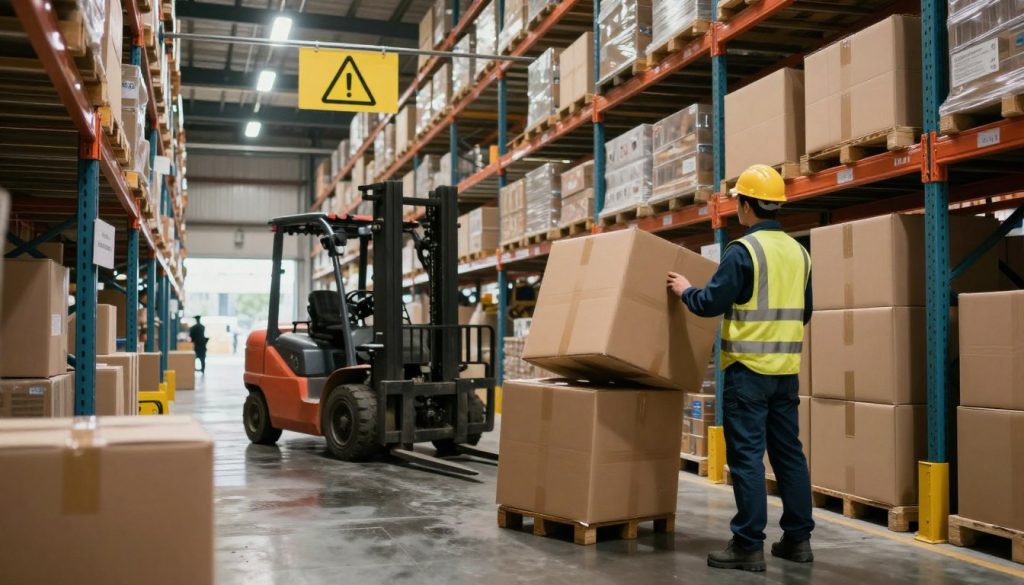
Crashes between big machines and people are a big problem. Our AI spots when someone is in a forklift’s way. It sends alerts to the driver and the person right away.
Monitoring Personal Protective Equipment (PPE) Compliance
It’s key that everyone wears the right gear like vests and hard hats. Our tech checks for missing PPE and tells supervisors right away. This keeps everyone safe and follows the rules.
Know more about TensorVok PPE Detection solution
Detecting Unauthorized Access in Restricted Zones
Some places, like where batteries are charged or near high voltage, are off-limits. Our AI creates a digital fence that warns security if someone tries to get in where they shouldn’t.
Know more about TensorVok Restricted Area Monitoring & Industrial Geofencing
Identifying Spills and Obstructions in Aisles
Stuff like spills and messes can be a big trip hazard. Our system finds these problems fast. This lets us clean up quick, keeping paths clear and making things run smoother.
Selecting the Right AI Video Analytics Software Provider
Choosing the right ai video analytics provider is key. It’s about meeting both technical and operational needs. Your reputation as an integrator depends on the solutions you offer. Working with the right vendor keeps your projects profitable and effective.
Assessing Technical Scalability and Edge Computing Capabilities
Warehouses need fast processing to avoid accidents. Look for providers with strong edge computing abilities. This means data analysis happens right on the camera or server, reducing delays and network strain.
Scalability is also important, whether you manage many sites or large facilities. Choose white-label & oem partners that let you grow without major system changes. A flexible platform ensures your safety solution keeps up with warehouse growth.
Reviewing Data Privacy and Security Standards
Video surveillance faces strict rules in the U.S. today. Make sure your software partner follows strict data protection rules. Encryption, secure authentication, and data minimization are essential.
Check if providers are transparent and follow the rules. A good partner will show how they handle sensitive data. This protects your business and builds trust with users.
Evaluating Support and Documentation for Integrators
Complex systems need expert help during setup and maintenance. Good documentation is key for a successful ai video analytics system. Look for vendors with detailed guides, troubleshooting manuals, and dedicated support teams.
Good white-label & oem partnerships need clear communication and shared goals. Responsive support from a provider helps you solve issues quickly and keeps clients happy. Here’s what we look for in a software partner.
| Evaluation Criteria | High Priority | Standard Requirement |
|---|---|---|
| Edge computing support | Real-time processing | Basic local storage |
| Data security | End-to-end encryption | Standard password protection |
| Technical documentation | Comprehensive API library | Basic user manuals |
| Support availability | 24/7 dedicated help desk | Email-based ticketing |
Step One: Assessing Existing Infrastructure and Camera Compatibility
Starting with a thorough check of your current setup is key for AI video analytics. We need to make sure your physical and digital systems can handle the new tech. This step helps avoid problems and makes sure your system works well.
Conducting a Site Survey for Optimal Camera Placement
Good video quality is critical for AI to work well. We suggest a detailed survey to spot blind spots and check camera angles. Proper camera angles are key for spotting people and forklifts accurately.
“The most sophisticated AI algorithm cannot compensate for a poorly positioned camera. Success starts with a clear view of the operational floor.”
Determining Bandwidth Requirements for AI Processing
Handling network traffic is important for our setup. Using edge computing helps by processing data on the camera or a local gateway. This reduces the load on your main network, saving on bandwidth upgrades.
Upgrading Legacy Hardware for AI Readiness
Many places use old systems that can’t handle today’s high-resolution video. We often need to upgrade to IP cameras or add smart encoders. Adding edge computing to your old setup helps modernize your safety while saving money.
| Feature | Legacy Hardware | AI-Ready Infrastructure |
|---|---|---|
| Processing Location | Centralized Server | Edge Computing |
| Data Latency | High | Near-Zero |
| Scalability | Limited | Highly Flexible |
| Maintenance | Manual/Reactive | Automated/Proactive |
Step Two: Configuring AI Models for Specific Warehouse Environments
Configuring AI models is key to turning video data into safety insights. Every warehouse faces unique challenges, like different lighting and complex layouts. Our software is tailored to these conditions, spotting warehouse hazards accurately and reliably.
Training Models for Unique Warehouse Layouts
AI models struggle with the varied layouts of modern warehouses. We train our algorithms to understand your warehouse’s specific design. This includes feeding it data that matches your environment, helping it spot real safety risks.
Consistency is key in mapping these complex spaces. We account for shadows, reflective surfaces, and narrow paths. This ensures the AI works well, no matter the warehouse’s layout.
Adjusting Sensitivity Thresholds to Reduce False Positives
False alerts can be a big problem for safety managers. If the system is too sensitive, it might alert for nothing. We adjust the sensitivity to only alert for real warehouse hazards.
This fine-tuning balances security with the reality of a busy warehouse. By setting the right limits, your team can focus on real incidents. Reliable data is our goal.
Defining Zones of Interest for Targeted Monitoring
Not every part of a warehouse needs the same level of watch. We focus on high-risk areas like loading docks and pedestrian crossings. This targeted approach lets the AI use different rules for different areas.
By focusing on these zones, we can monitor more effectively. This makes your safety program more efficient. Here’s a table of key configuration parameters we use:
| Parameter | Primary Function | Impact on Safety |
|---|---|---|
| Sensitivity Level | Reduces false positives | High |
| Zone Mapping | Targets specific hazards | Critical |
| Object Classification | Identifies specific risks | High |
| Alert Thresholds | Manages notification frequency | Medium |
Step Three: Integrating Analytics with Existing Warehouse Management Systems
Adding ai video analytics to your warehouse management systems turns watching into preventing incidents. It makes sure visual data helps with daily operations. This is key for a safer work environment.
Utilizing APIs for Seamless Data Exchange
APIs are the core for linking systems today. They let your video analytics talk to your business software easily. Seamless data exchange means every event is logged and analyzed without manual work.
- Standardized JSON or RESTful API endpoints for rapid deployment.
- Automated synchronization of event logs with inventory databases.
- Customizable data fields to match your specific operational metrics.
Triggering Automated Alerts via WMS or Mobile Devices
The main goal is to send real-time alerts to the right people. When a safety issue is spotted, alerts go to mobiles or dashboards. This quick feedback helps managers tackle problems fast.
Using current communication channels cuts down response time. Speed is critical in preventing accidents. Managers get images or short videos to make quick decisions.
Ensuring Compatibility with Existing Video Management Software (VMS)
Your new AI must work well with your VMS. This ensures your security team can handle incidents without switching systems. Make sure your chosen solution supports standards like ONVIF or RTSP for easy integration.
Having one system for all security and safety makes training easier and saves time. Efficiency increases when staff can manage everything in one place. This approach keeps your old hardware useful while adding smart features.
Step Four: Branding and Customizing the User Interface
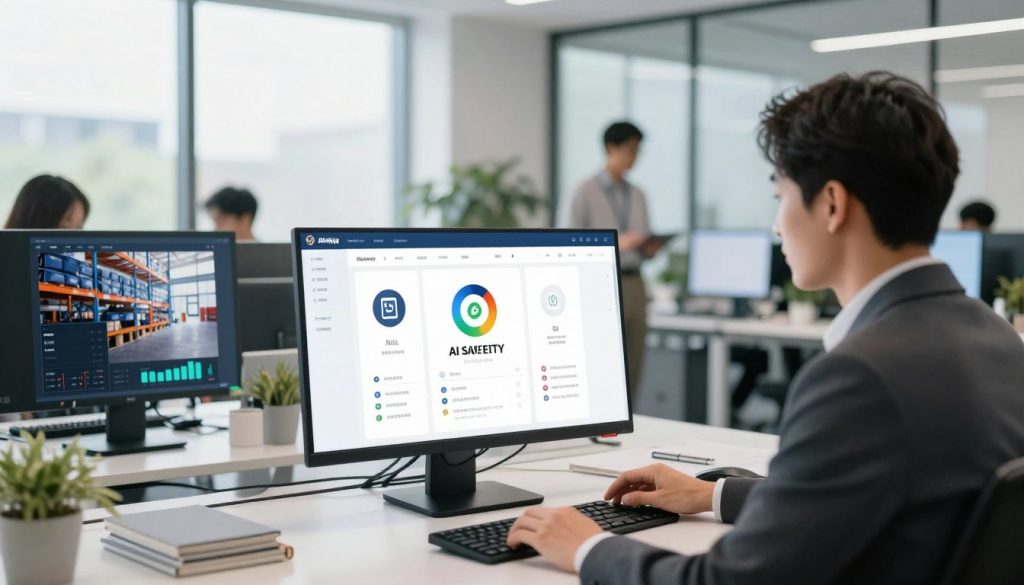
After setting up the technical base, we focus on the look of your safety platform. Making the user interface your own is key to a professional, branded solution. We use white-label & oem to make sure the software looks like yours, not the vendor’s.
Applying White-Label Branding to Dashboards
A unified brand experience builds trust with your clients. We suggest swapping out default logos, colors, and login pages with your own. This white-label & oem method lets you show off a polished, unique tool that boosts your market standing.
- Replace vendor logos with your company branding.
- Adjust color palettes to match your corporate style guide.
- Configure custom domains for client login portals.
Customizing Reporting Modules for End-User Needs
Every warehouse manager has different needs. We tailor reporting modules to show the metrics that matter most to your clients. This way, users can make quicker, data-driven decisions about site safety.
Good reporting should be easy to use and free of clutter. We find that customizable widgets help users focus on key safety alerts, like forklift proximity or PPE issues, right on their dashboard.
Creating Role-Based Access Controls for Warehouse Staff
Security and clarity are essential for managing large teams. We set up role-based access controls so staff only see data and alerts that matter to their job. This stops information overload and keeps sensitive data safe.
By setting clear permissions, you help your clients manage their teams well. Role-based access means floor supervisors get safety alerts in real-time, while executives get performance summaries. This approach keeps everyone focused on safety goals.
Step Five: Testing and Validating Safety Alerts in Real-Time
We think the best way to ensure reliability is through pilot testing in real settings. Before we fully deploy, we must check if our warehouse safety works as expected. This step is key to moving from initial setup to full operation.
Conducting Controlled Pilot Tests in Active Aisles
We start by picking busy aisles for a test. We watch how the automated safety monitoring system works with forklifts and people. This setup helps us see if real-time alerts work right, without slowing down work.
“Quality is never an accident; it is always the result of high intention, sincere effort, intelligent direction and skillful execution.”
Refining Alert Logic Based on Operational Feedback
During the pilot, we listen to what warehouse staff and managers say. We adjust the system to better spot real dangers and ignore normal movements. This back-and-forth is key to keeping everyone safe without too many false alarms.
The table below shows how we handle common feedback to improve safety:
| Feedback Type | System Adjustment | Expected Outcome |
|---|---|---|
| False Positives | Lower sensitivity zones | Increased staff trust |
| Missed Detections | Increase camera frame rate | Higher hazard capture |
| Alert Latency | Optimize edge processing | Faster real-time alerts |
Establishing Maintenance Protocols for AI Accuracy
Keeping the system top-notch is key to long-term success. We do regular checks to keep automated safety monitoring sharp as the warehouse changes. With set maintenance times, we ensure our warehouse safety tools stay reliable for years.
Our team keeps the system updated and checks hardware often. We also do audits to make sure real-time alerts stay accurate with new stuff or people. Reliable automated safety monitoring is vital for a safe and efficient work area.
Scaling Deployment Across Multiple Warehouse Facilities
Expanding safety tech to many sites means standardization is key. You need a framework that keeps safety standards high everywhere. Integrator solutions help keep your tech consistent, no matter where your warehouses are.
Standardizing Configurations for Multi-Site Rollouts
Start with the same hardware and software for all sites. Create a “golden image” to set up new sites quickly. This stops the setup issues that come with big operations.
Having the same setup makes fixing problems easier. It helps your tech team work faster. This uniformity keeps your data reliable across all sites.
Managing Centralized Monitoring and Analytics
Watching everything from one place gives a big picture of safety. It shows trends that might not be seen at one site. This often means linking AI with warehouse management systems to get data right.
This way, leaders can see how different sites are doing. They can find out which sites are doing well and which need help. This is a powerful tool for making things better everywhere.
Training Warehouse Managers on AI-Driven Safety Insights
Good tech needs smart users. We stress the need to train managers to understand AI data. When they know how to use this info, they can stop accidents before they start.
Training should teach managers to use data to improve operations. They should learn to use warehouse management systems to make things safer. This builds a safety culture in your warehouses.
Conclusion
Using white label warehouse AI safety solutions is a big step for integrators. It helps them offer top-notch protection. These tools are key for modern warehouses that care about worker safety and efficiency.
We focus on catching problems early to prevent accidents. By adding these systems to current workflows, we create a strong security layer. This layer keeps up with the changing needs of warehouses.
The world of industrial tech is always changing. Keeping up with edge computing and AI is vital for our success. We suggest looking into how these technologies can improve your services now.
Talk to your hardware partners about starting pilot programs for your next project. The right tech and a dedication to getting better are the first steps to a safer place. We’re excited to see how you’ll use these strategies to make your clients safer.