
Did you know that industrial accidents cost American companies over $15 billion every year? This huge cost shows how important it is to have better safety in warehouses. As we get closer to 2026, warehouse managers are looking for ways to protect their places better.
Using AI-based fire and smoke detection is a big step up for keeping places safe. It helps find dangers before they become big problems. This change is key to keeping businesses running smoothly in a tough market.
Updating your setup means you can spot fires early, which cuts down on lost time. This guide will show you how to add these smart systems to your place. By doing this, you make your workplace safer for your team and keep your business strong.
Key Takeaways of AI-based fire and smoke detection
- Industrial fires cause billions in annual losses for United States businesses.
- Proactive safety measures are becoming the industry standard by 2026.
- Advanced technology allows for rapid identification of possible dangers.
- Early warning systems help cut down on lost time and money risks.
- Modernizing warehouse infrastructure is a smart move for lasting success.
Assessing Warehouse Fire Risks and Infrastructure Readiness
Starting with AI monitoring needs a thorough fire risk assessment of your warehouse. Before adding new tech, check your safety setup. This ensures a smooth transition.
This step helps spot issues that old systems might miss. Knowing your warehouse’s layout and risks helps prepare for smart detection tools.
Evaluating Current Fire Suppression Systems
Most places use sprinklers or manual extinguishers for industrial safety. But these systems act late. It’s key to see how they’ll work with new AI tools.
Check if your suppression gear meets local codes and works well. Integrating AI means catching fires early. This can lessen damage to goods.
Identifying High-Risk Zones for AI Camera Placement
Not every part of a warehouse is equally risky. A detailed fire risk assessment finds danger spots like electrical panels or flammable materials.
Place AI cameras in these risky areas. They can spot small signs of trouble early. This is key for warehouse fire safety.
Checking Network Bandwidth and Power Requirements
Being tech-ready is as important as safety. AI systems need steady network speed for video and alerts.
Make sure your IT can handle the data without slowing down other tasks. Also, reliable power is vital for industrial safety. Plan for extra power and network lines for 24/7 warehouse fire safety.
Selecting the Right AI-based fire and smoke detection Technology
Choosing the right AI-based fire and smoke detection system is key. Warehouse managers need tools that are accurate and don’t trigger false alarms. This fire prevention technology is the first defense for valuable goods and people.
Comparing Thermal Imaging versus Optical Sensors
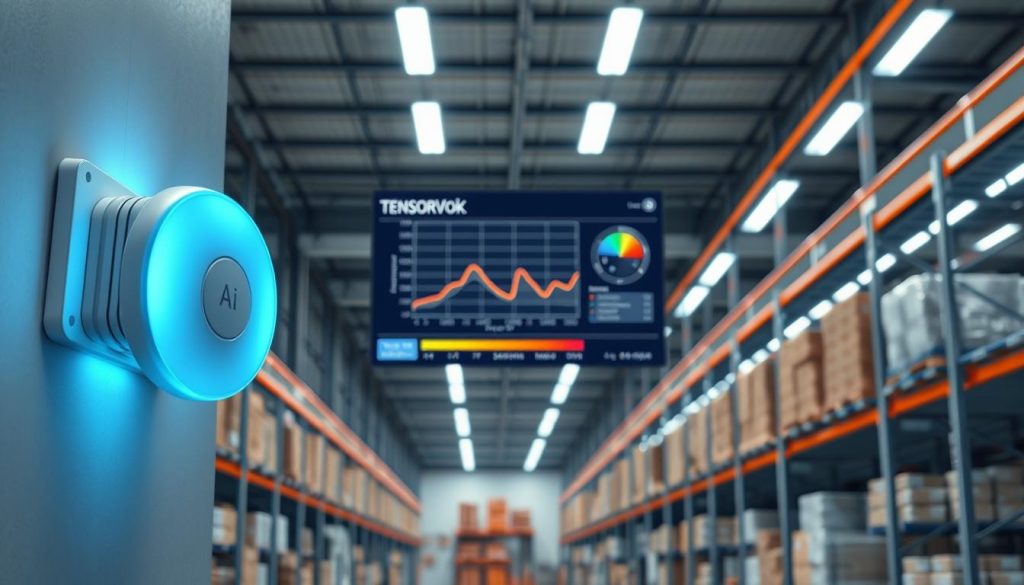
Today’s computer vision systems use different sensors for better results. Optical sensors spot smoke and flames, while thermal imaging finds heat that’s not seen. Using both gives a clearer view of the warehouse.
“The integration of multi-modal sensing is the future of industrial safety, allowing systems to distinguish between harmless steam and dangerous combustion with unprecedented speed.”
| Feature | Thermal Imaging | Optical Sensors |
|---|---|---|
| Primary Detection | Heat Signatures | Visual Patterns |
| Lighting Needs | Works in Total Darkness | Requires Ambient Light |
| Best Use Case | Hidden Electrical Fires | Visible Flame/Smoke |
Analyzing Edge Computing Capabilities for Real-Time Alerts
The speed of early fire detection depends on data processing. Edge computing analyzes video on the camera or local gateway. This cuts down on delay, sending alerts quickly.
Edge computing also boosts resilience against network failures. Even without internet, the local AI keeps watching for threats. This is critical for keeping large logistics centers safe.
Ensuring Compliance with NFPA 72 Standards
Following NFPA 72 compliance is a must for most U.S. commercial properties. These rules cover fire alarm system placement, testing, and upkeep. Any AI system must follow these safety guidelines.
Designers should pick hardware that’s certified for fire-rated areas. Working with certified installers ensures the system meets fire marshal standards. This also makes insurance checks easier.
Planning the Strategic Deployment of AI Sensors
Technology changes how warehouses handle fire risks. By doing a detailed fire risk assessment, managers find key spots to watch closely. This way, safety is part of everyday work, not just a quick fix.
Mapping Camera Angles for Maximum Coverage
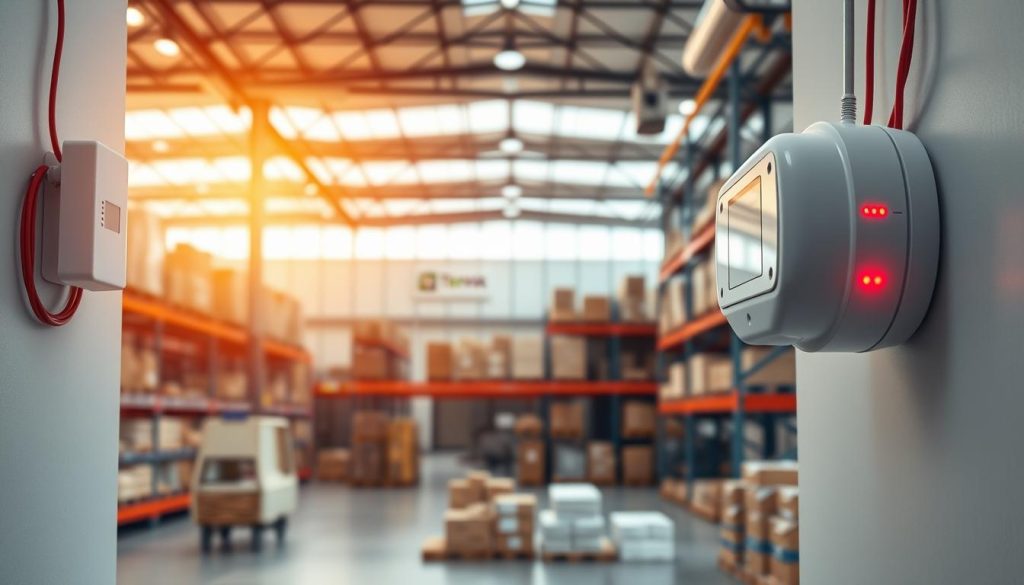
Getting the right view is key, not just placing cameras anywhere. Engineers plan camera angles to cover all areas, even where flammable stuff is stored. AI fire detection sensors spot smoke or flames early, giving a big advantage before the fire spreads.
“The true power of modern detection lies in the ability to see the threat before it becomes a disaster, turning minutes of reaction time into seconds of prevention.”
Integrating AI Systems with Existing Building Management Software
Good warehouse automation needs smooth connections. Linking AI systems with Building Management Systems (BMS) lets operators act fast. This link enables:
- Turning off HVAC to stop smoke from spreading.
- Stopping conveyor belts to keep fires away.
- Alerts sent right to management dashboards.
Establishing Redundant Communication Channels
When it comes to emergencies, being reliable is everything. A solid fire risk assessment must plan for network or power losses. Having backup communication channels makes sure alerts get through, even if the main internet goes down.
Using cell backups and local networks is a smart move. This layered approach keeps the warehouse safe, no matter what technical issues come up. By focusing on these fire detection sensors and their connections, warehouses can reach a new level of safety.
Installing and Configuring AI Detection Hardware
To get the best from your security, you need to place and set up your hardware right. AI-based fire and smoke detection systems can spot dangers in just 2–5 seconds. This is way faster than old systems that wait for smoke to reach a detector.
Mounting Sensors in High-Ceiling Warehouse Environments
Warehouses have big vertical spaces that make it hard for standard gear. You have to put fire detection sensors at the right heights for a clear view. This stops blind spots behind big racks or heavy machines.
Special brackets are used to point the sensors down. This lets the computer vision watch the floor well. It can spot small fires early, stopping big problems.
Calibrating AI Algorithms for Specific Warehouse Environments
Every place has its own special conditions that affect sensors. Calibrating means teaching the software to tell real fires from normal stuff. It learns to ignore things like forklifts or charging stations.
- Adjusting sensitivity based on light levels.
- Setting up specific areas for the camera to watch.
- Using computer vision to tell smoke from steam.
Testing Detection Sensitivity to Minimize False Alarms
Testing is key to make sure your AI-based fire and smoke detection works right. You need to test it under different conditions to make sure it only alerts for real dangers. This keeps things running smoothly and avoids false alarms.
Teams use smoke generators to test the fire detection sensors during testing. They adjust the system to ignore things like dust or steam. A well-set system with thermal imaging is a strong defense, giving safety teams the right info when they need it.
Integrating AI Detection with Emergency Response Protocols
When early fire detection and automated emergency response come together, safety gets a big boost. A quick five minutes can make a huge difference between a small issue and a big disaster. By connecting smart sensors to building controls, managers can act fast to save lives.
Automating Notifications to Local Fire Departments
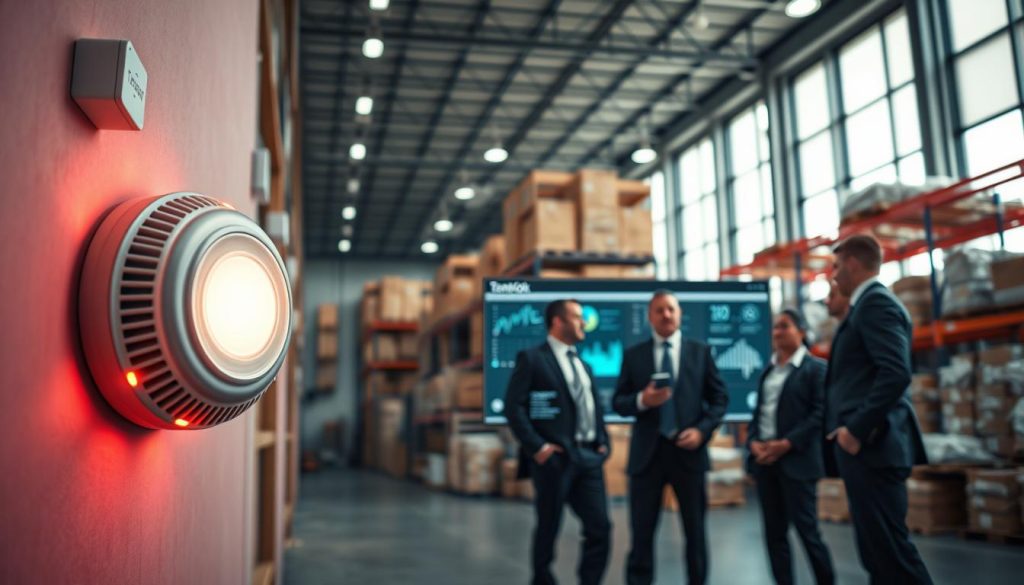
Today’s fire alarm systems can send alerts straight to local fire departments. No need for manual calls anymore. The AI system sends detailed info to the fire department right away.
This instant communication gives firefighters the exact location and how big the fire is before they get there.
Triggering Automated Shutdowns for HVAC and Conveyor Systems
Good warehouse automation means stopping hazards fast. If smoke or heat is detected, the system shuts down HVAC units to keep bad air out. It also stops conveyor belts to keep goods from moving and spreading the fire.
These steps are key to keeping things under control. They cut off power and stop air flow, making it safer for everyone. This way, fires are less likely to spread across the warehouse.
Coordinating with On-Site Security and Safety Teams
Technology is just part of a strong safety plan. The AI system must work with on-site teams for a complete response. When an alert goes off, it sends updates to mobiles of floor managers and security.
This smooth coordination lets teams check the situation and guide people to exits. By mixing tech with human insight, places can keep everyone safe during emergencies.
Training Staff on AI-Enhanced Safety Procedures
Staff training is key to linking automated detection with effective emergency response. Modern tech offers quick insights, but human skills are vital for top industrial safety. Employees need to know how to act on digital alerts during emergencies.
Conducting Drills Based on AI-Generated Alerts
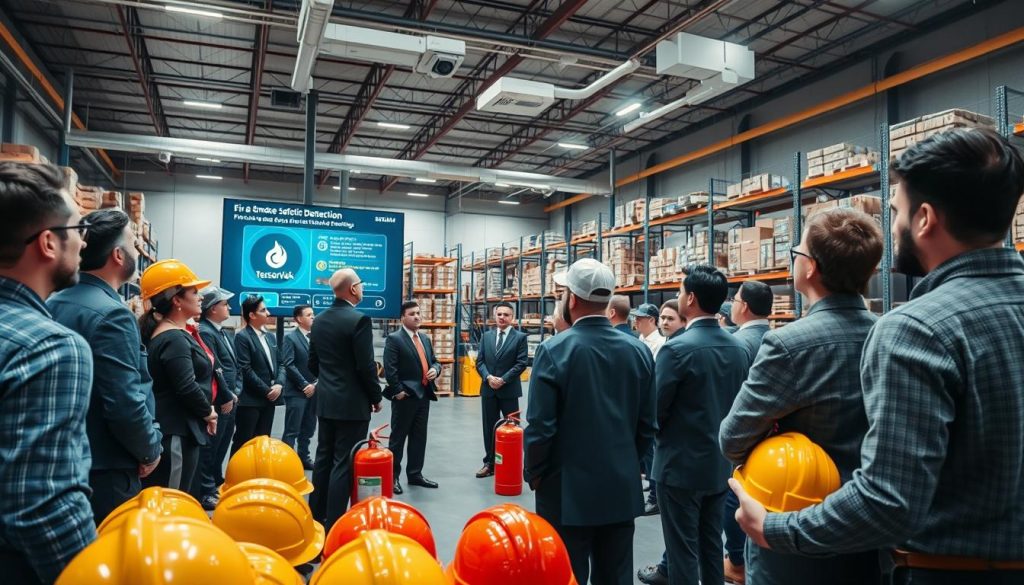
Regular drills help teams react fast when alarms sound. Managers should plan drills for different fire scenarios. This lets staff practice navigating the facility with data from fire alarm systems.
- Identify primary and secondary evacuation routes based on sensor zones.
- Practice manual overrides for automated systems when necessary.
- Review team communication protocols to ensure clear information flow.
“Every minute a fire burns undetected, the cost of damage increases by an estimated 7-10%.”
Interpreting Dashboard Data for Proactive Maintenance
Modern dashboards show more than just alerts; they reveal your facility’s health. By watching trends, teams can take proactive safety steps before small problems grow. Staff should learn to spot recurring issues like sensor sensitivity or connectivity problems.
Consistency is key in reviewing these metrics. When staff can read system logs, they can catch hardware failures early. This reduces downtime and keeps the system reliable.
Reporting System Anomalies to Technical Support
Even the best fire alarm systems need expert care to work well. If a sensor acts strangely or won’t calibrate, staff must report it right away. Quick action with technical support teams stops small problems from becoming big industrial safety risks.
Having a clear way to report issues ensures nothing is missed. By focusing on proactive safety, warehouse operators protect their assets and people. Keeping these reports helps with system audits and insurance needs.
Maintaining and Updating AI Detection Systems
Keeping your fire safety system up to date is key to safety. Consistent performance comes from regular care and updates. This ensures your system protects against dangers effectively.
Scheduling Regular Firmware Updates for AI Models
Today’s AI-based fire and smoke detection systems get better with time. New firmware updates improve how they read images. Keeping your system updated means it can spot threats faster and more accurately.
Staying on top of software versions helps your system keep up with changing environments. This keeps your security network running smoothly. Regular updates are a must for modern fire prevention technology.
Cleaning Optical Lenses in Dusty Warehouse Conditions
Dust and dirt can quickly block the view of sensors in warehouses. Even the best AI-based fire and smoke detection systems can’t work if their lenses are dirty. Cleaning the lenses regularly is vital.
Use soft materials to clean the lenses without damaging them. This ensures the system can see clearly and protect your space. This simple step greatly improves your safety system’s reliability.
Auditing System Performance Logs Quarterly
Checking system logs every three months gives you insights into how well your fire prevention technology works. These audits help spot any issues that need fixing. They also check if edge computing is working right.
For places with tough conditions like fog or bad lighting, using data from several sensors is best. This makes your safety system stronger. Here’s a suggested maintenance schedule for your facility.
| Task | Frequency | Primary Benefit |
|---|---|---|
| Firmware Updates | Monthly | Improved AI Accuracy |
| Lens Cleaning | Bi-Weekly | Clear Visual Data |
| Performance Audit | Quarterly | System Optimization |
| Sensor Calibration | Bi-Annually | Reduced False Alarms |
Navigating Legal and Insurance Requirements in the USA
Using advanced safety tech needs a good grasp of US laws and insurance. Warehouse owners must mix new tech with strict rules to stay safe. This way, they protect their stuff and cut costs.
Leveraging AI Data for Lower Insurance Premiums
Insurance companies value proactive safety steps. AI systems help show how safe a warehouse is. This can lead to big savings for the business.
- Annual insurance costs can drop by 5% to 15%.
- Underwriters get solid proof of lower risks from detailed logs.
- Keeping an eye on things shows a long-term commitment to safety.
Meeting Local Fire Marshal Regulations for Automated Systems
Every area has its own safety rules for safety systems. Getting NFPA 72 compliance is key for modern detection systems. This makes sure your automated emergency response meets local standards.
Talking to the local fire marshal early on is smart. It helps make sure your system meets local rules. This avoids legal trouble during checks.
Documenting System Reliability for Liability Protection
Keeping detailed records is a strong defense against lawsuits. Keeping track of system performance and updates is vital for warehouse fire safety. It shows you did everything to avoid dangers.
Having a digital spot for all reports is a good idea. It makes sure you’re ready for legal checks. By focusing on accurate record-keeping, companies can avoid legal trouble.
Conclusion
Using AI for fire and smoke detection is a big step for warehouse safety in the U.S. Today’s warehouses use smart systems to handle emergency risks better. This technology helps protect workers and goods more effectively.
Companies that focus on safety stand out in the market. Saving just two minutes in response time can cut property damage by half. This efficiency keeps operations running smoothly and reduces the risk of major losses.
Choosing these advanced tools is key to keeping operations going. Leaders who adopt this technology show they care about safety. This focus on safety is critical for warehouse managers aiming to succeed in 2026 and later.
It’s important for readers to check their current setup to see where these smart sensors can be used. Working with safety experts can help customize these solutions for your building. Taking steps now makes your workplace safer for the future.