
Did you know that nearly 70% of all workplace accidents happen in areas where people and heavy machinery meet? As we get closer to 2026, the old ways of using physical barriers are becoming less common. Now, companies are looking at new digital solutions to improve workplace safety.
A virtual fence for industrial safety lets managers set up invisible zones that change as needed. These systems help prevent dangers before they happen, keeping people safe without slowing down work. By using smart monitoring instead of fixed guards, businesses can keep their sites safe and productive.
Key Takeaways of Virtual Fence for Industrial Safety
- Digital boundaries provide superior protection compared to traditional physical barriers.
- Real-time monitoring significantly reduces the risk of accidents in high-traffic zones.
- Modern systems enhance operational flow by removing physical obstructions.
- Proactive hazard detection is becoming the new gold standard for site management.
- Advanced technology allows for flexible, scalable security across complex environments.
The Evolution of Perimeter Security and Safety Systems
Today, protecting a facility is more than just physical walls. It needs a dynamic digital boundary. For years, managers used concrete walls or chain-link fences to mark property lines. These barriers offered basic site security but didn’t keep up with modern logistics and manufacturing.
Now, physical barriers alone can’t ensure total safety. Companies use advanced technology to create a digital boundary that tracks movement with great accuracy. This change lets them make quick adjustments where physical gates can’t be used.
Geofencing is a key digital tool that boosts traditional physical boundaries. It sends alerts right away when someone or something unauthorized enters restricted areas. This shift in perimeter security keeps safety plans effective in complex, busy places.
“The future of industrial safety lies in our ability to blend physical infrastructure with intelligent, invisible layers of protection that react to the world in real-time.”
To see how far we’ve come, let’s look at the old ways versus the new. The table below shows the main differences between old barriers and today’s systems for site security.
| Feature | Traditional Barriers | Modern Digital Systems |
|---|---|---|
| Flexibility | Static and Fixed | Dynamic and Reconfigurable |
| Response Time | Passive/Delayed | Instant/Automated |
| Data Insights | None | Predictive Analytics |
| Maintenance | High Physical Cost | Low/Software-Based |
The move to a digital boundary shows a commitment to proactive protection. As perimeter security gets better, industrial sites will be safer, more efficient, and ready for future challenges.
Understanding the Core Technology Behind Virtual Fence for Industrial Safety
The magic of a virtual fence for industrial safety is in its advanced sensor fusion. It goes beyond old physical barriers. Now, facilities can use invisible, smart perimeters that change with the site. This makes protection both flexible and quick to respond.
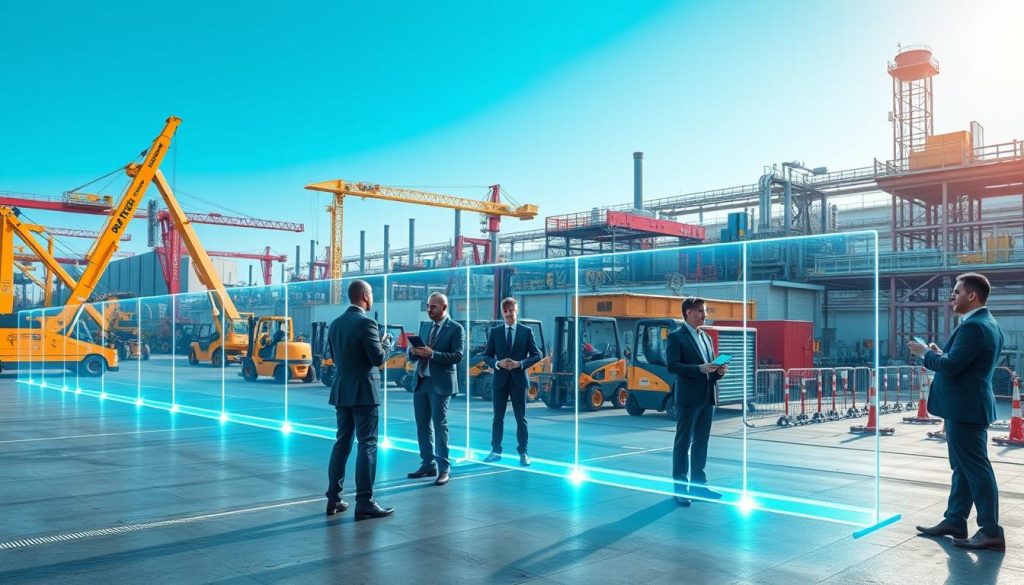
LiDAR-Based Detection Mechanisms
At the core of these systems are precise sensors, like the eyes of the facility. They scan the area to measure distances and spot intruders accurately. To cover all areas, engineers use different types of hardware:
- LiDAR and Radar: These give exact distance and depth info.
- Infrared and Microwave: Great for spotting motion in dark or blocked spots.
- Seismic and Satellite: These tools watch for ground shakes or big site changes.
Computer Vision and AI-Driven Analytics
Just hardware isn’t enough for a safe workplace. The real strength of a virtual fence for industrial safety is its software. It uses computer vision to tell apart a forklift, a pallet, and a person.
This real-time detection lets the system ignore normal machine actions. But it alerts right away for any human who shouldn’t be there. The AI learns your facility’s patterns, cutting down on false alarms and keeping production flowing.
Integration with Industrial IoT Ecosystems
Today’s safety systems don’t work alone. They’re key parts of the industrial IoT world, sharing info site-wide. When a sensor spots a danger, it sends data fast to the main control center.
This connection means real-time detection and quick actions to protect people. By linking safety data with industrial IoT systems, managers get insights on traffic and site efficiency. This turns safety into a proactive, data-driven effort.
Assessing Your Facility for Virtual Safety Zones
Before setting up safety tech, managers need to know their facility inside out. A proactive industrial risk management plan ensures every area is covered. This way, teams can focus on hazard mitigation to keep workers and equipment safe.
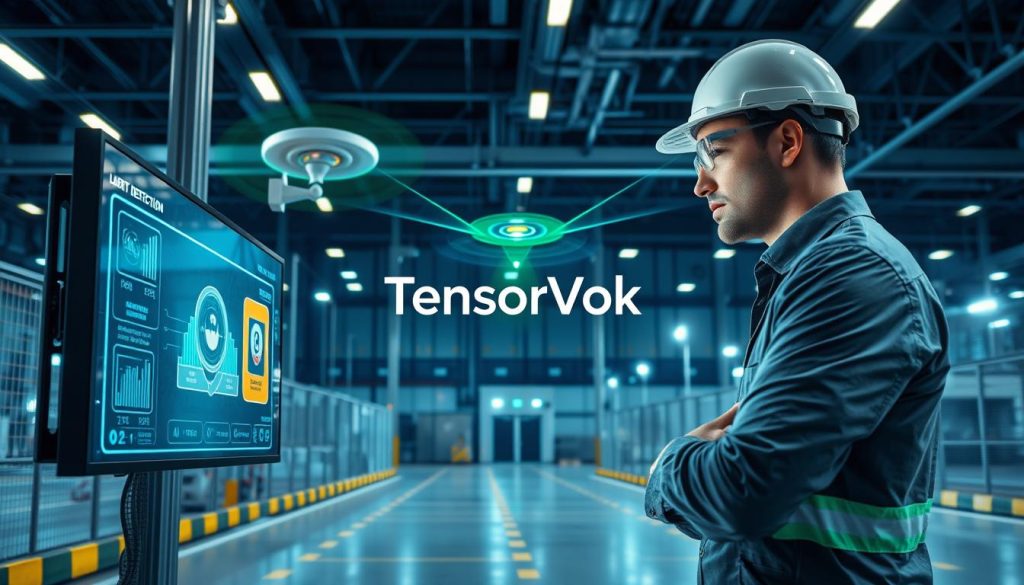
Identifying High-Risk Zones and Traffic Patterns
Start by watching how people and machines move around. Note where foot traffic meets heavy machinery. These spots are key for real-time detection systems.
By studying peak hours, teams can set up safety zones that change with the workday. This approach keeps productivity high while keeping everyone safe.
Mapping Environmental Constraints and Lighting Conditions
Every industrial site has its own set of challenges, like changing light and dust. Virtual fences can filter out background images, which is vital for avoiding false alarms. This makes the system reliable, even in busy places.
To manage risks well, you need to understand your environment. Engineers can set up sensors to ignore static objects but watch for moving ones. This careful setup is key for strong industrial risk management.
| Assessment Factor | Primary Objective | Impact on Safety |
|---|---|---|
| Traffic Flow | Identify collision points | High |
| Lighting Levels | Ensure sensor clarity | Medium |
| Environmental Noise | Reduce false triggers | High |
| Machine Proximity | Define exclusion zones | Critical |
Selecting the Right Hardware for Your Industrial Environment
The key to good industrial risk management is picking hardware that’s tough yet precise. The right gear protects your team and your assets. It keeps your place running smoothly, even when things get tough.
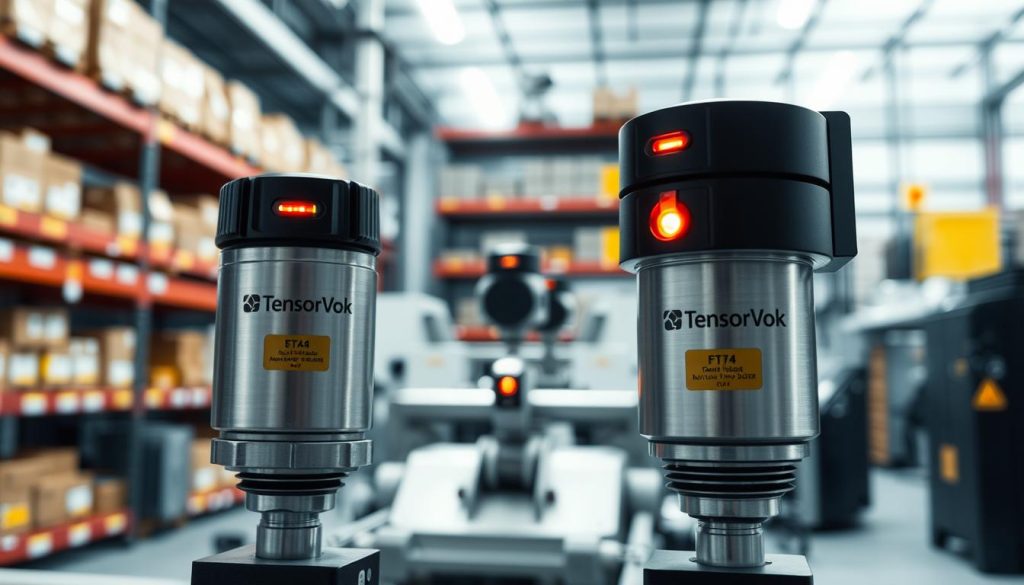
Evaluating Sensor Durability and IP Ratings
Industrial spots can be rough, with extreme weather and lots of dust and water. Your safety sensors need high Ingress Protection (IP) ratings to keep working well. These ratings show how well a device stands up to dirt and water.
Choosing the right IP rating stops your gear from breaking down too soon. Reliability is the cornerstone of safety. Pick parts that can handle your workspace’s unique challenges.
Comparing Fixed-Mount Versus Mobile Robotic Sensors
Today’s industrial automation needs flexible monitoring. Fixed systems cover busy areas well, while mobile sensors can move around. Many places use a mix of both.
For example, SentryPODS cameras are great because they don’t need wires. They’re easy to set up and can be swapped out quickly. They also connect via cell, making them fast to use without big setup costs. These tools help a lot with industrial risk management.
The best safety sensors match your needs. Whether you go for fixed or mobile, the aim of industrial automation is to be proactive. Picking the right tech now will protect your site for a long time.
Configuring Software Parameters for Maximum Protection
Mastering software parameters is key to unlocking your industrial safety’s full power. Think of the software as the intelligent brain of your operation. It ensures all sensors work together to protect your team. This control lets facility managers balance security with the demands of a busy production floor.
Defining Exclusion Zones and Warning Perimeters
Creating a precise digital boundary is the first step to a safer workplace. These boundaries act as invisible lines that trigger immediate responses when crossed. You can set these lines in both directions of travel, keeping the system alert no matter how an object moves.
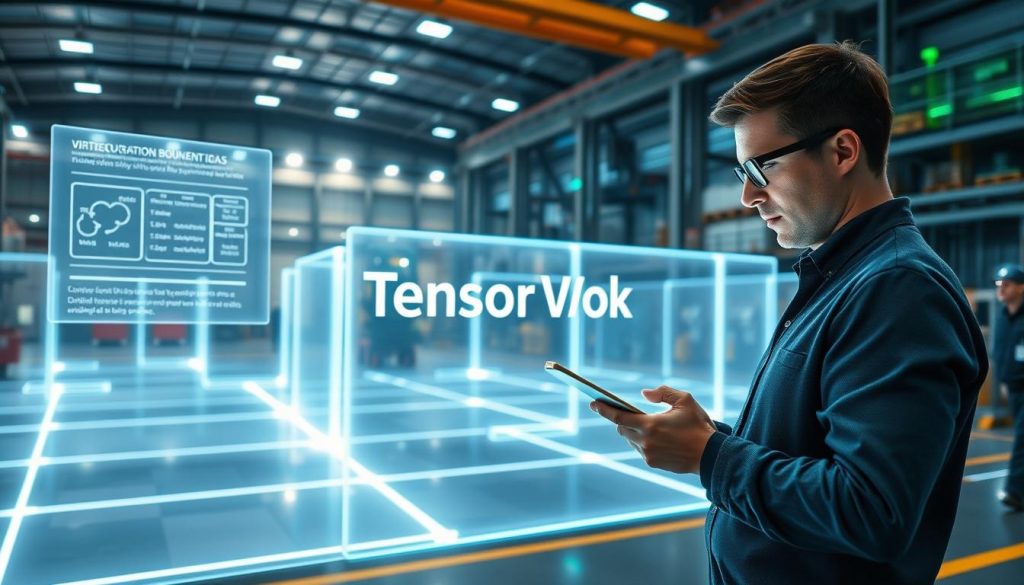
Being flexible is key when your site layout changes. Modern software lets you adjust these zones quickly. This way, your safety infrastructure grows with your business needs.
Setting Up Multi-Tiered Alert Protocols
Good safety management needs clear communication in critical moments. Automated safety protocols help by categorizing alerts based on severity. This tiered approach ensures the right people get the right information, avoiding unnecessary alarm fatigue.
Here’s a structure for your alert system:
- Level 1 (Caution): Visual indicators or soft audio cues for approaching a warning zone.
- Level 2 (Warning): More intense alerts when a worker nears an active exclusion zone.
- Level 3 (Emergency): Immediate automated safety protocols that trigger machine slowdowns or stops upon breach.
Empowering your staff with clear, tiered responses builds a safety-aware culture. When everyone understands the system, they can work with confidence. They know the technology is watching over them.
Integrating Virtual Fencing with Existing Machinery Controls
Adding virtual fencing to existing hardware makes monitoring active and lifesaving. Sensors alert the system to unauthorized movement. This is where industrial IoT shines, connecting directly with machine controllers.
This connection makes safety a must, not just a suggestion. It’s an immediate, hard-coded reality.
Automated Emergency Stop Sequences
Modern facilities use automated safety protocols to prevent accidents. Virtual boundaries are set up around machine zones. An instant emergency stop is triggered if a breach is detected.
This quick action is essential for protecting workers. It stops them from stepping into dangerous areas.
These sequences work by sending a fast signal to the machine’s controller. The system knows if someone is approaching danger or just passing by. This means less downtime and higher security.
Synchronizing Safety Zones with Autonomous Mobile Robots
The rise of autonomous mobile robots (AMRs) needs a new approach to safety. Safety zones are synced with the robots’ navigation systems. This ensures fluid human-machine collaboration.
Robots get updates on human presence in real-time. They can slow down or change path to stay safe.
This integration makes a safer, more efficient workplace. It’s all thanks to industrial IoT. Your facility stays productive and safe in 2026.
Training Personnel to Work Alongside Smart Safety Systems
True safety comes when machines and people work together well. Smart safety systems are key, but people using them are just as important. A team that gets the tech can use it right.
Communicating System Capabilities and Limitations
Being open is key to safety. Managers should tell everyone what the sensors can do and what they can’t. Knowing this makes people trust the system more.
Education should never be a one-time event. Regular training shows that these systems help, not hinder. This boosts workplace safety and cuts down on mistakes.
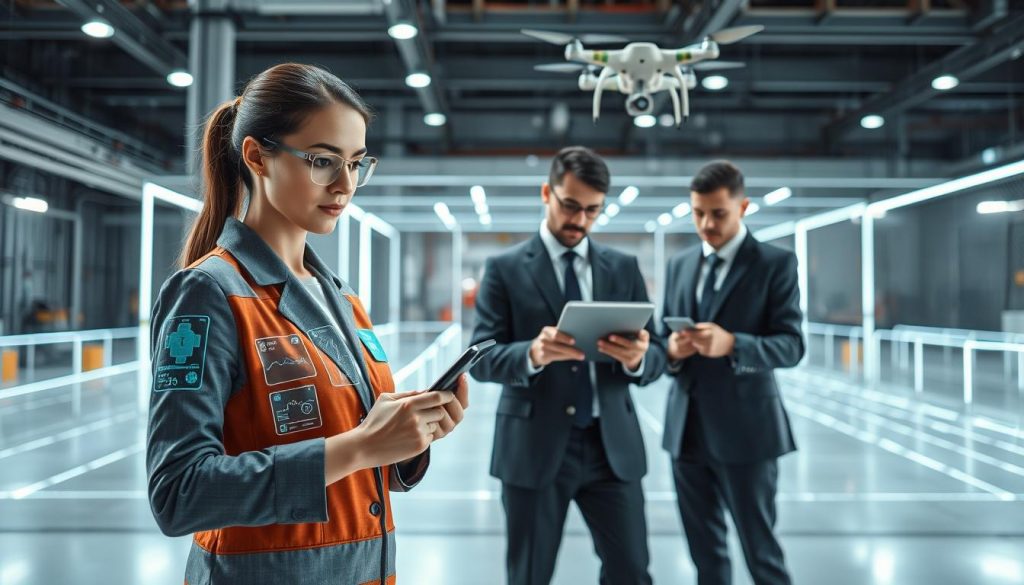
“The greatest technology in the world is useless if the people operating it do not trust or understand the boundaries of its power.”
Establishing Protocols for System Maintenance and Calibration
Keeping things consistent is vital for safety. Regular checks and updates are needed. This keeps the system working well, even when things change.
Here are key steps for keeping your safety gear in top shape:
- Weekly Sensor Audits: Make sure sensors are clean and clear.
- Monthly Calibration Checks: Adjust detection zones for layout changes.
- Quarterly Software Reviews: Update to the latest AI analytics.
Standardizing these steps makes the system reliable. This shows that workplace safety is a daily focus. When everyone knows their part, the whole place runs smoother.
Overcoming Common Implementation Challenges
Innovation in site security brings big benefits but also complex challenges. Companies face the hard task of making new tech work well in their workplaces. By tackling these issues early, teams can make sure their systems work efficiently and reliably.
Mitigating False Positives in Dynamic Environments
Busy industrial floors can confuse safety sensors with all the noise. To fix this, engineers use edge-based video analytics. This method cuts down on costs and boosts accuracy.
“True progress in industrial safety is not just about adding more sensors, but about making the existing ones smarter and more context-aware.”
Improving detection algorithms helps the system tell real dangers from normal activity. This precision means security teams only deal with real threats. So, the perimeter security stays strong without causing too many delays.
Ensuring Data Privacy and Cybersecurity Compliance
Modern safety systems gather a lot of data that needs careful handling. Keeping safety compliance means following strict data protection rules. Companies should use encrypted channels to keep site info safe from hackers.
Checking the digital setup regularly helps spot and fix security holes early. By focusing on cybersecurity, companies protect their operations and earn trust from their workers. Taking a proactive approach to safety compliance turns risks into a strong base for site security success.
Leveraging Predictive Analytics for Proactive Safety Management
The use of smart safety systems changes how leaders use data. They can now predict risks with great accuracy. This move to predictive safety helps prevent accidents before they happen.
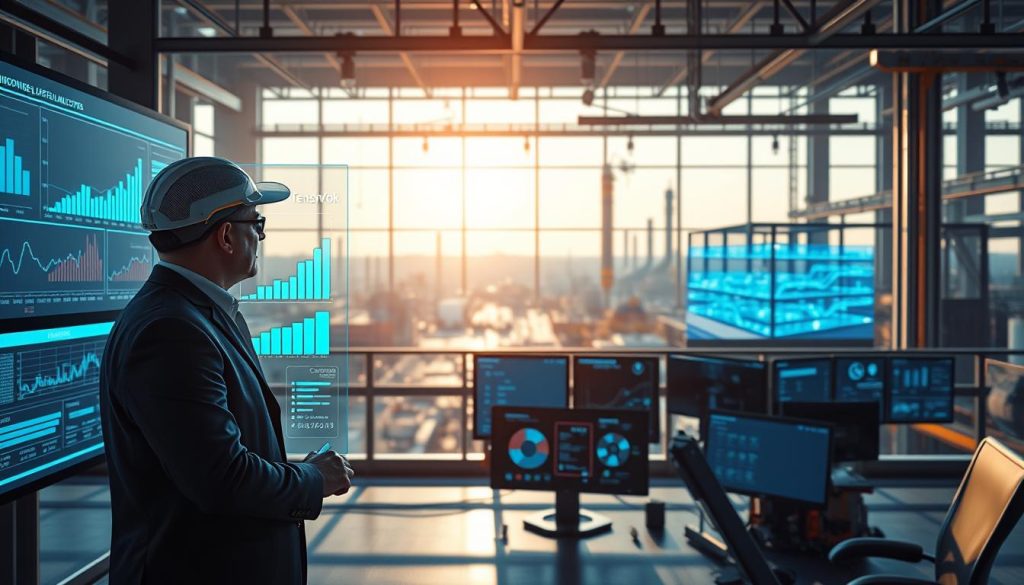
Analyzing Near-Miss Data to Optimize Layouts
Virtual fencing covers all protected areas, giving lots of data on site traffic. Teams look at this data to find patterns that might lead to big problems. This is key for hazard mitigation in complex places.
Managers use this data to change how the site is laid out. They move barriers and virtual zones to where they help the most. Optimizing the environment based on past data cuts down on future accidents.
Reporting and Compliance Documentation in 2026
Keeping up with changing rules is a big deal for every place. Now, tools make it easier to keep safety records up to date. These tools make sure all records are correct and ready for checks anytime.
In 2026, being able to show clear, up-to-date records will be very important. Using automated compliance software lets safety officers spend more time on hazard mitigation. This improves site safety even more.
Future-Proofing Your Site with Scalable Safety Infrastructure
Modern safety systems grow with your business. By focusing on predictive safety, managers keep their sites safe as they grow. This makes safety a dynamic asset that supports growth.
Adapting Systems to Changing Production Demands
Modern industrial automation needs systems that can change fast. Modular virtual fencing lets teams adjust safety zones easily. This keeps perimeter security strong, even with new equipment.
Scalability is key for a strong facility. Systems that can grow with your business save money and keep safety high. This means no big overhauls are needed.
Planning for Next-Generation Sensor Upgrades
Technology changes fast, so planning for upgrades is important. Choose systems that can add new sensors easily. This keeps your site up-to-date with industrial automation.
Plan for the future by budgeting for new sensors. This keeps your site safe and your costs down. Investing now protects your business for years.
| Feature | Legacy Systems | Scalable Infrastructure |
|---|---|---|
| Flexibility | Fixed and Rigid | Highly Adaptable |
| Upgrade Path | Full Replacement | Modular Updates |
| Integration | Isolated Silos | Unified Ecosystem |
| Maintenance | Reactive Repairs | Proactive Optimization |
Conclusion
Modern manufacturing needs smarter, more responsive environments. Using a virtual fence for industrial safety is a big step. It protects people and makes operations more efficient.
Companies that use these advanced systems get ahead. They turn dangerous areas into safe zones where tech and human skills work together. This approach cuts down on downtime and builds a culture of excellence.
Creating a safer facility takes vision and ongoing effort. By using a virtual fence, companies lay the groundwork for growth. These tools help navigate complex production needs with confidence.
The time to improve safety is now. Facilities that adopt these digital boundaries lead the way. Every step today makes the workplace safer for the future.