
Did you know that nearly 70% of head injuries in high-risk environments occur because protective gear was either missing or improperly worn? This staggering figure highlights a massive gap in traditional industrial safety protocols.
Manual inspections are often inconsistent and prone to human error. Supervisors cannot watch every corner of a facility at once, leaving gaps that put lives at risk. We believe that true protection requires a shift from subjective observation to objective, data-driven oversight.
At TensorVok, we leverage advanced AIoT technology to bridge this gap. Our systems provide constant, real-time monitoring to ensure workplace safety compliance across your entire facility. By implementing automated safety helmet recognition, we help you move beyond manual checks.
This intelligent approach acts as a silent guardian for your team. We prioritize worker safety by providing the tools needed to prevent accidents before they happen. Let us show you how to transform your site into a smarter, more secure environment.
Key Takeaways of Automated Safety Helmet Recognition
- Manual inspection methods are often unreliable and prone to human error.
- AIoT technology provides objective, real-time monitoring for large facilities.
- Consistent compliance reduces the risk of preventable head injuries.
- Data-driven systems act as a constant guardian for your personnel.
- TensorVok empowers organizations to move toward proactive protection.
Understanding the Mechanics of Automated Safety Helmet Recognition
At TensorVok, we believe that seeing is believing, which is key in protecting your team. Modern industrial settings need more than just human eyes to keep everything safe. We use computer vision to turn regular surveillance into a smart, always-on safety partner.
How Computer Vision Identifies Protective Gear
Our systems work on a simple “sense, think, act” model, perfect for high-risk industrial areas. The sense phase captures high-definition video, and the think phase analyzes this data to spot specific objects. This makes safety helmet detection precise, even in busy or dark places.
The system can tell if someone is wearing a helmet or not by looking at shapes and colors. If it spots a safety issue, it acts fast. This way, your safety rules are followed without needing a person to do it.
“The future of industrial safety lies in the ability of machines to interpret visual data with the same nuance as a human supervisor, but with the tireless consistency of an algorithm.”
The Role of Deep Learning in Real-Time Monitoring
To keep up with real-time monitoring, we use deep learning. The YOLOv10 model lets our systems work at incredible speeds. It’s designed to be fast and accurate, which is key to stopping accidents before they happen.
This method is better at spotting many objects at once, over a wide area. By training on many different industrial scenes, our system stays reliable no matter where it’s used. Here’s how our AI system compares to old methods.
| Feature | Traditional Surveillance | TensorVok AI System |
|---|---|---|
| Detection Speed | Manual/Slow | Instantaneous |
| Accuracy Rate | Variable | High (99%+) |
| Operational Scope | Reactive | Proactive |
| Scalability | Limited | High |
By using YOLOv10, we offer a strong solution for your facility’s needs. This deep learning feature keeps your real-time monitoring up to speed as your operations grow. Our aim is to give you a dependable computer vision tool for safety helmet detection in your daily work.
Assessing Your Workplace Infrastructure Requirements
Understanding your infrastructure is key to zero-incident operations. Before using advanced AI, check your industrial safety setup. A good plan makes sure your tech helps, not hinders.
Evaluating Camera Placement and Field of View
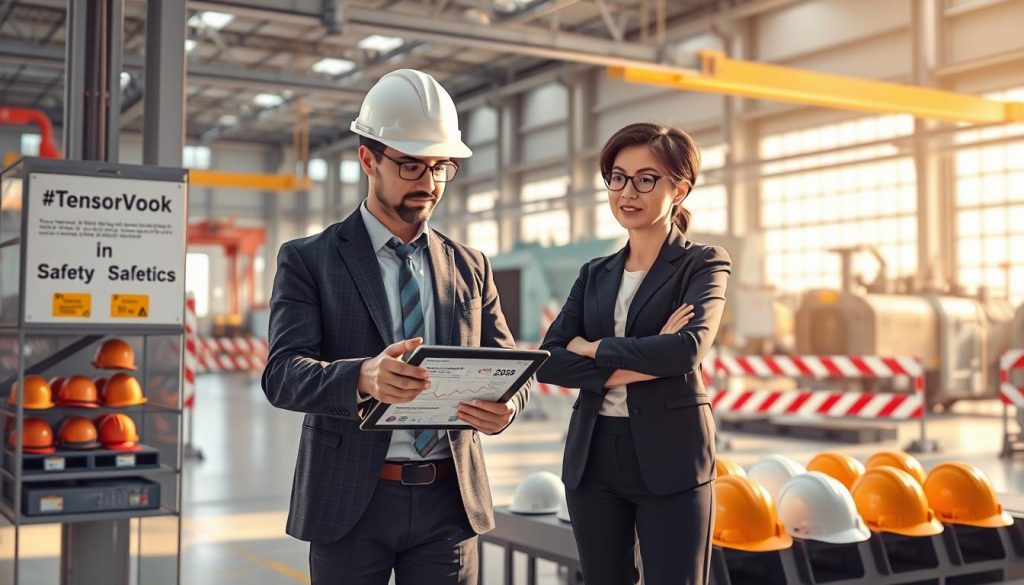
Camera placement is vital for a good vision system. Map out busy areas to get clear views of workers. This ensures accurate hazard mitigation and steady data.
Mount cameras at the right height to avoid blind spots. This setup helps track movement and feeds your deep learning models well.
Network Bandwidth and Edge Computing Needs
High-definition video streams can overwhelm your network. Cloud processing alone can slow down real-time monitoring. We suggest using edge computing for local data processing.
IoT edge devices help manage data locally. This reduces bandwidth use and keeps your system fast, even when busy. Local processing also boosts reliability over cloud systems.
Determining Latency Requirements for Instant Alerts
Every millisecond is critical in preventing accidents. High latency can delay alerts, making them useless. Your setup must send alerts instantly when a safety issue is found.
The table below shows the main infrastructure parts for top performance:
| Component | Primary Function | Performance Goal |
|---|---|---|
| Edge Gateway | Local Data Processing | Sub-100ms Latency |
| Industrial Cameras | Visual Data Capture | High Frame Rate |
| Network Switch | Data Transmission | Low Jitter/High Speed |
| Safety Dashboard | Alert Management | Instant Notification |
Selecting the Right Hardware and Software Solutions
The connection between raw data and useful safety insights starts with your hardware and software choices. A strong safety system needs parts that can handle tough environments and work well. Focus on reliability and scalability to keep your safety plans effective as your space grows.
Comparing Industrial-Grade Camera Systems
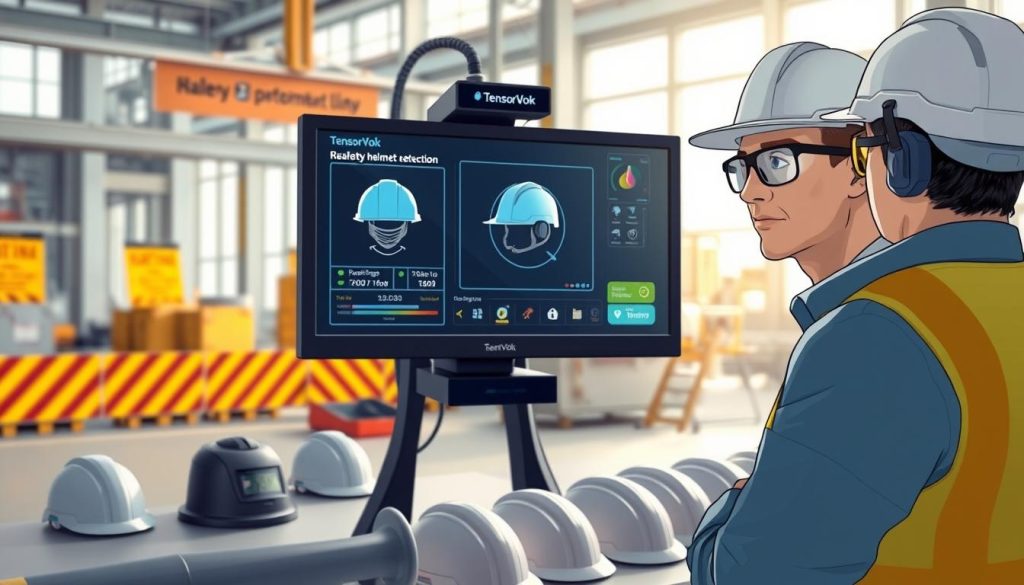
Regular cameras can’t handle the detail needed for safety checks. Industrial cameras need to work well in bright and dark places. Look for cameras with IP67 ratings to protect against dust and water, common in factories.
Also, using IoT edge devices helps process video feeds locally. This lightens the load on your network and makes alerts quicker. By processing data closer to the source, you cut down on delays and boost your safety system’s speed.
Software Platforms for Safety Analytics
The brain of your system is its software. Today’s platforms use AIoT technology to link sensors with digital decisions. With YOLOv10, you can spot safety gear fast, even in busy or moving scenes.
“The true power of AI in safety is not just in detection, but in the ability to provide immediate, context-aware feedback that prevents accidents before they occur.”
Key Features to Look for in Recognition Software
When checking software, look for strong edge computing abilities. A good platform should work well with your current gear and be light on resources. Here are some key tech specs to ensure your software meets your safety needs:
| Feature | Benefit | Technical Requirement |
|---|---|---|
| Small Object Detection | High accuracy at distance | YOLOv10 Optimization |
| Real-time Latency | Instant alert triggers | IoT edge devices |
| System Scalability | Future-proof growth | AIoT technology |
| Data Privacy | Regulatory compliance | Local edge computing |
The aim is to build a system that watches over your team silently. By combining automated safety helmet recognition with top-notch edge computing, you make your workplace safer and more efficient. Try these solutions in a test setting to see how they work before you use them everywhere.
Step-by-Step Implementation of Automated Safety Helmet Recognition
Starting with automated safety helmet recognition requires careful planning and precise calibration. We focus on a step-by-step approach to ensure your facility’s success in hazard mitigation. This method protects your team and keeps operations running smoothly.
Step 1: Mapping High-Risk Zones in Your Facility
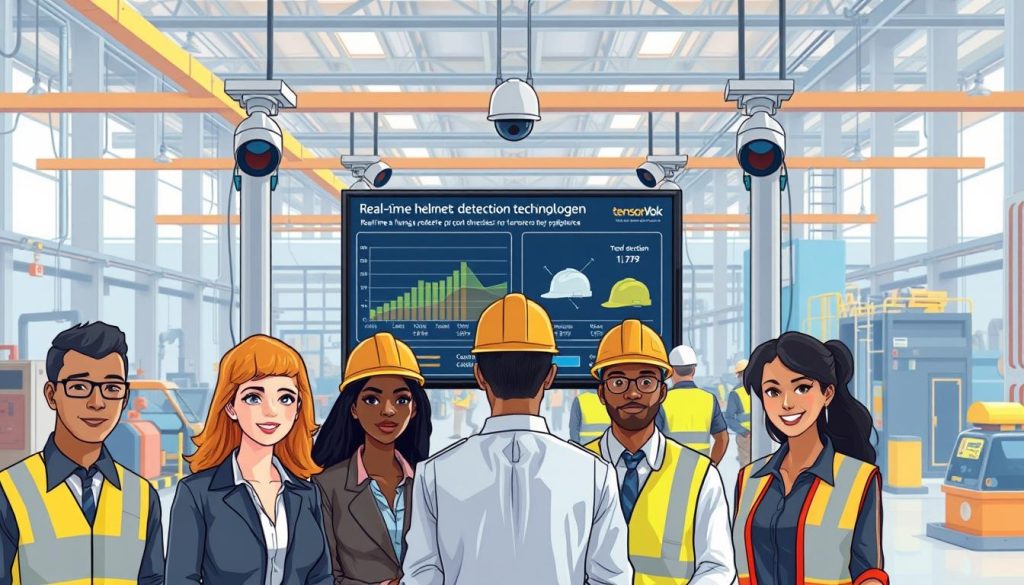
The first step is to find areas where worker safety is most important. We suggest walking the floor to spot high-traffic or machinery areas. These spots need the most watchful eyes to follow safety rules.
After finding these zones, note down how people move around. This helps us place cameras right. We make sure there are no hidden spots that could risk safety.
Step 2: Configuring Detection Zones and Alert Thresholds
Next, we set up safety helmet detection zones in your camera views. These zones trigger the system to watch closely. We focus on places where wearing helmets is a must.
Setting alert levels is also key to avoid false alarms. We adjust the system to only alert for real safety issues. This smart filtering keeps your workday running smoothly.
Step 3: Conducting Pilot Testing and Calibration
Before going full-scale, we do a pilot test. This lets us see how the tech works in your setting. We collect data to make sure it meets your safety needs.
Fine-Tuning Detection Accuracy for Different Lighting Conditions
Places with flickering lights or shadows can be tough for small object detection. We tweak the AI to work well in all lighting. Reliable performance is what we aim for, no matter the light.
We keep testing and tweaking to make sure helmets are recognized in all ways. This careful work makes your safety system strong and lasting.
Integrating Computer Vision with Existing Safety Protocols
We think the best safety systems blend well with what you already do. Technology is powerful when it helps the people who keep things running. By adding computer vision to your daily tasks, you turn watching into a proactive, predictive safety effort.
Linking Automated Alerts to Incident Management Systems
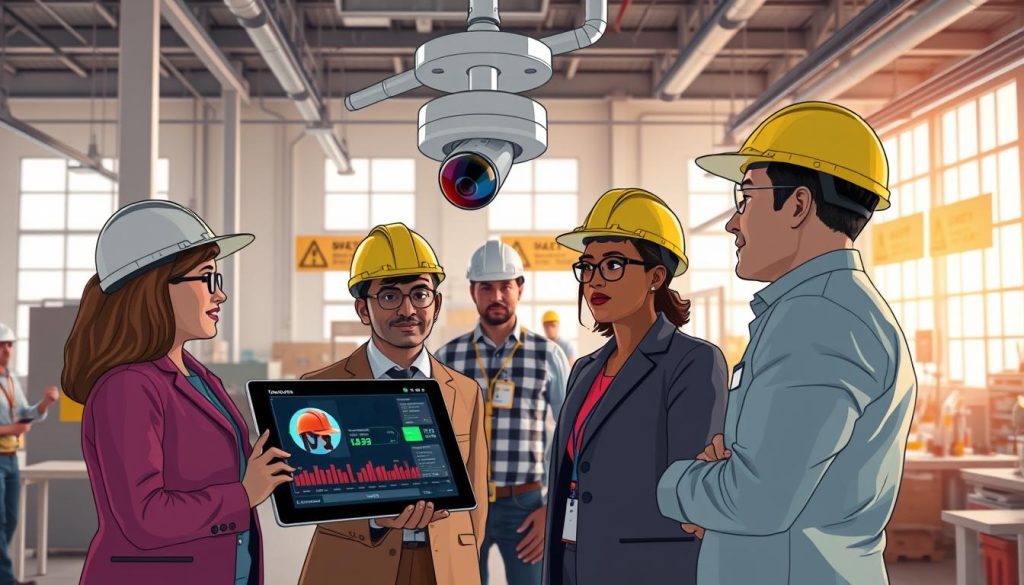
Today’s workplaces need more than just seeing problems; they need solutions. We suggest linking your detection tools to your incident management software. This way, every alert is recorded and handled.
This setup lets safety managers spot trends and risky spots before accidents happen. It makes sure workplace safety compliance is tracked right, without extra work for your team.
Training Staff on New Safety Monitoring Procedures
Getting new tech right takes teamwork and clear talks. It’s key that your team gets how these systems work to trust the data they give.
Training should show how predictive safety tools help keep workers safe, not just watch them. When staff sees computer vision as a safety ally, they’re more likely to follow rules and support better safety standards. This way, your workplace safety compliance stays strong as your tech gets better.
Managing Data Privacy and Employee Compliance
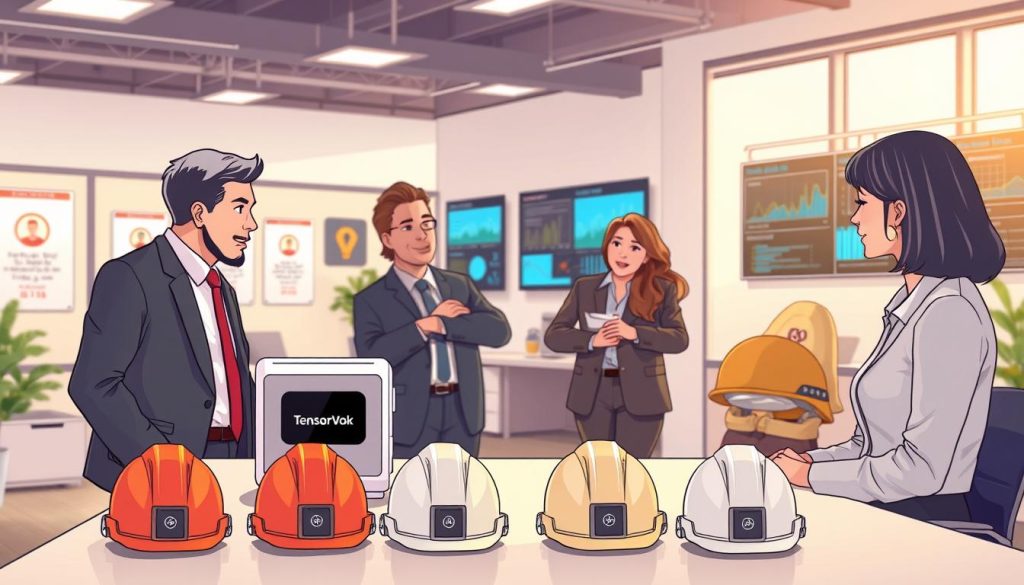
Protecting your team is more than just about the tools you use. It’s about following ethical data practices. We know that using advanced monitoring tools can feel like an invasion if not done right. By focusing on workplace safety compliance, we make sure our systems protect, not stress.
Establishing Transparent Data Retention Policies
Data governance is key for any safety helmet detection program. We advise setting clear rules for how long data is kept. Keeping data only as long as needed reduces risks and shows respect for your team.
Your policy should clearly state who can see the data and when it’s deleted. By automatically removing non-incident data, you ease fears of being watched all the time. This makes predictive safety a team effort that everyone can get behind.
Addressing Worker Concerns Regarding Surveillance
Open talks are the best way to build trust in your workplace. When workers see the system is meant to prevent accidents, they’re more likely to support it. We recommend hosting town halls to explain how the system works and what it doesn’t.
Highlight the benefits, like fewer injuries and a better work environment. When employees see safety helmet detection is for their safety, they become part of the solution. This mindset is key for lasting workplace safety compliance.
| Feature | Traditional Monitoring | Privacy-First Approach |
|---|---|---|
| Data Storage | Indefinite retention | Automated purging |
| Primary Goal | Employee tracking | Predictive safety |
| Transparency | Limited disclosure | Full staff visibility |
| System Focus | Punitive measures | Proactive protection |
Trust is earned through consistency and honesty. By following these guidelines, you build a safer, more efficient workplace. One that values both technology and the people who use it.
Troubleshooting Common Deployment Challenges
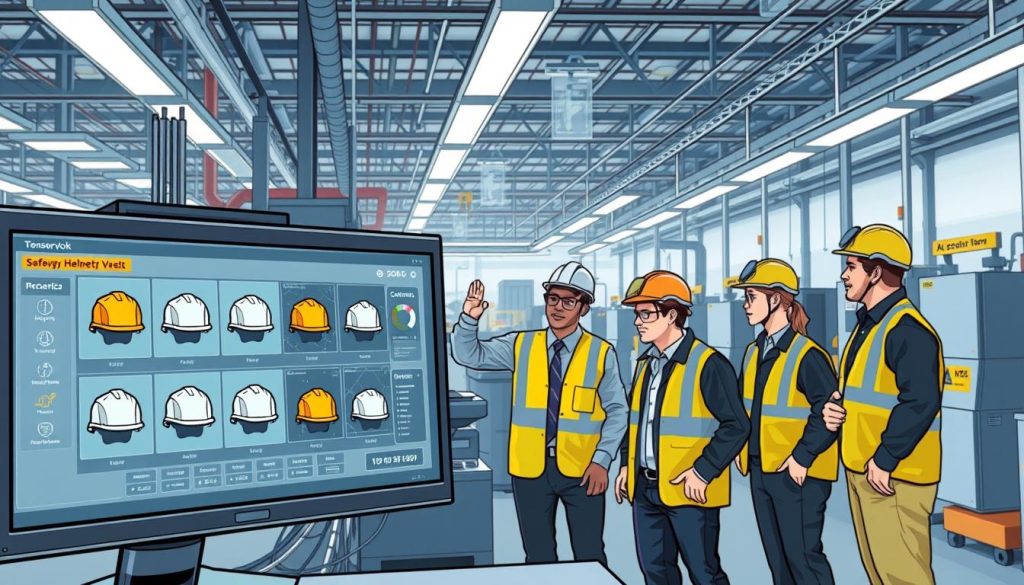
We know that keeping safety monitoring precise is a big job. Computer vision systems are great, but they face real-world challenges in industrial safety. We work hard to spot and fix technical problems early to protect workers.
Mitigating False Positives in Complex Environments
False positives happen when lighting changes or background clutter messes with the model. Using YOLOv10 helps a lot. It’s made to spot small objects, like helmets, even when they’re far or hidden.
We suggest tweaking the detection settings for different areas. This way, the system can ignore unnecessary movements but catch important ones. Consistency is key to earning trust from workers about alerts.
“The true value of an AI safety system lies not in its initial setup, but in its capacity to learn and adapt to the unique nuances of the factory floor.”
Maintaining Hardware Performance in Harsh Industrial Settings
For edge computing to work well, the hardware needs to be tough. We choose IoT edge devices that can handle dust, shakes, and heat. Regular checks and updates keep them running smoothly.
Here’s a table with common problems and how to solve them:
| Challenge | Root Cause | Recommended Action |
|---|---|---|
| High False Positives | Poor Lighting/Clutter | Retrain Model/Adjust Thresholds |
| Latency Issues | Network Congestion | Optimize Edge Processing |
| Hardware Failure | Dust/Thermal Stress | Clean Filters/Check Cooling |
| Detection Gaps | Camera Obstruction | Reposition Field of View |
By tackling these issues, your safety setup stays strong. We’re here to help you overcome these challenges. This way, your place stays safe and follows the rules.
Conclusion
Automated safety helmet recognition is a big step forward in protecting workers and following rules. By using advanced AIoT technology, you can watch over dangerous areas more closely than ever before.
Real-time monitoring is key to a modern industrial plan. These smart systems help keep your place safe and lower risks. They help you move towards a future where accidents are prevented before they happen.
TensorVok is committed to helping industries worldwide with top-notch edge AI solutions. We invite you to join us in using these strong tools to improve safety. Your efforts today will shape the safety standards of tomorrow.
Check out https://tensorvok.com/ to see how our technology can change your workplace. Let’s create a smarter, safer place for everyone.