
Imagine walking into your store and knowing where everyone goes. For years, store owners used their gut to plan their space. Now, data-driven insights of Shop Gathering detection let you see your business in high definition.
By watching customer flow, you can find and fix slow spots. AI-driven analytics turns movement data into plans. This tech helps you arrange your store to sell more.
Knowing how people move in your store is key, whether it’s small or big. Using these digital tools keeps you competitive. Now, you can measure every visit’s success.
Key Takeaways of Tracking Shop Gathering & Customer Flow
- AI tools give exact data on how visitors move through your space.
- Improving your layout based on traffic boosts your sales.
- Modern analytics help find and fix sales blocks.
- Using data for decisions keeps you ahead in retail.
- These technologies make shopping more personal and efficient.
Understanding the Mechanics of Shop Gathering and Customer Flow
You can make your physical store better by studying the paths customers take. Watching how people move helps you understand what they like to buy. This helps you see the key parts of shop gathering and customer flow.
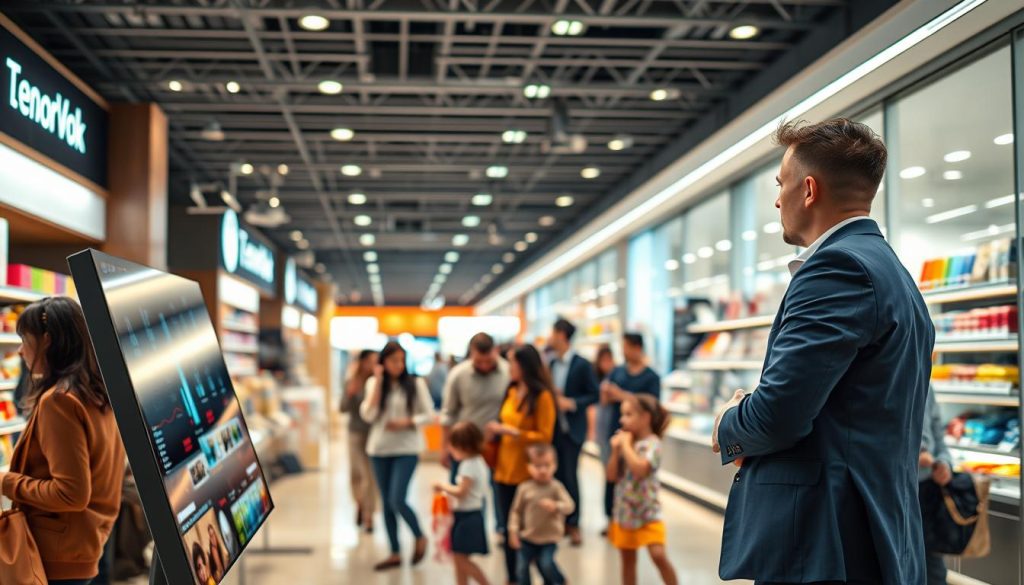
Defining Shop Gathering in Modern Retail Environments
Shop gathering means customers tend to gather in certain spots. These spots are often near popular items, sales, or interactive displays. Knowing where these spots are helps you manage crowd density and improve shopping.
By watching these patterns, you can sort them into three types:
- Planned stops: Areas where customers look for specific items.
- Impulse zones: Places where shoppers stop because of eye-catching displays.
- Bottleneck areas: Areas with a lot of people that slow down movement.
The Role of AI in Mapping Customer Movement
Today’s retail technology helps understand shopper behavior better. AI sensors track movement in real-time, turning data into useful heatmaps. This lets you see how visitors move around your store.
“Data is the new oil, but it is only valuable if you have the tools to refine it into actionable insights that improve the customer journey.”
Using these tools, you can measure dwell time very accurately. Knowing how long customers stay in certain areas helps you see if your product placement works. You can stop wondering why some areas don’t do well.
Why Accurate Data Collection Matters for Your Bottom Line
Getting exact data on foot traffic is key, not just for counting people. It helps you understand why they visit. With good data, you can make smart choices that boost your sales. Accurate data collection is the base for all improvements.
Without these insights, you’re guessing in a tough market. By knowing your store’s layout well, you can make every inch count for profit. This way, your store becomes a place that meets your customers’ needs.
Setting Up Your AI-Powered Analytics Infrastructure
Starting strong in retail means having the right tech. Investing in top-notch retail technology boosts your operational efficiency. It also helps you see how shoppers move through your space.
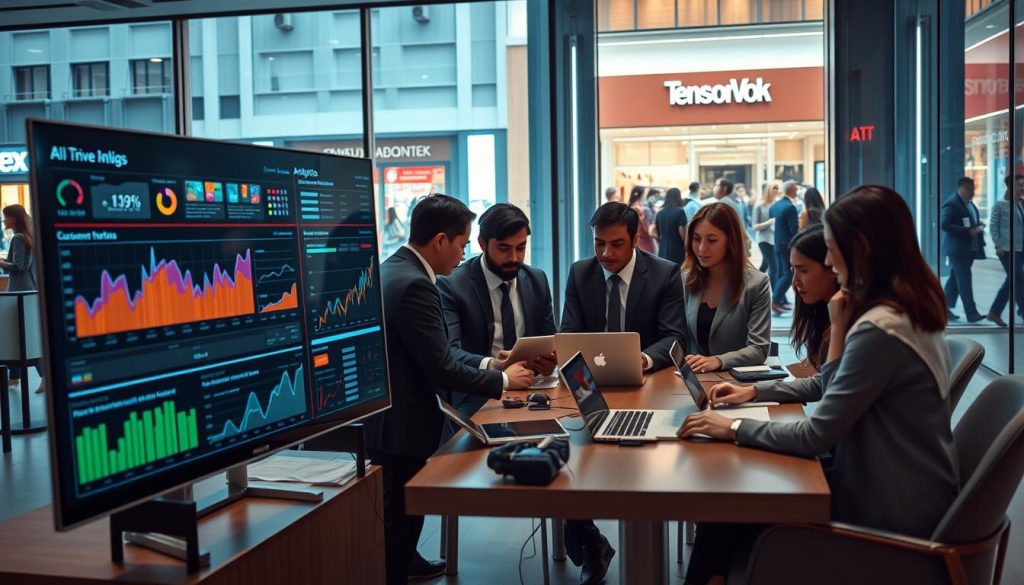
Selecting the Right Hardware for Traffic Monitoring
Choosing Between Thermal Sensors and Computer Vision Cameras
Choosing the right hardware is key to getting good data. Thermal sensors are great for keeping things private. They track heat without showing faces. Computer vision cameras, on the other hand, give detailed insights into customer actions.
Strategic Placement for Maximum Coverage
Where you put your devices matters a lot. Place sensors at main doors to count everyone. Cameras near important displays help you see how people interact with them.
Integrating Software Platforms for Real-Time Data Processing
Cloud-Based Analytics vs. On-Premise Solutions
After setting up your hardware, pick a software that fits your needs. AI-driven analytics often use cloud services for easy growth and access. On-premise options give you full control over your data, which is important for security.
Linking these systems with your predictive analytics tools makes smarter choices. This setup helps manage your stock better by matching it with what customers want. Below is a table showing the main differences between these options.
| Feature | Thermal Sensors | Computer Vision | Cloud Software |
|---|---|---|---|
| Data Detail | Basic Counts | High Detail | Real-time Access |
| Privacy | High | Moderate | Secure |
| Installation | Simple | Complex | Scalable |
| Cost | Low | High | Subscription |
Step-by-Step Guide to Tracking and Analyzing Customer Behavior
Understanding customer flow helps you make your store welcoming. By watching shopper behavior, you can offer a personalized experience. This makes people want to come back.
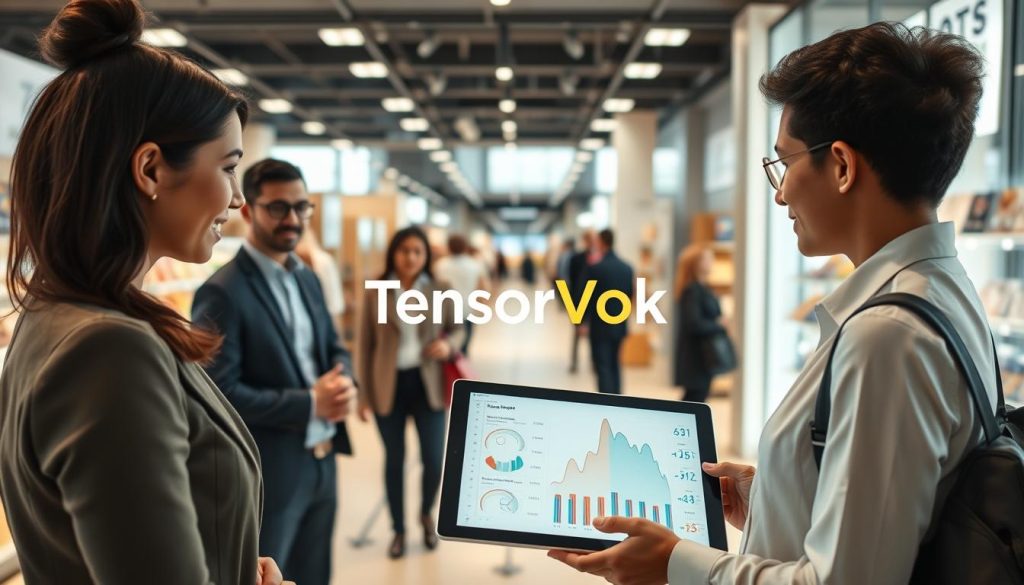
Calibrating Your Sensors for Accurate Footfall Counting
Good analytics start with well-set sensors. Make sure your sensors catch every entry and exit. Consistency in data is key for trends.
Test your sensors in quiet and busy times. Wrong data can mess up your plans. Accurate sensors give you the data you need.
Mapping High-Traffic Zones and Identifying Bottlenecks
With right data, see how people move. Find out where they stop and look. This shows where your store layout might be a problem.
Look for places where people stop or change direction. These spots show where your store might be hard to navigate. Fixing these spots can lead to more visits and spending.
Analyzing Dwell Time to Improve Product Placement
Dwell time shows how long shoppers stay in certain areas. High times mean your products are working well. Use this to improve other areas.
Identifying Areas of Low Engagement
Not all parts of your store are equal. Find low engagement spots to see if they’re hidden or not appealing. Moving displays can make a big difference.
Optimizing Layouts Based on Heatmap Insights
Heat maps show where people go. Use these to plan your store better. This helps guide shoppers to more profitable items.
| Metric | Primary Goal | Expected Outcome |
|---|---|---|
| Foot Traffic | Volume Tracking | Better Staffing |
| Dwell Time | Engagement Depth | Higher Sales |
| Conversion Rate | Revenue Growth | Profit Optimization |
Leveraging Data to Optimize Store Operations
Once you have gathered accurate traffic metrics, the next step is to make smarter business decisions. By using data, you can make your store more efficient. This is what makes leaders stand out in the market.
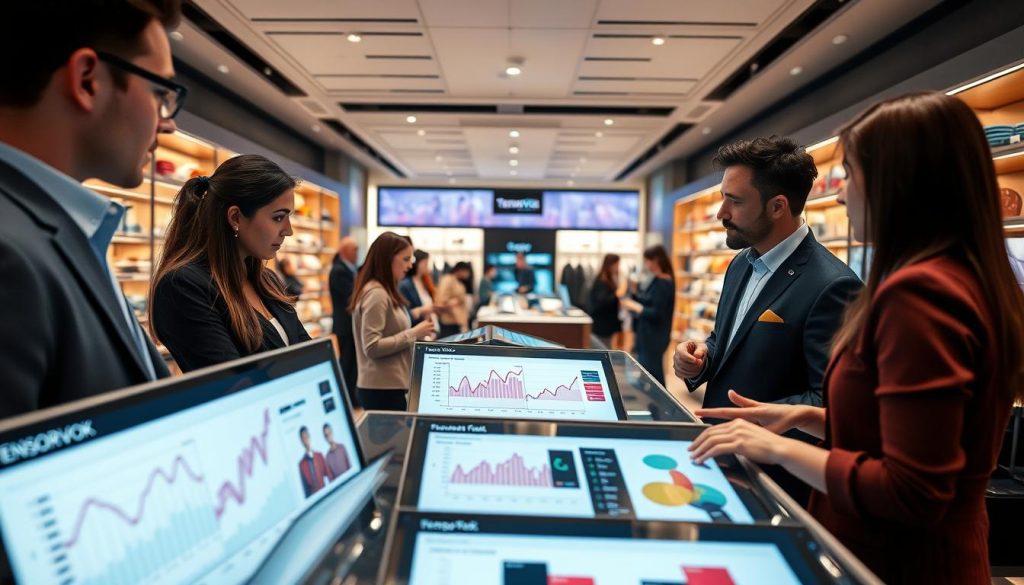
Adjusting Staffing Levels Based on Peak Traffic Patterns
Managing labor well is key for good retail performance. Predictive analytics help you know when it’s busy. This way, you can schedule your team right when it matters most.
Matching staff with footfall saves money when it’s slow. This keeps your store busy all day. Your team stays focused and happy, not just waiting.
Personalizing the In-Store Experience Using Behavioral Analytics
Knowing how shoppers move is key for a personalized experience. Heat maps show you what catches eyes. Then, you can highlight what your customers love.
Behavioral analytics help build loyalty. Placing popular items in busy spots makes shopping better. Your store feels made just for your visitors.
Measuring the Impact of Store Layout Changes on Sales
Every floor plan change should be data-backed. Track your conversion rate before and after changes. This helps you keep improving.
See your store as a place to always get better. If a change doesn’t work, data will tell you why. Use this table to see how changes affect your store.
| Metric | Pre-Optimization | Post-Optimization | Impact |
|---|---|---|---|
| Staff Utilization | 65% | 88% | Improved |
| Average Dwell Time | 4.2 Minutes | 6.8 Minutes | Increased |
| Inventory Turnover | 3.1x | 4.5x | Optimized |
| Sales Conversion | 12% | 18% | Growth |
By using predictive analytics and heat maps, you stay ahead. This focus on data keeps your retail performance strong. Adapting to data insights is key for growth and a personalized experience.
Conclusion
Modern retail success depends on turning raw data into useful business insights. You now have the tools to watch how people move and improve their shopping experience. This is thanks to advanced AI.
Begin by checking how your store works now. Look for chances to test new ideas. Even small changes can make a big difference in sales.
Stores like Walmart and Target show how important using data is. They offer better shopping experiences. By focusing on these upgrades, you can stay ahead of the competition.
Keep moving forward to keep your brand fresh in a changing world. Share your experiences with these tools. Your feedback will help make retail smarter for everyone.