
Benjamin Franklin once said, “An ounce of prevention is worth a pound of cure.” This saying is very true today. It’s about keeping your workers safe in a world full of challenges.
Using edge AI can help spot dangers early. It’s all about keeping your team safe and following OSHA rules without needing someone to watch over everything all the time.
We use AIoT technology to change how you keep your site safe. It makes your work area smarter and safer. Let us show you how to make your construction site safety better today.
Key Takeaways of AI Restricted Area Monitoring
- Proactive safety models prevent costly incidents before they occur.
- Edge computing provides real-time data for immediate hazard detection.
- Automated systems simplify the process of maintaining strict OSHA compliance.
- Prioritizing worker wellbeing boosts overall site productivity and morale.
- Modern AIoT tools offer a scalable path toward smarter industrial operations.
The Evolution of Construction Site Safety with AI Restricted Area Monitoring
The world of industrial safety is changing fast. We’re moving from old ways to new, smart ways to keep everyone safe. For years, sites used barriers and people to watch dangerous areas. Now, AI Restricted Area Monitoring is making safety better and more reliable for all workers.
Understanding the Shift Toward Autonomous Safety Protocols
Job sites are now using automated safety protocols to manage risks better. Computer vision helps spot dangers that people can’t see. These tools help site managers make better decisions, not replace them.
Predictive analytics helps us see dangers before they happen. This change means we understand the site better in real-time. By focusing on worker wellbeing, we make safety a key part of the project.
“Technology in construction is not about removing the human element; it is about providing the human element with the data necessary to make life-saving decisions in an instant.”
Key Benefits of AI-Driven Perimeter Security in 2026
High-precision monitoring has changed how we keep sites safe. Companies using these techs see fewer accidents, often by 40% to 50%. This level of industrial safety is key for keeping projects on time and people safe.
The table below shows how AI systems are better than old ways:
| Feature | Traditional Methods | AI-Driven Systems |
|---|---|---|
| Detection Speed | Delayed (Human-dependent) | Real-time (Instant) |
| Risk Identification | Reactive | Predictive |
| Accuracy | Variable | High-Precision |
| Reporting | Manual Logs | Automated Compliance |
These advanced tools make sure every dangerous area is watched closely. This lets safety teams focus on other important tasks while the system keeps an eye on risks.
Preparing Your Infrastructure for AI Integration
Getting AI to work on a job site starts with the right setup. Your hardware needs to handle big data fast. This is key for keeping everyone safe on site.
Assessing Hardware Requirements for High-Definition Surveillance
Good visual data is vital for computer vision systems. You’ll need high-definition surveillance cameras that work well outdoors. They should capture clear images, even in bad light or weather.
“The quality of your data determines the intelligence of your safety outcomes.”
Choose rugged sensors for edge AI processing. This way, data is processed locally, making your system faster and more reliable.
Optimizing Network Connectivity for Low-Latency AI Processing
Good network connectivity is key for automated safety protocols on big sites. Slow networks can make predictive analytics tools slow. Use a dedicated mesh network for smooth communication.
Selecting the Right Camera Placement for Maximum Coverage
Where you place cameras is very important for AI Restricted Area Monitoring. Focus on busy areas and where machines and people are close. This way, your AIoT technology can see everything important without missing a thing.
- Mount cameras at elevated angles to maximize the field of view.
- Use weather-resistant housings to protect sensitive optics.
- Regularly clean lenses to maintain high-definition surveillance clarity.
Ensuring Power Stability for Remote Site Monitoring
Power outages can ruin your construction site safety plan. Use backup power like solar batteries for remote sites. This keeps your AI Restricted Area Monitoring running 24/7, no matter the power grid.
By focusing on these technical areas, you make your site ready for edge AI and computer vision. A well-prepared site is the best way to avoid accidents.
Configuring TensorVok Systems for Perimeter Detection
We can make surveillance more effective by setting up TensorVok right. The right setup makes your AI Restricted Area Monitoring work well in critical areas. It turns video into useful information.
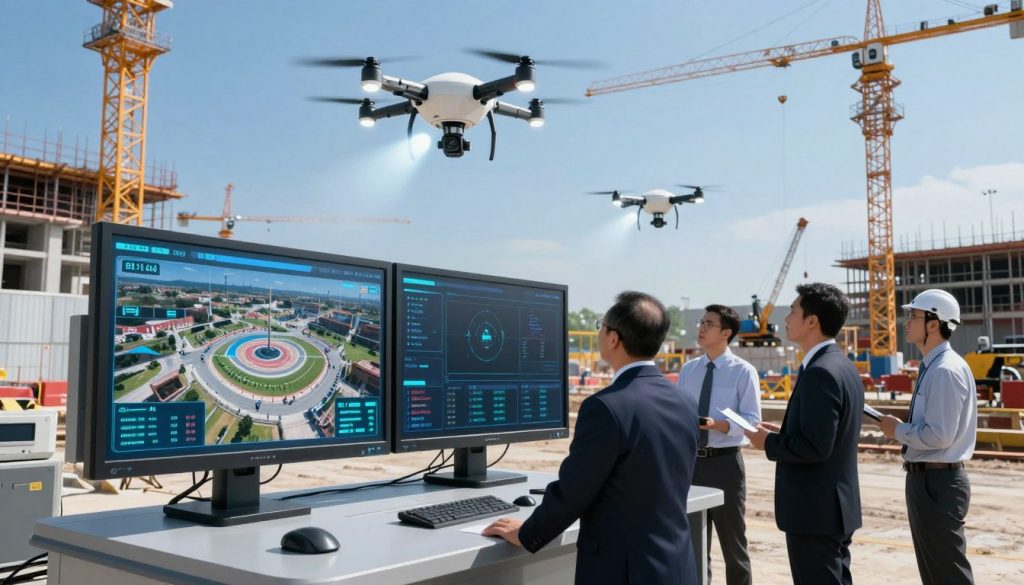
Defining Virtual Geofences Around High-Risk Zones
First, we map your site with virtual geofences. These digital lines alert you when crossed. With high-definition surveillance, we draw clear lines around dangers.
This method uses edge AI for quick data processing. It keeps the system fast, even with network issues. Accurate zones help follow OSHA compliance and keep dangerous areas safe.
Calibrating Object Detection Algorithms for Construction Environments
Construction sites change a lot. So, we need to adjust our computer vision models. Each site is different, so we teach the system to recognize its own signs.
Training the AI to Distinguish Between Personnel and Heavy Machinery
Our AIoT technology can tell people from machines. We use many examples to make it better at real-time object recognition. This helps avoid false alarms and keeps workers safe.
Adjusting Sensitivity Thresholds to Minimize False Positives
Too high sensitivity causes too many alerts. Too low might miss important warnings. We find a good balance to keep incident reporting accurate. Here’s how to adjust for different sites.
| Environment Type | Sensitivity Level | Primary Focus |
|---|---|---|
| High-Traffic Entry | Medium | Personnel Tracking |
| Heavy Machinery Zone | High | Collision Avoidance |
| Restricted Storage | Very High | Unauthorized Access |
Integrating TensorVok with Existing Site Management Software
Connecting TensorVok with your systems is key for safety. It makes a single place for all safety info. This lets you act fast when there’s a problem.
Effective integration makes safety proactive, not just reactive. It gives you a clear view of your site and helps protect your team every day.
Managing Alerts and Real-Time Compliance Reporting
Quickly responding to safety alerts is key to avoiding risks. Our AI Restricted Area Monitoring tools help keep job sites safe. This is critical in the fast-paced world of construction site safety.
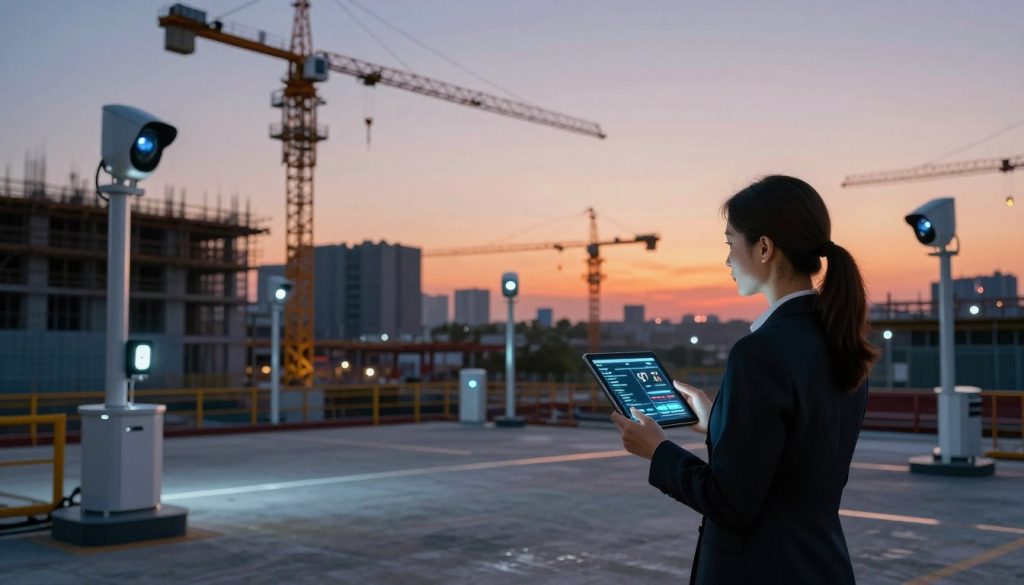
Establishing Automated Notification Workflows for Safety Officers
Safety officers get updates right away when a breach happens. Our computer vision technology filters alerts, sending them to devices or control centers. This helps stop accidents before they start.
Our automated safety protocols work with your site management software. This centralizes alerts, making sure nothing is missed. We aim to give your team the tools to make quick, informed decisions.
Generating Compliance Logs for OSHA Documentation
Keeping up with OSHA compliance is more than just barriers. It’s about having exact, timed records. Our system logs every event, creating a detailed audit trail for reviews.
Automating Incident Reporting Based on AI Trigger Events
Manual incident reporting can be slow and error-prone. We automate it, creating reports based on AI events. These reports include photos and details, making it clear what happened.
Reviewing Historical Data to Improve Future Site Safety
We also use predictive analytics to spot safety trends. By looking at past data, your team can find and fix high-risk areas. This data-driven approach makes your site safer over time.
Conclusion
AI Restricted Area Monitoring is changing how we keep our teams safe. It moves away from manual checks, making safety proactive.
This change lets site managers prevent accidents. We think focusing on worker wellbeing boosts productivity. Edge AI makes managing complex sites easier.
TensorVok gives you the tools to achieve these safety goals. Our systems cut costs and meet strict rules. You’ll know your site is safe all the time.
Discover how our tech improves construction site safety. Visit https://tensorvok.com/ to see our solutions. Let’s create a safer, smarter future for all workers.