
Ever thought about stopping a crisis before it starts? In today’s fast world, just watching isn’t enough to keep everyone safe. We’re heading toward a time when smart systems like AI Crowding detection watch over every worker.
TensorVok thinks being proactive is key to doing things right. With real-time monitoring, places can spot dangers right when they start. This move from just reacting to seeing ahead is crucial for 2026’s high standards.
Smart tech lets us see, think, and act fast. It gives us the clear view we need to keep things safe and running smoothly. Let’s see how these new tools make tough places safer and better.
Key Takeaways of AI Crowding detection
- Switching to automated systems makes sites safer.
- Finding dangers early stops big problems before they start.
- Today’s tech meets 2026’s tough safety rules.
- Live data helps leaders make smart, quick choices.
- Smart watching creates a safe, caring work environment.
The Current Landscape of Crowd Management in the United States
The way we keep public spaces safe in the United States is changing. We’re moving from old ways to new, smarter methods. Before, people watched to keep things safe, but this had big holes.
Now, we’re using systems that watch and analyze all the time. This helps keep everyone safe better.
Evolution of safety standards in public spaces
Safety rules in the United States used to be the same for a long time. They focused on fixing problems after they happened. People thought watching carefully was enough to spot dangers early.
But, as places got busier, old ways didn’t work anymore. Now, we know we need something better.
Today, we want safety rules that change with the situation. Places are starting to use new rules that let them see things in real time. This shows we really care about keeping people safe by stopping problems before they start.
The shift toward proactive monitoring technologies
New sensors and computers have changed how places are run. They help places watch over everything better. This way, teams can spot problems before they get big.
Using smart tech lets us act fast. It makes keeping places safe more accurate. This way, places can use their resources better and keep everyone safe, even in tough spots.
Understanding the Mechanics of AI Crowding detection
Modern safety uses a smart “sense, think, act” method to keep public areas safe. AI Crowding detection turns video into safety info using smart logic. It helps managers keep people safe before problems start.
How computer vision identifies density patterns
Computer vision is key to our tech. It checks areas to see how many people are there. It makes a heat map to show how crowded it is.
This lets the system spot when places get too full. Our ai crowding detection tools give managers real-time data. This means they always know how many people are around.
Distinguishing between normal flow and hazardous congestion
Not all crowds are dangerous. Our systems can tell the difference. They look at how people move to see if it’s safe.
If people stop moving in a bad place, the system warns of danger. This proactive approach helps security teams act fast but only when needed. It cuts down on false alarms and keeps everyone safe.
The role of neural networks in real-time analysis
We use neural networks for quick and accurate checks. These networks learn from lots of data to understand people’s actions. They work fast, making sure the system responds quickly.
With ai crowding detection, our system gets better over time. It adapts to new situations. This makes AI Crowding detection essential for keeping places safe today.
Assessing Your Facility Requirements for AI Integration
We help leaders figure out if their places are ready for new monitoring systems. Adding ai crowding detection is a big step towards updating your site. But, you need to know your current setup well. Checking your space first makes sure the tech fits your safety needs.
Identifying high-traffic zones in commercial environments
The first step is to map where people usually hang out. Look at entry points, hallways, and common areas. Identifying these zones helps you focus on keeping industrial safety high.
Good data comes from good data collection. By finding busy spots, you can set up alerts when it gets too crowded. This way, you can stop small problems before they get big.
Determining camera placement for optimal coverage
Putting cameras right is key for getting the best data. You need to place sensors so they see everything clearly without missing anything. Strategic mounting helps the algorithms work better.
Think about the height and angle of each camera. A good setup means less trouble from the environment. It also makes your ai crowding detection more reliable. Spending time on this now will save you trouble later.
Selecting the Right Edge AI Hardware for Real-Time Monitoring
We think the key to a good safety project is strong hardware. Picking the right gear is crucial for a real-time monitoring system. It keeps your staff and visitors safe.
Evaluating processing power for edge computing
Today’s safety needs fast, local processing of data. Edge AI helps by doing this work on-site. It avoids the delays of cloud connections.
Good hardware must run neural networks well. This lets it spot crowd patterns fast. Your team gets alerts right away, helping them make quick decisions.

Compatibility with existing surveillance networks
Switching to smart systems should be easy. We focus on gear that works well with your current setup. This cuts down on downtime.
Think about these key points when picking hardware for success:
- Scalability: Can it grow with your space?
- Interoperability: Does it work with standard systems?
- Thermal Efficiency: Is it built for constant use in tough places?
- Data Security: Does it keep data safe with local encryption?
Why TensorVok systems lead the market in 2026
TensorVok systems are top in 2026 for working well with old systems. Our gear is the go-to for reliable, top-notch edge AI. It’s powerful and simple to set up.
Our tech uses neural networks to meet today’s safety needs. We give your team the tools for a safe place. They get real-time monitoring that’s always on.
Step-by-Step Deployment of TensorVok Edge AI Systems
Starting with a plan is key to adding safety tech. We make sure your place gets edge AI smoothly. This way, your work keeps going without a hitch. Our steps help keep your place safe and data precise.
Preparing the network infrastructure for AI traffic
First, we check if your network can handle the data. Sensors send a lot of info, needing a fast and reliable connection. Reliability is the foundation of any successful safety system.
We suggest splitting your network. This keeps security data separate from office work. This way, your edge AI works well, even when it’s busy. The right amount of bandwidth means alerts come fast.
Installing and calibrating sensors for accuracy
Putting sensors in the right spots is important. They need to see all areas well, without missing anything. Precision in placement leads to precision in data.
After setting them up, we calibrate the sensors. This makes sure they only notice real dangers. This step cuts down on false alarms and makes your edge AI better.
Establishing the central management dashboard
The last step is setting up your dashboard. It’s where your safety team can see everything happening in real time. Centralization is key to rapid response.
Your team can pick what they want to see. They can watch certain areas or the whole place. This dashboard makes complex data easy to understand. It helps your team make quick, smart choices.
| Deployment Phase | Primary Objective | Key Requirement |
|---|---|---|
| Network Prep | Bandwidth Optimization | Low-latency connection |
| Sensor Setup | Coverage Accuracy | Strategic mounting |
| Dashboard Config | Operational Control | User access levels |
| System Testing | Validation | Live data verification |
Configuring Thresholds and Alert Protocols for Safety
We think setting clear occupancy limits is key to a safe and efficient workplace. By setting exact limits, you keep your place safe and follow local fire codes. This way, you can control how many people are there before it gets too crowded.
Setting occupancy limits based on fire safety codes
Every place has rules on how many people can be there. Our systems watch these numbers closely to make sure you follow the law. If the number gets close to your limit, the system warns you right away.
To follow the rules, do these things:
- Check your local fire marshal’s rules for how many people can be in a space.
- Put these numbers into the TensorVok dashboard to make dynamic safety zones.
- Do regular checks to update these numbers if your space changes.
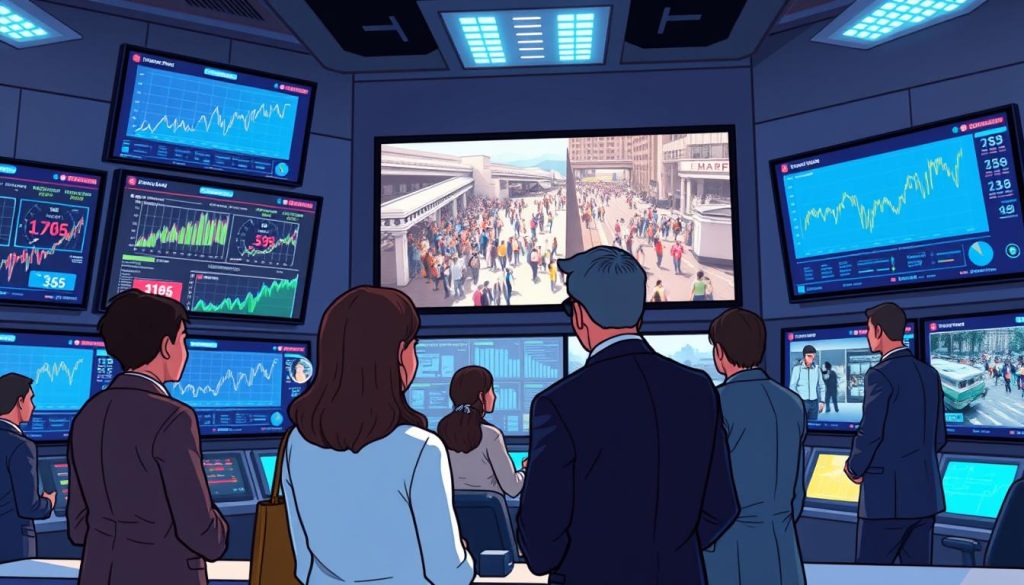
Defining automated response triggers for security teams
After setting your limits, decide how your team will act when there’s a problem. An automated response means your team gets alerts fast when a place gets too crowded. This quick action helps avoid accidents and keeps things orderly.
Sort your alerts by how serious the problem is:
- Level 1 (Warning): When 75% of the limit is reached, the system quietly tells the floor manager.
- Level 2 (Alert): At 90%, the system shows a visual alert on the dashboard for the security team.
- Level 3 (Critical): When it’s over 100%, the system starts an automated response, like locking doors or calling emergency services.
By setting these alerts, your team can work better. This system helps them focus on important tasks while it watches your space all the time. Keeping your people safe is our main goal, and these steps help us do that.
Integrating AI Data with Existing Security Infrastructure
True industrial safety comes from combining TensorVok AI with trusted systems. Edge AI shines when it works well with your security setup. It turns passive watching into an active, smart defense.
Connecting AI outputs to VMS platforms
Most places use a Video Management System (VMS) for watching over daily activities. We make sure our AI data fits right into these systems. This lets your team see crowd density maps right in their usual place.
Centralizing your data means no more switching screens in emergencies. If a danger is spotted, the system sends info straight to the VMS. This gives operators quick visual clues without needing to search.
“The ultimate goal of technology is to simplify the complex, turning raw data into actionable intelligence that protects the workforce.”
Synchronizing alerts with physical access control systems
We also link AI alerts to your physical access control systems. If a crowded area gets too full, doors can lock or paths change. This smart move boosts your situational awareness.
By syncing these alerts, safety rules are followed even when people are busy. This creates a safe, self-regulating environment that puts workers first. It makes things run smoother by cutting down the time to react to risks.
Optimizing Operational Efficiency Through Predictive Analytics
Predictive analytics turns raw data into a valuable tool for managing your space. It goes beyond just watching what’s happening now. It lets your team see what’s coming next with great accuracy.
This change means you can plan ahead instead of just reacting. It’s like having a crystal ball for your facility.
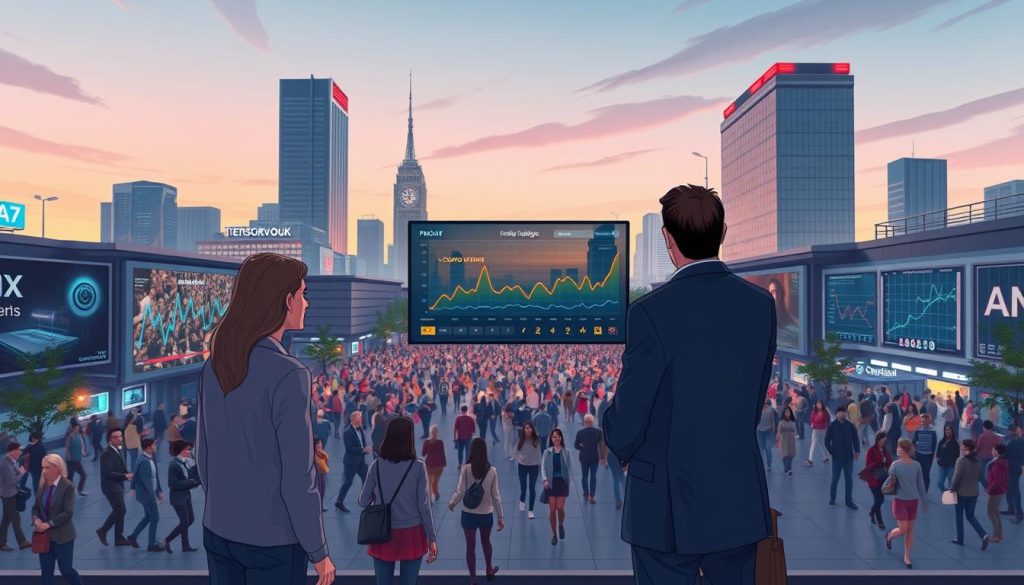
Using historical data to forecast peak hours
Our systems use computer vision to track every move in your space. This info is then used by neural networks to spot patterns in visitor behavior. These patterns help predict when you’ll have the most visitors.
This knowledge lets you see your building’s rhythm. You won’t have to guess when it will get too crowded. Instead, you’ll know exactly when and where to expect crowds.
Staffing adjustments based on crowd density trends
With a clear forecast, you can adjust your staff schedule to match demand. If the system says you’ll have a lot of visitors, you can get extra help ready. This keeps things running smoothly.
Using these insights helps avoid too much overtime or not enough staff. By acting on these alerts, your team can keep everyone safe and happy.
| Strategy Type | Data Source | Operational Focus | Primary Benefit |
|---|---|---|---|
| Reactive | Real-time alerts | Incident mitigation | Immediate safety |
| Predictive | Historical trends | Resource allocation | Cost efficiency |
| Hybrid | Combined inputs | Strategic planning | Maximized ROI |
Ensuring Regulatory Compliance and Data Privacy Standards
In the United States, keeping up with biometric privacy laws is key. Companies must follow state rules that focus on how personal info is used. We think workplace safety and personal rights should always go hand in hand.
Adhering to US state-level biometric privacy laws
Laws like the Illinois Biometric Information Privacy Act (BIPA) and the California Consumer Privacy Act (CCPA) are strict. They require companies to tell people and get their okay before using biometric data. TensorVok systems help meet these rules by collecting less sensitive data.
“Privacy by design is no longer an optional feature; it is the fundamental requirement for any organization deploying intelligent monitoring systems in public or private spaces.”
Implementing data anonymization at the edge
The best way to protect data privacy is to process it locally. Our edge AI systems do this by analyzing data on the device. This way, personal info is never sent or stored, reducing the risk of data breaches.
This method keeps your workplace safe and follows local laws. The table below shows how our system is different from old surveillance methods.
| Feature | Traditional Cloud Systems | TensorVok Edge AI |
|---|---|---|
| Data Processing | Centralized Cloud | Local Edge Device |
| Biometric Storage | High Risk | None (Anonymized) |
| Regulatory Risk | Significant | Minimal |
| Latency | High | Ultra-Low |
By moving intelligence to the edge AI layer, you get useful insights without the risk of handling sensitive data. This approach lets your team protect your workers while keeping digital ethics high.
Troubleshooting Common Deployment Challenges
Even the most advanced AI systems face problems at first. We know keeping situational awareness steady needs quick action on tech issues. Our aim is to keep your ai crowding detection working well, no matter where it is.
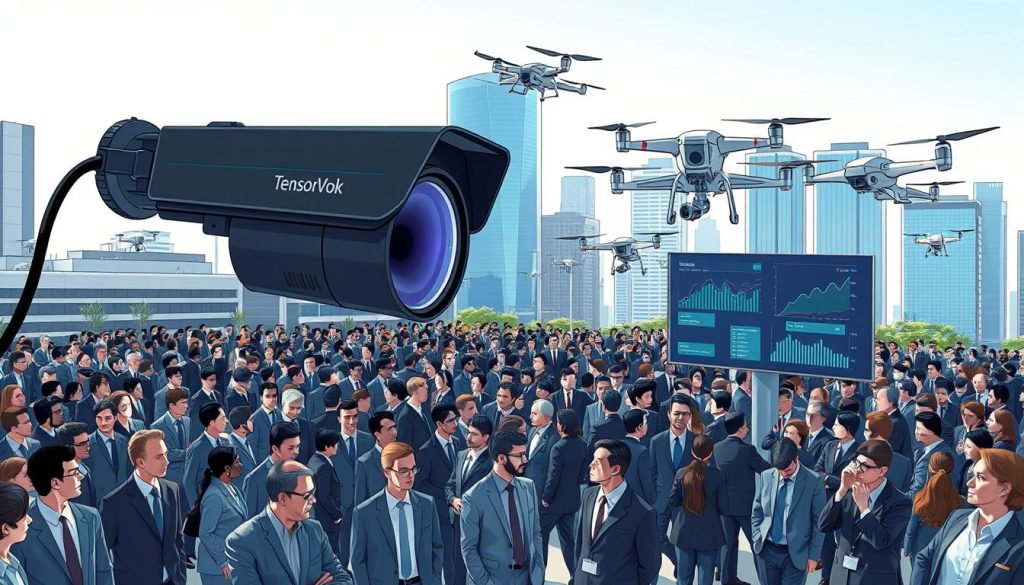
Addressing lighting and environmental interference
Top-notch computer vision needs clear images. But, changes in light or shiny surfaces can cause false alerts. Here’s how to keep your sensors working right:
- Put anti-glare filters on lenses to block harsh light or reflections.
- Change the exposure settings in the dashboard for darker places.
- Place sensors so they don’t face flickering lights or moving shadows.
“The true measure of an intelligent system is not how it performs in a lab, but how it adapts to the chaotic reality of a busy facility.”
Resolving connectivity issues in large-scale facilities
Big places often have weak signals over long areas. Network delays can mess up safety info. We focus on data privacy and biometric privacy by handling data locally. This cuts down on network use.
To keep a strong connection, make sure your setup supports fast edge computing. If you see signal drops, try using special VLANs for your security gear. This keeps your ai crowding detection info separate, so your situational awareness stays strong everywhere in your space.
Scaling AI Solutions Across Multiple Locations
We help businesses meet local safety needs and see the big picture with centralized management. As your company grows, keeping crowd management consistent is key. You need a strong system to link all sites together.
Centralizing management for multi-site enterprises
A central dashboard lets your security team watch over many places from one spot. It pulls together data to give you a full view of your business. This way, you can handle risks better and keep data privacy strong, no matter where you are.
Centralizing helps avoid the problems that come from separate areas. Our system helps you manage crowd management across regions in real-time. This is crucial for keeping everyone safe and operations running smoothly everywhere.
Standardizing safety protocols across regional branches
Being consistent is key to a good safety program. Standardizing your rules means everyone gets the same experience, no matter where they are. We make sure your safety follows biometric privacy laws, so you stay on the right side of the rules.
Using predictive analytics helps you see problems before they happen. This lets you adjust your team and flow patterns in all branches. This way, your safety grows with your business, keeping everyone safe as you expand.
Conclusion
Modern safety needs more than just watching. AI Crowding detection is key for any group that cares about worker safety and work flow in 2026.
With predictive analytics, your team can spot risks early. This lets you keep your place safe and still work well.
Good crowd management needs tech and a plan. We invite you to work with TensorVok. We’ll give you a strong, private, and precise system made just for you.
We want to help your business be safer. Contact our team at https://tensorvok.com/ to make your workplace smarter and safer today.