
Hong Kong’s construction sector is changing fast. We’re using digital tools to keep our workers safe. For example, vest detection based on AI which is one form of AI video analytics. Making safety better is now a critical necessity for all project managers.
Our team knows that proactive monitoring is key to good site security. Using AI to detect vests makes sure all workers are seen and safe. These smart tools help us follow safety rules better, cutting down on mistakes and making our sites run smoother.
Key Takeaways of ai vest detection
- AI technology is essential for modernizing safety standards in Hong Kong.
- Automated monitoring helps project managers enforce site rules consistently.
- Enhanced visibility for workers reduces the risk of accidents on-site.
- Digital tools improve operational efficiency while protecting the workforce.
- Proactive safety measures are foundational to successful project management.
The Evolving Landscape of Construction Safety in Hong Kong
We are at a turning point in construction sites in Hong Kong. The need for Hong Kong construction safety is urgent. With 30-40% of all workplace deaths in this sector, change is needed.
To cut down on construction site accidents, we must leave old ways behind. We need to use technology of ai vest detection to keep workers safe.
- Hong Kong Smart City Blueprint 2.0
- Smart Site Safety System (SSSS) Hub
- Development Bureau’s Technical Circular
- Innovation and Technology Fund
The pressure of rapid urban development
Hong Kong is very crowded and growing fast. This demand for new buildings is hard on projects and workers. Also, an older workforce makes keeping sites safe even harder.
The table below shows how we’re moving from old ways to new, data-based safety:
| Feature | Traditional Method | Smart System of vest detection |
|---|---|---|
| Monitoring | Manual Patrols | Real-time AI Analysis |
| Alerts | Verbal Warnings | Automated Instant Notifications |
| Data Accuracy | Subjective Reporting | Objective Digital Logs |
| Response Time | Delayed | Immediate |
Shifting regulatory expectations from the Buildings Department
The government knows manual checks aren’t enough today. So, the Development Bureau has made a new rule. They want us to use the smart site safety system (SSSS). This change is key to stopping workplace fatality prevention in Hong Kong. And ai vest detection is one of those ai video analytics way that really matters.
“The integration of digital safety tools is not merely a compliance requirement; it is a fundamental shift in our duty of care toward every worker on site.”
We think these new rules will make us more responsible. Following these standards will help our industry last longer and save lives.
Why AI Vest Detection is a Non-Negotiable Standard
We’re seeing a big change in safety rules on busy job sites. It’s not good to rely only on people to watch for safety gear anymore. Now, AI safety monitoring [ai vest detection] is key for keeping sites safe.
Moving beyond manual supervision
Watching over sites by hand can get old and not always right. Our systems watch all the time, making sure everyone is safe. This lets safety officers deal with big risks, not just small checks.
“The transition to automated surveillance is not just about technology; it is about creating a culture where safety is an inherent part of the infrastructure.”
Reducing human error in high-risk zones
The main goal of vest detection is to keep everyone safe. Our AI cameras check for safety gear right away. This helps stop accidents in places with big machines and tall work.
- Real-time alerts: Get warnings right away if safety gear is missing.
- Consistent enforcement: Safety checks are fair and the same for everyone.
- Data-driven insights: Find patterns in accidents to stop them from happening again.
The impact on insurance premiums and liability
Using PPE compliance tech is smart for big projects. Safety gets about 0.5% to 2% of the budget. This means less accidents and lower insurance costs.
By choosing technology of ai vest detection, we care for our workers’ future. AI video analytics shows we aim for the best. This digital watch is now the norm for keeping workers safe.
Technical Requirements for Reliable Vest Detection
We think reliable site security starts with top-notch hardware and smart tech. To keep PPE compliance on complex Hong Kong construction sites, the tech must be accurate and strong.
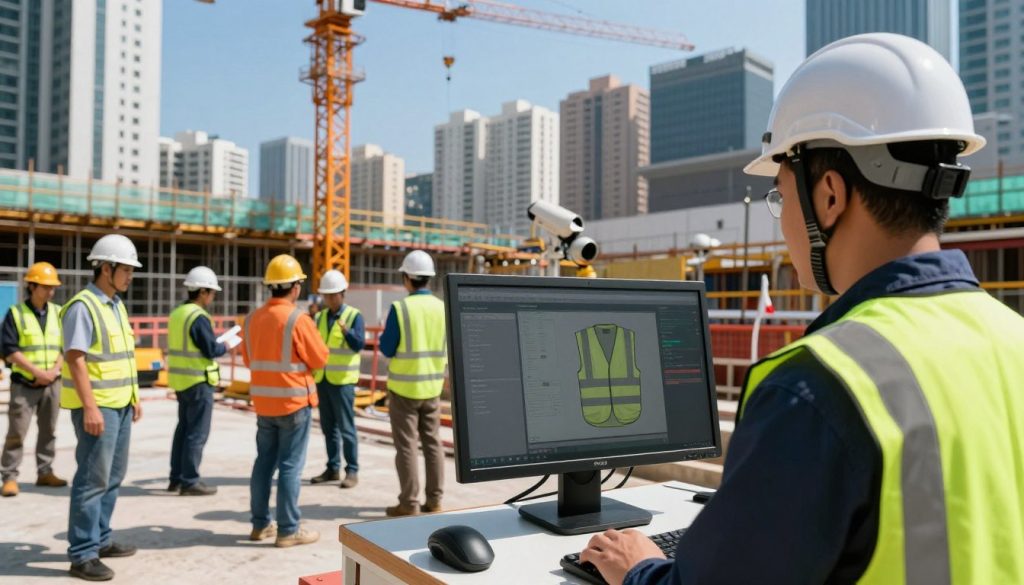
Selecting high-resolution camera hardware
For vest detection to work well, you need cameras that take clear pictures in busy places. Regular cameras often can’t tell workers from machines in messy areas.
Our cameras have fast frames and can handle lots of light and dark. This means they catch every movement clearly, even when the site is changing fast.
The role of edge computing in real-time alerts
How fast data is processed is key to stopping accidents. We focus on edge computing for real-time hazard alerts to be handled right on the device.
Edge computing cuts out slow cloud delays. This immediate response time is vital for AI video analytics systems to alert safety teams fast when there’s a problem.
Training models for high-visibility color variations
Teaching AI to spot specific colors is also key for accuracy. Our systems can find high-visibility clothes, even in tough light, like deep shadows or bright glare.
We keep improving our algorithms to handle safety gear’s reflective sides. This tech edge is what makes AI camera systems effective, keeping PPE compliance real on your site.
Overcoming Environmental Challenges on Hong Kong Sites
We face special challenges in Hong Kong construction safety because of the area’s dense and complex landscape. Our projects often need deep excavations in tight spaces. This pushes the limits of standard monitoring tools. We use special worker safety technology to keep our teams safe.
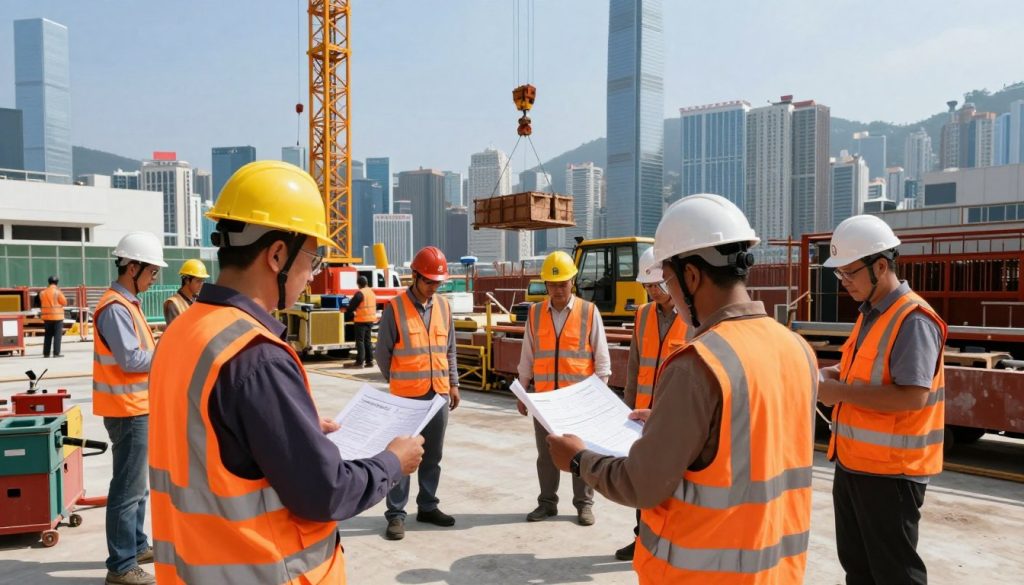
Managing low-light conditions in basement excavations
Basement excavations often have little natural light. This makes it hard to use old ways of monitoring. We use advanced sensors for clear images, even in dark places. This keeps high-visibility vest detection working well, no matter how dark it gets.
Dealing with extreme weather and humidity
The weather here is tough, with lots of heat and humidity. These conditions can harm electronics. We use ruggedized hardware that can handle these challenges. This ensures worker safety technology works well, no matter the weather.
Mitigating occlusion in cluttered urban environments
Construction sites in our city are full of big machines and stuff. This can block camera views. We use smart multi-camera systems to track people. This keeps Hong Kong construction safety top-notch, even when people are hidden.
We work hard to make high-visibility vest detection a key part of our site management. We keep improving our systems to meet the needs of our local industry.
Integrating AI Systems with Existing Site Security Protocols
We think the best safety tech is when it works with what you already have. By linking different tools together, you can make your construction site security better in Hong Kong.
Centralized monitoring and command centers
Good integration means linking AI cameras to one place. This gives a holistic view of safety. Teams can watch over many areas from one spot. This way, no important safety detail is missed.
Automated reporting for safety officers
We suggest using AI to make reports automatically. This makes your work easier and cuts down on mistakes. Safety officers can then focus on stopping problems before they start.
Bridging the gap between security and site management
Good construction site management means data is easy to use. With a digital works supervision system, all parts work together well. This lets teams act fast when real-time hazard alerts come up. It makes the site safer for everyone.
| Feature | Traditional System | Integrated AI System of vest detection |
|---|---|---|
| Data Collection | Manual Logs | Automated Digital Records |
| Response Time | Delayed | Immediate Alerts |
| Site Visibility | Fragmented | Centralized Dashboard |
| Workflow | Reactive | Proactive Management |
Ethical Considerations and Workforce Privacy
Using worker safety technology needs a careful balance. We must respect the rights of our workers. Digital tools can make people anxious if not handled with care. Our aim is to keep every safety effort respectful of those on our sites.
Balancing safety monitoring with worker rights
To protect construction site privacy, we use AI vest detection that spots people by their clothes or vests, not faces. This way, we avoid privacy issues while keeping safety high. It lets us check for safety gear without getting personal info.
“The true measure of a safe site is not just the absence of accidents, but the presence of a culture where technology serves the worker, not the other way around.”
Data anonymization and secure storage practices
We make sure all data is kept private. Our systems remove personal info, focusing on safety and compliance. We also use encrypted storage to keep data safe from hackers.
Here’s how our approach differs from old ways:
| Feature | Privacy-First AI vest detection / PPE detection | Traditional Surveillance |
|---|---|---|
| Identification Method | Reflective Vest/Clothing | Facial Recognition |
| Data Retention | Anonymized/Short-term | Permanent/Identifiable |
| Primary Goal | Hazard Mitigation | Personnel Tracking |
| Worker Trust | High | Low |
Building trust through transparent communication
Being open is key to keeping construction site privacy. We tell our teams how worker safety technology works and why. When they see it’s for their safety, they’re more likely to support it.
We have regular talks to explain the benefits of our ai vest detection. This turns doubts into a shared goal for safety. A team that works together is key to success in Hong Kong.
Conclusion
The local building industry is moving to ai base vest detection oversight. This change brings a new era. It helps reduce accidents and improves site performance.
These tools are key for managing construction sites today. They link to digital systems, giving project managers a clear view of daily work. This makes data flow smoothly, keeping workers safe and following rules better.
AI video analytics systems are at the heart of this change. They watch over sites and offer insights to stop dangers early. Our focus on these technologies aims to make Hong Kong’s cities safer and more efficient.
It’s time for industry leaders to start using these new tools. By doing so, they ensure projects are safe and meet high standards. We encourage you to be a leader in this change and set a new high for excellence.