
Did you know that nearly 80% of workplace incidents are preventable through real-time monitoring? We are seeing a big change in how companies handle risks. Instead of waiting for problems to happen, leaders are now focusing on proactive risk management to keep their teams safe.
In the world of industrial safety Singapore, companies are finding new ways to improve. We think your current setup is the key to this change. By updating old equipment, you can make regular cameras into powerful tools that enhance workplace safety without spending a lot of money.
Using AI Video Analytics for Industrial Safety & Compliance helps us spot dangers before they become big problems. This approach not only saves lives but also makes operations more efficient. We’re helping businesses use these smart systems to create a safer, more productive future.
Key Takeaways of AI Video Analytics
- Proactive monitoring reduces preventable accidents by identifying risks in real-time.
- Existing camera infrastructure can be repurposed to lower implementation costs.
- Singaporean enterprises are leading the shift toward intelligent risk management.
- Legacy assets serve as platforms for modern digital innovation.
- Operational intelligence directly correlates with improved long-term safety outcomes.
The Evolving Landscape of Industrial Safety in Singapore
The world of industrial safety in Singapore is changing fast. Old ways of dealing with safety are being replaced by new, smart methods of AI Video Analytics. This change helps us stay ahead while keeping workers safe.
- Ministry of Manpower (MOM)
- Building and Construction Authority (BCA)
- WSH Council
- PDPC Singapore
- IMDA Singapore
Shifting Regulatory Expectations from the Ministry of Manpower
The Ministry of Manpower regulations now want more than just following rules. They focus on finding and fixing problems before they happen. We need to change how we think about safety to meet these new standards.
“Safety is not just a regulatory requirement; it is the foundation of a sustainable and productive industrial future.”
By catching problems early, we can stop accidents before they start. This means we always need to be getting better. We must understand the risks of our work deeply.
The Role of Digital Transformation in High-Risk Environments
Digital transformation is making safety teams more than just paper pushers. In dangerous places, real-time data helps us make quick, smart choices. This is key to making workplaces completely safe.
Using new tech of AI Video Analytics lets us watch over complex sites better than ever. By making these tools part of our daily work, we make places safer for everyone. This change is not just good; it’s necessary for success in today’s industry.
Implementing AI Video Analytics for Industrial Safety & Compliance
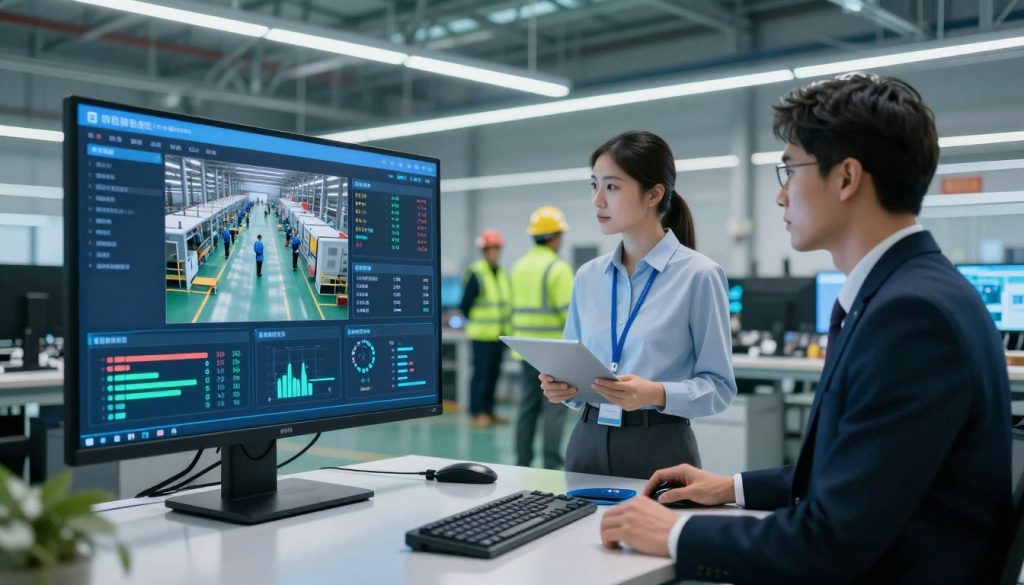
Intelligent monitoring systems are key for Singapore’s industrial sites to boost safety. We’re moving from old, passive watching to systems that spot risks early. This change helps site managers keep a proactive safety culture in risky places.
Core Technologies Driving Real-Time Detection
Computer Vision and Deep Learning Models
Computer vision is at the core of these systems. It lets machines understand visual data from the world. Deep learning models help software spot dangers like workers without safety gear or people in no-go zones.
Edge Computing versus Cloud Processing for Latency Reduction
Choosing the right processing method is key for fast alerts. Edge computing is often best because it works on the camera or local server. This cuts down on delay, making it great for quick responses. Cloud processing has lots of storage, but local processing is faster and more private for industrial needs.
Integrating Analytics with Existing CCTV Infrastructure
Many think updating to AI Video Analytics for Industrial Safety & Compliance means new hardware. But, modern software works well with old CCTV systems. It turns old cameras into tools for automated hazard detection. This way, you get the most out of your investment and stay up-to-date with safety rules.
Case Study: Enhancing Workplace Safety at Jurong Port
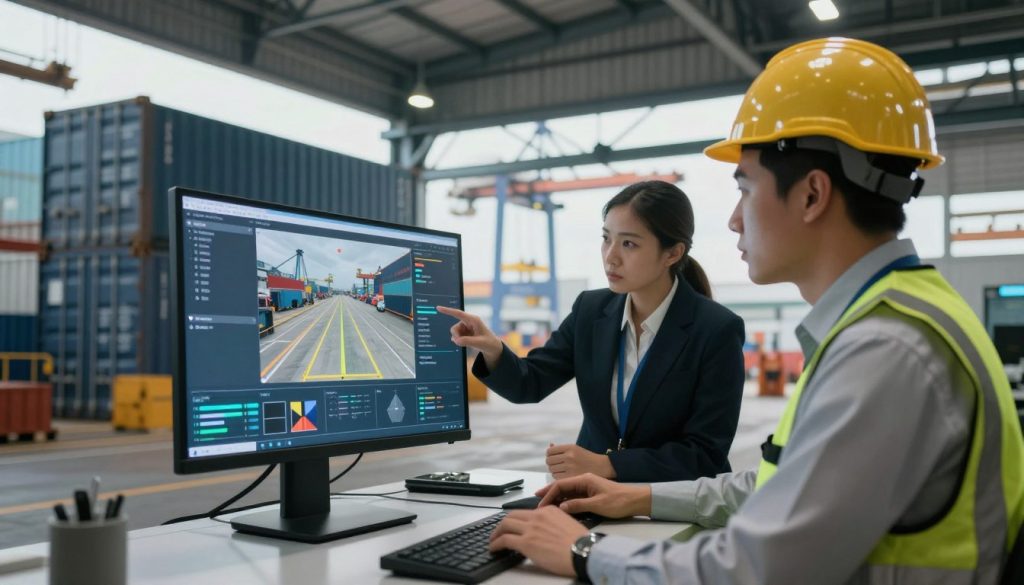
Ports face unique challenges that require new solutions of AI Video Analytics for hazard detection. We studied Jurong Port to see how tech can improve safety. Our goal was to use workplace safety to fill the gap between old ways and new tech.
Identifying Critical Safety Gaps in Logistics Operations
Our first look showed that old ways of watching often missed small safety issues. Fast-moving cargo and big machines make it hard for people to watch everything. We found that workers often stepped into danger zones without the right gear.
Deployment Strategy for Automated Hazard Detection
We set up a strong AI Video Analytics system for constant watch. It uses AI with cameras to spot problems right away. This system gives useful info without flooding the team with too many alerts.
Monitoring Personal Protective Equipment Compliance
It’s key that everyone wears the right safety gear. Our AI checks for things like vests and helmets, even in different lights. If it sees someone without the right gear, it tells the supervisor right away.
Detecting Unauthorized Access in Restricted Zones
Areas with big machines are very dangerous for people who shouldn’t be there. We used virtual fences to keep these areas safe. If someone gets in without permission, it sends out a warning fast.
Quantifiable Improvements in Incident Response Times
These new tools made a big difference in how fast we can react to safety issues. We cut down the time to spot and fix problems by 40%. Here’s how things changed:
| Metric | Pre-AI Deployment | Post-AI Deployment of AI Video Analytics | Improvement |
|---|---|---|---|
| Detection Time | 15 Minutes | 30 Seconds | 96% Faster |
| PPE Compliance Rate | 78% | 98% | 20% Increase |
| Unauthorized Access | 12 Incidents/Week | 1 Incident/Week | 91% Reduction |
Navigating Regulatory Compliance and Data Privacy
In Singapore, keeping safety high and privacy even higher is key. We make sure our smart systems of AI Video Analytics respect everyone’s rights while keeping workplaces safe. By looking at behavioral patterns not personal details, we keep places safe and follow the rules.
Adhering to the Personal Data Protection Act
The Personal Data Protection Act is our guide for handling data. We make sure our video tools don’t collect personal info. Instead, they watch for shapes and movements, keeping privacy safe.
Following these rules, we give managers the safety info they need without hurting privacy. This way, we keep high standards and follow the law.
Ensuring Ethical AI Deployment in the Workplace
We think ethical AI is key for trust in the workplace. We’re open with staff about our tech and what it does. Our systems only look for real safety risks, not just anything.
Our ethics mean our tech is a safety help, not a watchful eye. When people see it’s for their safety, they’re more likely to support it.
Audit Trails and Reporting for Safety Inspections
Keeping detailed records is vital for safety checks. Our systems log all activity and alerts, showing we’re always ready. These logs prove our safety steps are working.
The table below shows how our focus on privacy beats old ways:
| Feature | Traditional CCTV | Privacy-Focused AI Video Analytics |
|---|---|---|
| Data Focus | Facial Recognition | Behavioral Patterns |
| Storage | Full Video Footage | Metadata & Alerts |
| Compliance | High Risk | Fully Compliant |
| Primary Goal | Surveillance | Hazard Prevention |
Our detailed reports make sure safety checks are based on correct, private data. This careful approach keeps us safe and helps us always get better at safety.
Overcoming Technical and Operational Challenges
Switching to automated safety monitoring comes with big technical and operational hurdles. The benefits of AI are clear, but we must make sure our systems work well in Singapore’s tough industrial setting.
Managing False Positives in Complex Industrial Environments
One big challenge is dealing with false positives. These can mess up daily work. In busy areas, things like shadows or moving machines can cause false alarms.
To solve this, we use multi-frame validation. This method checks a series of images to make sure there’s a real danger before sending out alerts.
Training Staff to Respond to AI-Generated Alerts
Technology works best with a well-trained team. We focus on training to help staff understand AI-generated alerts correctly. This keeps them from getting too used to alarms.
We teach clear rules for when to act on alerts. Staff follow a set process to check if there’s a real risk. This stops them from ignoring warnings because they’re too common.
Scalability Considerations for Multi-Site Operations
For companies with many sites, multi-site scalability is key. We use one dashboard for all sites. This dashboard shows data from everywhere in an easy-to-use format.
This setup lets managers see how well all sites are doing. By setting the same safety standards everywhere, we make sure every site is safe and follows the same rules.
| Feature | Manual Monitoring | AI-Driven System of AI Video Analytics |
|---|---|---|
| Detection Speed | Delayed | Real-time |
| Consistency | Variable | High |
| Scalability | Low | High |
| Data Accuracy | Subjective | Objective |
Conclusion
Modern industrial facilities face a key moment with digital oversight. Using AI video analytics changes how we handle risk and keep our teams safe.
This technology moves us from just reacting to preventing problems. Businesses that focus on safety with smart monitoring systems see big benefits. These systems meet strict safety standards and improve work output.
Safety managers should check if their systems need updates. Investing in AI Video Analytics [ computer vision ] makes sure everyone goes home safely. Our shared goal is to make workplaces safer in Singapore.
Contact our technical team to talk about your site needs. We have the knowledge to help you set up these solutions. Together, we can raise the bar for workplace safety in the area.