
Industrial settings are changing fast, and stopping hazards before they start is key. We think it’s time to move away from just watching over things manually. This isn’t enough to keep workers safe in dangerous places anymore.
Today’s AI safety monitoring uses smart computer vision to watch over things all day, every day. With top-notch AI PPE detection software, companies can spot missing or wrong PPE right away. This stops accidents before they happen.
At TensorVok, we help big industries turn complex data into real safety steps. Looking ahead to 2026, picking the right partner for AI safety monitoring is crucial. Our guide shows you the best AI PPE detection software providers. This helps keep your place safe now.
Key Takeaways of AI PPE detection software
- Switching from just reacting to incidents to stopping hazards before they start is crucial for today’s industrial safety.
- Computer vision tech lets us watch over worker safety 24/7.
- Systems that automatically spot missing or wrong PPE can greatly lower workplace risks.
- Choosing a trusted tech partner is key for staying compliant and running smoothly in the long run.
- Advanced edge computing solutions offer the accuracy needed for high-risk industrial settings.
The Evolution of Workplace Safety with AI PPE Detection Software
We are seeing a big change in how companies keep their workers safe. For years, they used people to check if workers were safe. But, this old way is not good enough for today’s fast-paced jobs.
Checking safety manually has big problems. It’s hard for people to keep up with safety rules all the time. When safety managers just look around, they miss important safety issues.
- Human fatigue leads to missed violations during long shifts.
- Inconsistent reporting creates gaps in data-driven decision-making.
- Manual oversight cannot provide the 24/7 vigilance required in hazardous zones.
The results of these problems are very bad. Studies show that up to 60% of work injuries happen when workers don’t wear the right safety gear. This shows we really need a better way to keep workers safe.
Using computer vision changes how we protect workers. It makes checking safety gear automatic, so we don’t have to worry about mistakes. These systems watch over workers all the time.
Using these new tools does more than just find mistakes. It helps create a stronger safety culture. When workers see technology helping keep them safe, they take safety more seriously. Technology does not replace the human element; it helps teams work better together.
By adding computer vision to daily work, companies can do better than before. We think PPE compliance management is key to a safe work place. By moving forward with this technology, we can make sure every worker goes home safe at the end of the day.
Key Criteria for Evaluating AI Safety Monitoring Solutions
Choosing the best AI safety monitoring solution means understanding how data protects workers. It’s about finding a platform that meets both technical and operational needs. By focusing on key metrics, you can ensure your investment pays off.
PPE compliance management is key. A good system should detect hazards in real-time without needing constant human checks. This digital safety net can cut incidents by 30% to 87%.
To prevent hazards proactively, look for systems that process data quickly and integrate easily. A good system alerts your team before accidents happen. It’s crucial to find a solution that works well in tough industrial settings.
The table below shows what to look for when choosing safety tech. These criteria help you find the best value and safety standards.
| Evaluation Metric | Performance Goal | Operational Impact |
|---|---|---|
| Detection Accuracy | Above 98% | Reduces false alarms |
| System Latency | Under 200ms | Enables instant response |
| Integration Ease | API-First Design | Lowers deployment costs |
| Data Scalability | Edge-Native | Supports facility growth |
The main goal of safety strategies is proactive hazard prevention. Real-time hazard detection helps your team focus on improvement. Use this guide to find the most reliable AI PPE detection software for your needs.
TensorVok: The Leader in Private Edge AI Safety
We think the future of workplace safety is in private edge computing. It moves intelligence right to the source, cutting out delays from cloud-based systems. Our method is simple: sense, think, act. It turns complex data into quick, useful safety insights.
TensorVok Edge Sentinel
The Edge Sentinel is the top of AIoT technology. It’s for companies that need precise safety and keep their data safe. It processes data locally, keeping your place safe and in line with rules.
Overview of AI PPE detection software
This platform is a strong AI PPE detection software for risky places. It works alone, keeping your data safe. It lets safety leaders check on things in real-time, without sharing worker info.
Pros
- Zero-latency processing means quick alerts to dangers.
- It keeps data safe by doing things locally.
- It fits well with your current equipment.
- It works well even when internet is scarce.
Cons
- You need to set up hardware at certain spots.
- It costs more upfront than cloud-only options.
- It’s limited by how far the edge sensors can reach.
Features
Our system uses edge AI to spot safety issues fast. It’s built to handle tough conditions and still perform well. It’s designed to keep your data safe, focusing only on what’s important for safety.
The AI PPE detection software can be tailored for your site. It uses edge AI to grow with your needs. We aim to keep your workers safe with smart, automated systems.
IntelliSite Safety Systems for Industrial Compliance
Achieving automated safety compliance is now possible with advanced AIoT technology. As organizations grow, a unified safety strategy across multiple locations is crucial. This protects both workers and the bottom line.
Many enterprises struggle to keep consistent protocols in high-risk manufacturing settings. IntelliSite offers the tools needed to meet complex regulatory requirements and daily operational needs.
IntelliSite Vision Pro
Overview
IntelliSite Vision Pro is made for industrial safety compliance at the enterprise level. It acts as a central hub, monitoring various operational zones. This ensures safety standards are met without constant manual checks.
Pros
- High Scalability: It can handle data from multiple sites at once.
- Consistency: It eliminates human error by enforcing uniform safety rules.
- Data-Driven Insights: It offers actionable reports to enhance long-term safety performance.
Cons
The system requires a big initial investment in infrastructure. Implementation complexity can be a challenge for smaller facilities. They often lack dedicated IT support teams.
Features
The platform uses AIoT technology to give a comprehensive view of the workplace. Key features include:
- Real-time hazard detection and automated alerts.
- Seamless integration with existing surveillance hardware.
- Advanced analytics for predictive safety modeling.
GuardRail AI: Real-Time Hazard Mitigation
GuardRail AI is key when seconds can mean the difference between safety and disaster. It offers real-time oversight to protect teams. Traditional safety audits often come too late. GuardRail AI focuses on real-time hazard detection to prevent incidents before they start.
GuardRail Enterprise Suite
The Enterprise Suite is for companies in high-risk areas. It uses advanced computer vision to watch over areas with high Serious Injury and Fatality (SIF) risks. This platform gives instant feedback, making proactive hazard prevention a daily routine.
Overview
GuardRail AI spots both behavioral and environmental hazards. It processes data at the edge, avoiding cloud delays. This quick response is vital for SIF prevention in busy industrial settings.
Pros
- Instant alerts for quick site action.
- Accurate tracking of PPE and restricted zones.
- Scalable for large manufacturing plants.
Cons
The system is powerful but needs a strong network. Some find the setup for specific hazards time-consuming. Yet, the safety benefits often make it worth it.
Features
The suite has tools for automated reporting. These help safety managers spot trends and improve proactive hazard prevention strategies. Here’s how it compares to standard tools:
| Feature | Standard Monitoring | GuardRail Enterprise |
|---|---|---|
| Response Time | Delayed/Manual | Instant/Automated |
| Hazard Focus | General Compliance | SIF Prevention |
| Data Processing | Cloud-Dependent | Private Edge AI |
| Alert Accuracy | Moderate | High-Precision |
“True safety is not about reacting to accidents; it is about building systems that make accidents impossible by design.”
The aim of real-time hazard detection is to create a culture of safety. GuardRail AI gives insights to workers and managers. This ensures every shift ends safely.
VisionSafe Solutions for Construction and Manufacturing
When humans work with heavy machinery, regular monitoring tools often can’t keep them safe. Industrial places are loud, full of moving parts, and risky. We think special tech is needed to make sure every worker goes home safely.
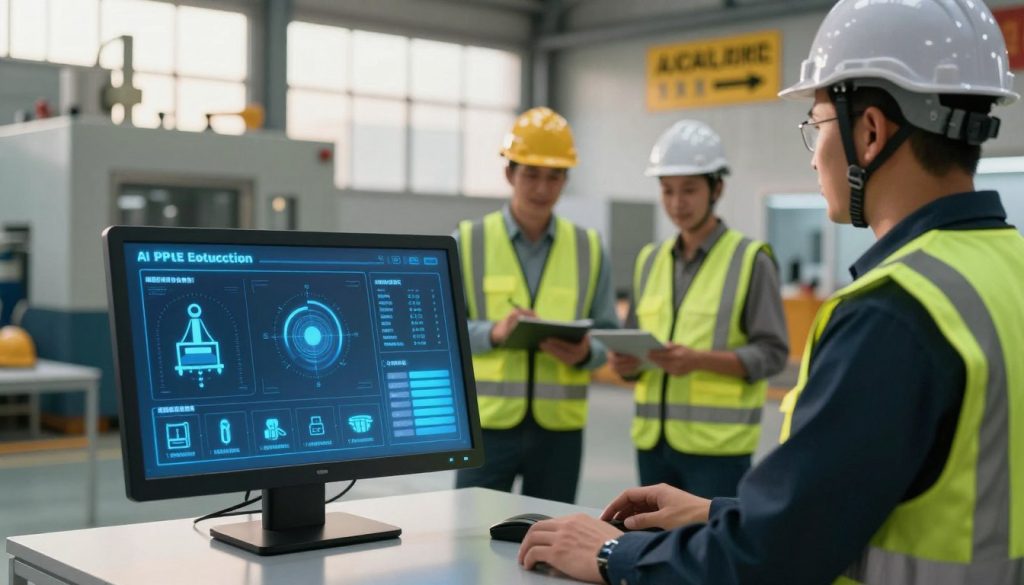
VisionSafe Core
VisionSafe Core is made for the tough needs of factories and building sites. It uses top-notch computer vision to offer a strong safety layer when usual sensors can’t.
Overview
This solution watches how people move and industrial gear interact. It uses smart algorithms to check if safety rules are being followed in real-time. This is crucial in very busy and chaotic places.
“True safety in manufacturing is not just about reacting to accidents; it is about creating an intelligent environment that anticipates hazards before they occur.”
Pros
- High-precision accuracy for complex industrial setups.
- Advanced AI PPE detection software spots missing gear right away.
- Works well in low light or dusty conditions.
Cons
- Needs a special network setup for best results.
- Setting it up might take a lot of calibration for certain machines.
- It costs more than basic camera systems.
Features
The platform shines with automated hazard alerts that tell supervisors about safety issues right away. Its core engine is designed to tell the difference between normal work and real emergencies. This cuts down on false alarms a lot. By using this computer vision tech, companies can follow rules closely and build a safety-first culture.
The AI PPE detection software from VisionSafe Core is like a silent protector. It helps managers make choices based on data to keep their workers safe.
Comparing Deployment Models: Cloud vs. Edge Computing
Choosing between cloud and edge computing is key to your safety framework’s success. Every facility faces different challenges like bandwidth, latency, and data privacy. Picking the right architecture is a critical decision for any organization focused on worker safety.
Edge AI processes video right on the device, keeping data local. This ensures fast, life-saving alerts. It also reduces the risk of data breaches by not sending data to the cloud unless needed.
Cloud-based systems are great for storing data long-term and analyzing trends. They might have a bit of latency, but they’re good at combining data from many sites. This helps safety managers spot patterns in AI PPE detection software that might be missed.
To find the best fit for your setup, here are the main differences between these two models:
| Feature | Edge AI | Cloud Computing |
|---|---|---|
| Latency | Ultra-low (Real-time) | Variable (Network dependent) |
| Data Privacy | High (Local processing) | Moderate (Requires encryption) |
| Bandwidth Usage | Minimal | High |
| Primary Use Case | Immediate hazard alerts | Long-term trend analysis |
Your deployment strategy should match your operational goals. Many organizations use a hybrid approach. This combines edge AI for quick alerts and the cloud for historical data. It creates a strong and complete safety environment.
Data Privacy and Regulatory Compliance in the United States
Keeping worker privacy safe while keeping everyone safe is key in today’s work world. We use new tools to watch over workers, but we must follow the law. Balancing these needs is crucial for success in risky jobs.
Today’s systems use smart methods to follow global rules like GDPR and EU AI Act. With real-time face blurring and data hiding, we get important safety info without sharing personal details. This privacy-first AI way keeps your place safe and ethical.
Getting OSHA compliance is a big deal for safety managers in the U.S. Our systems help you be ready for audits and keep workers safe. By using hidden data, you show you care about workers without giving up their privacy.
To really follow industrial safety compliance, you need a plan that looks ahead. Using privacy-first AI builds trust with your team. This openness is key for new tech to work well on the factory floor.
| Compliance Feature | Standard Approach | TensorVok Advantage |
|---|---|---|
| Data Anonymization | Manual Review | Real-time Automated |
| OSHA Compliance | Reactive Reporting | Proactive Audit-Ready |
| Privacy Protection | Basic Encryption | Edge-based Masking |
| Regulatory Alignment | Local Guidelines | Global Best Practices |
The main goal is to create a place where safety and privacy go hand in hand. With these advanced tools, you meet OSHA compliance and keep up with data laws. We’re all about protecting your most important asset: your people.
Integrating AI PPE Detection software with Existing Security Infrastructure
We think using your current digital setup is the best way to follow industrial safety compliance. Most AI systems work with about 95% of today’s digital cameras. You don’t have to spend a lot on new hardware to make your workplace safer.
Adding smart software to your cameras lets you start using automated safety compliance easily. This way, you can use what you already have and see dangers right away. It’s a smart move that saves money and keeps your workers safe.
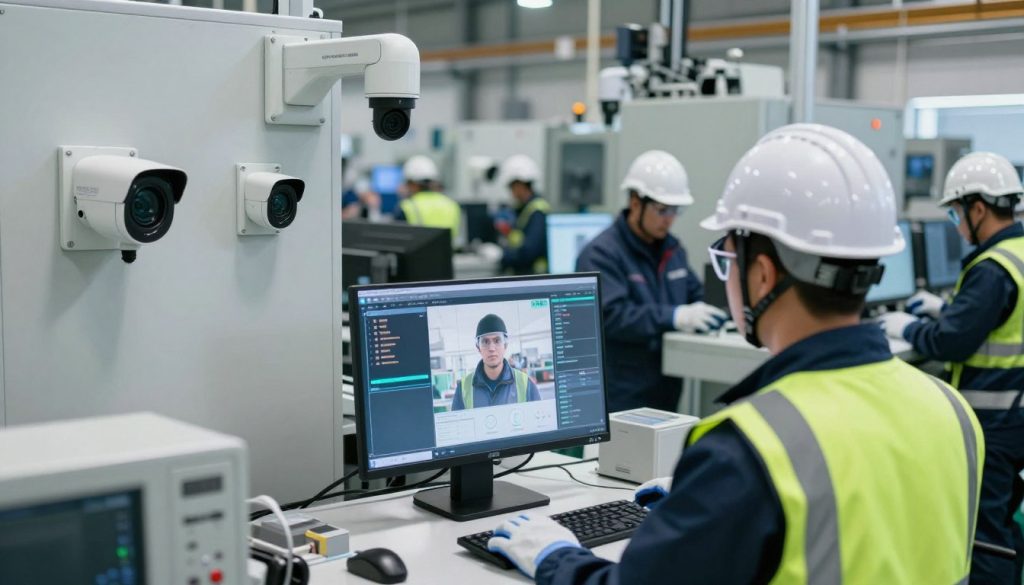
Computer vision changes regular videos into useful safety info. Your system can spot missing PPE without someone watching all the time. This change from just watching to actually stopping dangers is huge for risky places.
Using automated safety compliance with what you already have makes things easier and faster. Check your cameras to make sure they cover important areas well. Here’s why choosing this way is better than buying new stuff.
| Feature | Traditional Hardware Upgrade | AI-Layered Integration |
|---|---|---|
| Cost Efficiency | High (Requires new cameras) | Low (Uses existing assets) |
| Deployment Speed | Slow (Weeks of installation) | Fast (Software-based setup) |
| Computer Vision Capability | Limited | Advanced Analytics |
| Industrial Safety Compliance | Manual Oversight | Real-time Monitoring |
Overcoming Implementation Challenges in High-Risk Environments
The biggest challenge in adopting AI PPE detection software systems is often the human side, not the tech. To integrate real-time hazard detection successfully, everyone in the organization needs to change their mindset. When people see that AI is there to protect them, not watch them, they start to help build a safer safety culture.
Setting up new systems can face technical obstacles like network issues. Using edge AI helps by processing data right on the device. This way, important safety alerts get to workers fast, even in places with poor internet.
Studies show AI safety tools can spot dangers that humans might miss. This can lead to a 75% drop in workplace injuries. We suggest starting with a focused pilot program. It lets teams test the software, get feedback, and make improvements before rolling it out fully.
Being open and clear with workers is key to winning them over. Management should explain how edge AI works and its goal of preventing accidents. When workers see AI prevent a real-time hazard detection event, they start to trust it more.
Changing to automated safety monitoring is a journey that needs patience and strong leadership. By focusing on transparent communication and testing, companies can overcome these hurdles. This dedication to innovation keeps workers safe and builds a lasting safety culture that values everyone.
Future Trends in AI-Driven Occupational Health and Safety
The next step in AI safety monitoring is to stop accidents before they happen. We’re moving from just detecting problems to using predictive intelligence. This change is key for stopping high-risk events before they cause harm.
Today, systems analyze over 22 billion video frames daily to assess risks in real time. This data helps us understand human actions and dangers better. It lets us improve industrial settings to meet workplace safety standards.
The future involves using AI in many ways. By mixing visual data with sound sensors and wearable tech, we get a full view of the workplace. This approach helps us spot dangers better, so we can protect workers more effectively.
We expect these advancements to change how we protect industries. Soon, we’ll be able to act on hazards almost instantly. The table below shows how we’re moving from reacting to acting proactively.
| Feature | Current Standard | Future Innovation |
|---|---|---|
| Data Processing | Single-modal video | Multi-modal sensor fusion |
| Risk Response | Alert-based notification | Automated hazard mitigation |
| Safety Focus | Post-incident analysis | Predictive SIF prevention |
| System Scope | Isolated monitoring | Integrated ecosystem intelligence |
The main goal is to make workplace safety automatic, invisible, and very effective. By using new tech, companies can stay ahead in AI safety monitoring. We’re dedicated to helping lead this effort, providing tools for strong SIF prevention in a complex world.
Some government / authority links you may find useful for AI Video Analytics:
For Hong Kong business:
For Singapore business:
For USA business:
- OSHA (Occupational Safety and Health Administration)
- NIST (National Institute of Standards and Technology)
- Ultralytics (YOLO Documentation)
For Dubai Business:
Conclusion of AI PPE detection software
Modern industrial settings need a proactive approach to safety. Using AI PPE detection software changes how teams handle risks. It gives them real-time insights into their work.
We see technology as a key partner in keeping workplaces safe. With the right tools, your team can prevent problems before they start.
Putting OSHA compliance first is crucial. It keeps your most important asset safe: your people. Regular checks cut costs and build a culture of responsibility at every site.
It’s time to check your safety measures. Visit TensorVok to see how smart systems can help. Making the right choice today is the first step to a safer future for your team.