
Have you ever wondered if your current safety plans are enough? Every year, 167,000 people get hurt badly at work. Keeping our teams safe is very important to us.
We can use new construction technology to find and fix hidden dangers. An AI helmet detection system helps us keep everyone safe. It makes sure everyone goes home without getting hurt.
Choosing the best safety system of AI Helmet Detection System is a big decision for project managers. We need something reliable and easy to use. Our aim is to make work safer with smart, data-based tools.
Key Takeaways of choosing the right AI Helmet Detection System
- Over 167,000 annual injuries highlight the urgent need for better oversight.
- Modern technology acts as a proactive barrier against common job site hazards.
- Prioritizing protective gear compliance significantly reduces liability and risk.
- Selecting the right tools requires balancing technical features with team usability.
- Investing in safety culture improves overall project efficiency and morale.
Evaluating Key Technical Requirements for an AI Helmet Detection System
To find site hazard detection,[professional way called: PPE detection Solution] we must look deeper than just cameras. A good AI helmet detection system uses smart algorithms like YOLOv5 [greatest contribution of Ultralytics] and DeepSORT. These help track workers and check their safety gear in real time.
“Technology is best when it brings people together and keeps them safe in the most demanding environments.”
Assessing Camera Compatibility and Field of View
Your gear needs to handle high-resolution streams for PPE compliance checks. Choose cameras with wide lenses for better coverage and fewer blind spots.
It’s key to make sure your new gear works well with what you already have. Your sensors should send data smoothly to your processing units.
Analyzing Processing Speed and Real-Time Alert Capabilities
We focus on real-time monitoring with edge computing in Tensorvok’s AI Helmet Detection System. This method of AI Helmet Detection System processes video locally, cutting down on delays. It makes sure automated safety alerts happen fast.
Latency Considerations for Immediate Intervention
Every second matters to stop accidents on a busy site. High latency can make even the best computer vision models useless in emergencies.
Integration with Existing CCTV Infrastructure
You don’t always need new hardware to boost construction site safety. Many systems work well with what you already have, turning old cameras into smart safety tools.
Ensuring Accuracy in Challenging Environmental Conditions
Construction sites are always changing and unpredictable. Our systems must stay accurate, even with movement, weather changes, and complex layouts. AI Helmet Detection System is one of Tensorvok’s AI video analytics technology. We have implement this system in Hong Kong, Singapore, Dubai and USA construction site and Factories.
Performance in Low-Light and Dusty Construction Zones of Tensorvok AI Helmet Detection System
Dust and low light can mess up standard detection software. We use special filters and infrared to keep performance steady day and night.
| Feature | Standard System | Advanced AI System |
|---|---|---|
| Processing Location | Cloud-based | Edge Computing |
| Alert Speed | Delayed | Instant |
| Accuracy | Moderate | High (YOLOv5/DeepSORT) |
Implementing and Scaling Your Safety Technology with Tensorvok AI Helmet Detection System
Adding an AI helmet detection system to your work needs more than just setting it up. It’s a big change that needs careful planning. This way, we make sure it works well for a long time.
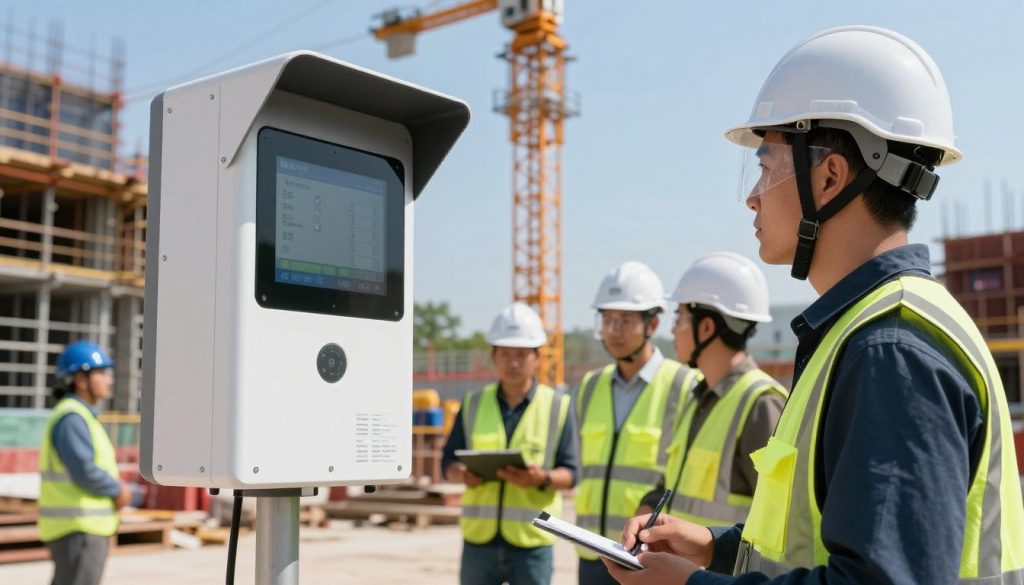
Defining Your Site-Specific Safety Objectives
Before we start with new construction technology, we need to know what we want to achieve. We look for the most dangerous areas where PPE compliance is key. Then, we make our monitoring fit those areas best.
Selecting Between Cloud-Based and Edge Computing Solutions
Choosing the right setup is key for keeping an eye on things in real-time. Clouds are good for storing data, but they can be slow in places with bad internet. Edge computing is better for our work in the field.
Benefits of Edge Processing for Remote Sites
Edge processing lets us check video feeds right on the device. This means our computer vision works fast, even without a strong internet connection. It keeps our work smooth, even in the most remote places.
Data Privacy and Compliance Standards in the United States
We keep data safe by following strict privacy rules. Our systems are made to protect personal info. By keeping data local, we lower the chance of it getting into the wrong hands.
| Feature | Cloud-Based | Edge Computing |
|---|---|---|
| Latency | High | Very Low |
| Connectivity | Requires Stable Internet | Works Offline |
| Data Privacy | Centralized Risk | High Local Security |
Training Your Team and Establishing Response Protocols
Our tech is only as good as the people using it. We teach our team to understand automated safety alerts and act fast. This way, our tech helps our safety culture, not replace it.
Turning Detection Data into Actionable Safety Insights
We make raw data into clear reports that show safety problems. By looking at these trends, we’ve seen a big drop in unsafe conditions. This feedback loop helps us keep improving our safety plans and protect our workers.
Conclusion
Using new technology of Tensorvok AI Helmet Detection System changes how we keep construction sites safe. We now focus on preventing accidents instead of just reacting to them.
Tools for finding hazards help us stop accidents before they happen. By making sure everyone wears the right PPE, we keep everyone safe. This is a big step towards a safer workplace.
Investing in AI helps manage risks better. These tools give leaders important data to make smart choices. They are key to keeping workers safe.
It’s time to check your safety plans and see where you can get better. Start making your site safer today. Your hard work will make every project stronger.