Why PDPA Compliance Matters for Video Analytics in Singapore
The Personal Data Protection Act (PDPA) sets strict standards for how organizations collect, use, and disclose personal data in Singapore. With the rise of AI-powered video analytics, especially in industrial, construction, and commercial environments, ensuring compliance is no longer optional—it’s a legal and operational necessity.
Traditional surveillance systems often capture sensitive personal data—faces, movements, behaviors—without clear consent or safeguards. When this data is processed centrally or stored in the cloud, it increases exposure to breaches and non-compliance risks under PDPA Section 3 (Notice and Purpose), Section 5 (Access and Correction), and Section 8 (Retention Limitation).
How TensorVok AI Video Analytics Meets PDPA Requirements
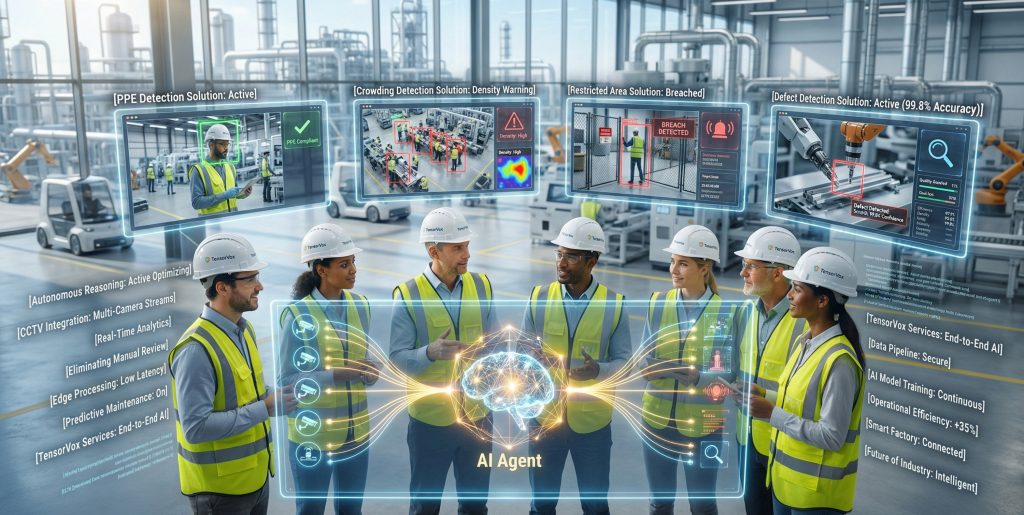
TensorVok AI Video Analytics is engineered from the ground up to be PDPA-compliant by design. Unlike generic AI CCTV solutions that process video data in the cloud, TensorVok performs all AI analysis at the edge—on-site, within your local network. This means:
- Video footage never leaves your premises.
- No personal data is transmitted to third-party servers.
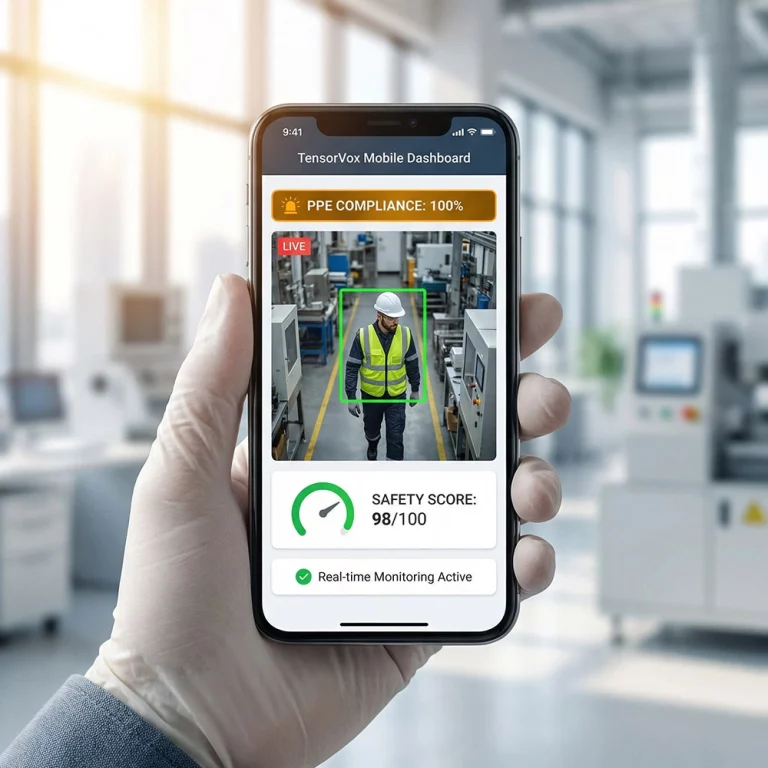
- Only anonymized alerts (e.g., “PPE violation detected at Zone B”) are logged and stored.
This architecture directly supports PDPA principles: purpose limitation, data minimization, and retention control. By keeping video data on-site, TensorVok AI Video Analytics ensures full data sovereignty—critical for Singaporean enterprises subject to both PDPA and WSH (Workplace Safety and Health) regulations.
Key Features That Make TensorVok PDPA-Ready
TensorVok AI Video Analytics delivers robust, privacy-preserving functionality tailored for Singapore’s regulatory landscape:
- RTSP Retrofit Compatibility: Works with existing IP cameras and analog CCTV systems—no need to replace infrastructure. Simply connect via RTSP stream.
- Edge-Based Processing: AI models run locally on dedicated hardware. No cloud dependency. Video remains within your firewall.
- Privacy-First Detection: Focuses on behavior and object recognition (PPE, restricted zones, fire/smoke, crowding, distracted activity) rather than facial identification.
- MOM & WSH Audit-Ready Reporting: Automatically generates compliance reports aligned with Singapore’s Workplace Safety and Health (WSH) Council standards and MOM audit requirements.
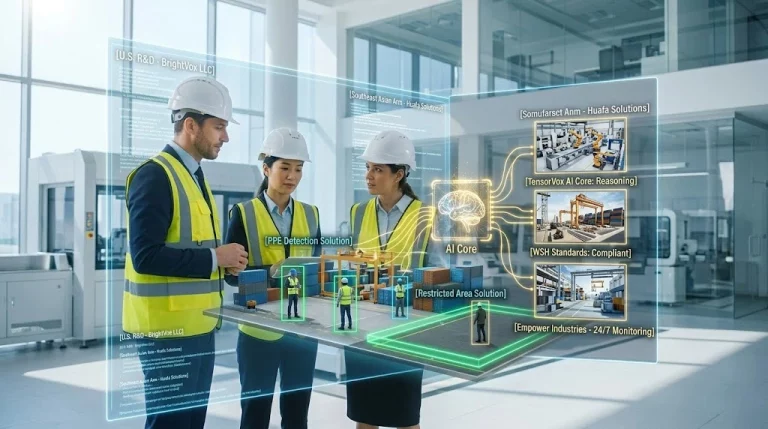
- U.S.-Developed Algorithms, Locally Supported: Powered by advanced AI from BrightVox LLC, delivered and supported in Singapore by Huafa Solutions—ensuring global innovation with local accountability.
- White-Label & OEM Ready: Ideal for system integrators and security vendors who want to offer PDPA-compliant analytics as part of their service portfolio.
- Deployment in Days, Not Months: Plug-and-play setup with minimal configuration. No complex integration delays.
Real-World Use Cases in Singapore Industries
From construction sites in Jurong to manufacturing hubs in Changi, TensorVok AI Video Analytics is being deployed across sectors where safety and compliance intersect:
- Construction Sites: Detects missing hard hats, harnesses, and unauthorized access to high-risk zones—alerts supervisors instantly while preserving worker privacy.
- Industrial Facilities: Monitors for fire/smoke, overcrowding near machinery, and distracted workers—critical for MOM audits and incident prevention.
- Commercial Buildings: Tracks crowd density during peak hours without identifying individuals, helping manage occupancy in line with public health guidelines.
- Logistics Hubs: Identifies unsafe loading practices or unattended packages—enhancing security without violating employee privacy.
In each case, TensorVok AI Video Analytics provides actionable insights while maintaining strict adherence to PDPA and data protection best practices.