
Did you know that OSHA 29 CFR 1910.120 violations can lead to huge legal costs and fines every day? These problems often come from manual checks in dangerous places where accuracy is key.
You can make a difference by adding advanced tech to your platform. White-Label AI HAZWOPER tools make safety checks easy and valuable for your clients every day.
By giving your users a strong defense against legal risks, you help them stay compliant easily. Using a white-label ai hazwoper approach lets you grow your EHS software. It also keeps your clients safe from expensive fines.
Key Takeaways
- OSHA compliance is essential for avoiding massive daily fines.
- Automation significantly reduces human error in hazardous work zones.
- White-label solutions enhance the value of your existing EHS software.
- AI-driven tools provide a distinct competitive edge in safety management.
- Proactive compliance protects your clients from severe legal liabilities.
Understanding the Role of White-Label AI HAZWOPER in Modern EHS Platforms
You can now make your EHS software better with smart, ready-to-use tools. The need for better safety has grown, and using White-Label AI HAZWOPER lets you offer top features easily. You don’t have to create complex algorithms from scratch.
Using special OEM solutions like TensorVok lets you add advanced safety features under your brand. This way, your platform stays the main place for your clients. And you get the best technical performance.
Defining the Intersection of AI and HAZWOPER Standards
Artificial intelligence and hazardous waste operations come together for better safety. With white-label ai hazwoper, you put safety rules right into your software.
This mix lets you track PPE and watch hazardous areas in real-time. By matching AI with OSHA rules, your platform keeps safety consistent and reliable for field work.
Why EHS Software Providers Are Shifting Toward White-Label AI
Many providers are choosing to outsource complex safety logic. This lets them focus on their main software. Using a White-Label AI HAZWOPER solution helps you get safety features out faster.
Keeping your brand unique is key in a busy market. These tools help you do that. By picking a white-label ai hazwoper partner, you give your clients the latest tech. And you keep control over how they use it and see your brand.
How Does AI Enhance HAZWOPER Compliance Training and Documentation?
The move to smart software is changing how companies handle dangerous materials and follow rules. With White-Label AI HAZWOPER tools, you give your clients a strong system that cuts down on mistakes. This tech turns old safety guides into active systems that meet your team’s needs.
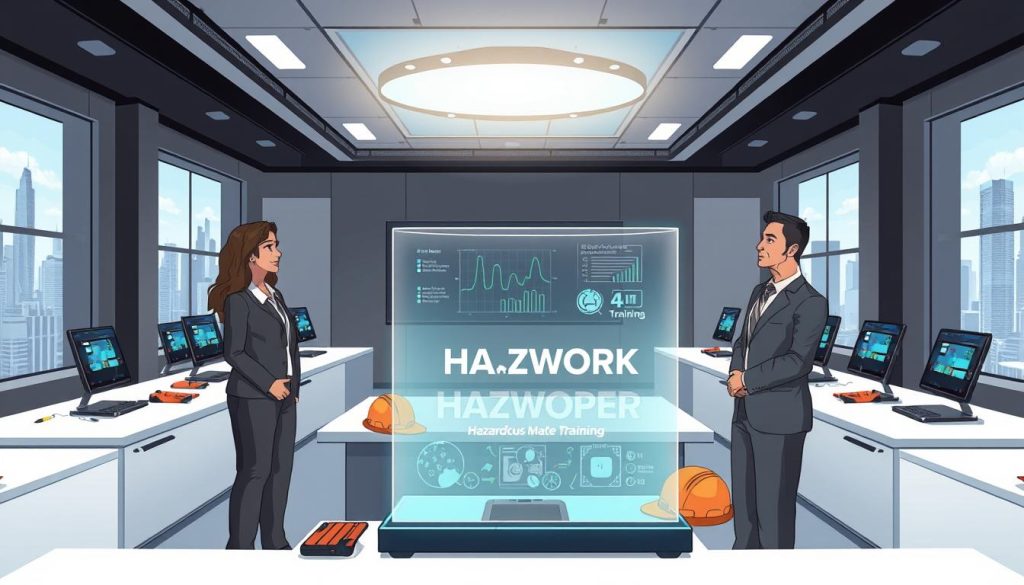
Automating Personalized Learning Paths for Hazardous Materials Handling
Old training methods often don’t fit everyone’s needs. AI changes this by making customized learning paths for each worker. This way, everyone gets training that matches their job and the chemicals they work with.
Your software keeps track of how well people are learning. It spots gaps in knowledge early, so you can fix them before they’re a problem. This keeps your clients’ teams safe and skilled over time.
“The future of workplace safety lies in the ability of systems to learn from data and provide actionable insights that prevent incidents before they occur.”
Using Natural Language Processing for Instant Regulatory Updates
Keeping up with OSHA rules is hard for EHS managers. White-label ai hazwoper solutions help by checking for updates automatically. When rules change, your system updates training and documents without you having to do it.
These systems also check safety gear with computer vision. They make sure workers are wearing the right hazmat suits and gear. This keeps your clients ready for audits and saves your safety team a lot of work. With White-Label AI HAZWOPER, your users can focus on their jobs while the software takes care of the rules.
What Are the Technical Requirements for Integrating White-Label AI Solutions?
Adding a White-Label AI HAZWOPER solution to your platform needs careful planning. Your current software must handle fast data processing without losing stability. A good technical setup lets you add advanced safety features without harming your main EHS platform.

API Connectivity and Seamless Software Ecosystem Integration
Your platform needs strong API connectivity for a unified experience. Webhooks help exchange data in real-time between your dashboard and the AI engine. This makes sure safety alerts reach users fast, on any device.
The backend architecture is key for performance. The white-label ai hazwoper engine uses a Go-based core gateway layer. This layer does quick hazard assessments, keeping systems running smoothly even when busy.
“Reliable integration is the backbone of any successful safety software deployment. When systems communicate without latency, the entire organization benefits from improved hazard awareness.”
Scalability Considerations for Cloud-Based EHS Infrastructure
As your client base grows, your cloud infrastructure must scale up. You need a design that keeps performance steady across many sites. This ensures your White-Label AI HAZWOPER tools stay fast, no matter the number of users or data.
Think about these technical points when expanding your infrastructure:
| Feature | Standard Integration | AI-Optimized Architecture |
|---|---|---|
| Processing Speed | Millisecond Latency | Microsecond Assessment |
| Data Handling | Batch Processing | Real-Time Streaming |
| System Load | Limited Concurrency | High-Concurrency Gateway |
| Deployment | On-Premise Focus | Cloud-Native Scalability |
By focusing on these technical needs, you offer a reliable and future-proof safety solution. A scalable, high-concurrency architecture makes your software a top choice in the EHS market.
How Can You Ensure Data Security and Regulatory Compliance with AI Tools?
When you use a White-Label AI HAZWOPER solution, keeping data safe is key. You need to protect every piece of data from unauthorized access. It’s important to balance new technology with strict safety rules to keep your clients’ trust.

Maintaining OSHA Data Privacy Standards in AI Processing
Following federal safety rules is a must in the environmental health field. Your system must handle sensitive info safely and follow OSHA privacy rules. A robust architecture logs all important events in a secure database.
This logging makes sure your place is always ready for audits. It keeps a clear, unchangeable record of AI decisions. This shows your users that their safety records are correct and can be defended. Such care sets top-notch software apart from simple tools.
Encryption and Secure Data Handling Protocols for Sensitive EHS Information
Creating a white-label ai hazwoper framework needs more than code; it needs top security. Use end-to-end encryption for all data to stop breaches. These steps keep EHS info safe from start to finish.
“Data security is not just a tech need; it’s the heart of safety in the digital world. When software makers focus on encryption, they safeguard the people they aim to protect.”
Here’s a look at the security steps your platform needs:
| Security Feature | Implementation Method | Compliance Impact |
|---|---|---|
| Data Logging | PostgreSQL Audit Trails | High (Audit-Ready) |
| Encryption | AES-256 Standards | Maximum Protection |
| Access Control | Role-Based Permissions | Regulatory Alignment |
By taking these stringent security steps, you lower risks from data silos. This forward-thinking approach makes your software a trusted ally for managing tough hazardous material settings.
What Are the Primary Benefits of Offering AI-Powered HAZWOPER Features to Your Clients?
By using White-Label AI HAZWOPER tools, you give your clients a strong defense against risks. You turn your platform from just keeping records to a lifesaving tool. This change adds huge value to industrial companies.

Improving User Retention Through Advanced Compliance Automation
Keeping clients happy means avoiding big mistakes. With automated compliance features, you ease the load on safety managers. They can then focus on real work, not just paperwork.
This automation builds strong loyalty. When your software spots hazards before they happen, users see it as a true partner. Consistent, reliable safety outcomes keep clients coming back for more.
“Technology is best when it brings people together and keeps them safe from harm in the most challenging environments.”
Competitive Advantages in the Crowded EHS Software Market
The EHS market is full of basic tools, but white-label ai hazwoper stands out. By adding these advanced features, you show your brand leads in innovation. This puts you ahead of competitors stuck with old, manual methods.
The financial benefits for your clients are clear. Stopping a big chemical exposure or avoiding a shutdown pays for the system fast. With White-Label AI HAZWOPER, your clients see a solid return on investment every year.
Using white-label ai hazwoper tech makes your software a valuable asset. You’re not just selling a product; you’re giving peace of mind and keeping operations running smoothly in a high-risk field.
How Do You Customize White-Label AI Models for Specific Industry Hazards?
Getting safety right starts with training AI models for specific hazards. By customizing your White-Label AI HAZWOPER solution, you make sure it fits your clients’ unique risks. This makes safety tools more than just software; they become valuable assets in high-risk places.

Training AI on Niche Chemical and Environmental Data Sets
Your AI needs to handle tough conditions well. Use YOLO-based spatial processing with special camera streams for better visibility. This advanced technical approach spots hazards that regular cameras can’t.
Also, train your models with data specific to your clients’ operations. This targeted training makes your white-label ai hazwoper features more reliable. It helps the AI identify site-specific threats accurately.
Adapting User Interfaces for Specialized Field Operations
How safety data is shown to workers is key. Make sure your user interfaces are clear and easy to use during field work. A messy dashboard can confuse people, so focus on intuitive design that shows important safety alerts.
Customizing the interface for different roles helps workers focus on what’s most important for their tasks. A white-label ai hazwoper interface tailored to the user reduces confusion and speeds up responses. Keeping complex data simple is vital for safety in tough industrial environments.
What Challenges Should You Anticipate When Implementing AI in EHS Software?
Bringing new tech to safety areas can be tricky. When you add White-Label AI HAZWOPER, you need to mix new ideas with the need for reliability. Knowing the challenges ahead is key to smooth operations.

Managing User Trust and AI Transparency in Safety-Critical Environments
In places where safety is top priority, user trust is everything. If AI systems cause too many false alarms, people might ignore real warnings. This is a big safety risk.
To avoid this, use a system that filters out false signals before they reach people. Showing how AI makes decisions helps your team trust the data. A white-label ai hazwoper tool that explains its actions is better than one that doesn’t.
Overcoming Data Silos During the Integration Phase
Data silos hold back EHS software from being its best. When data is stuck in one place, AI can’t give the full picture. You need to make sure data moves freely across your system.
To break down these walls, you need a plan that ties old systems to new AI. A central place for safety data lets everyone see the same info. This is key for a strong safety culture.
| Feature | Legacy Systems | Modern AI-Driven Solutions |
|---|---|---|
| Detection Logic | Basic Thresholds | Dual-Layer Architecture |
| Data Accessibility | Isolated Silos | Unified Ecosystem |
| False Positives | High Frequency | Minimized via Logic Filtering |
| User Trust | Low (Alarm Fatigue) | High (Transparent Insights) |
How Does AI-Driven HAZWOPER Support Real-Time Incident Response and Reporting?
When a chemical emergency happens, every second is critical. Traditional safety methods often can’t keep up with the fast pace of a hazardous material release. With White-Label AI HAZWOPER solutions, you give your clients the tools to move from reacting to making proactive, data-driven decisions.

Predictive Analytics for Hazard Mitigation and Emergency Planning
During a chemical hazard breakout, the platform tracks team positions and hazard spread in real-time. This visibility lets safety officers see the threat clearly, directing people away from danger zones before they’re exposed. Predictive analytics forecast the spread of toxins based on wind, temperature, and chemical properties.
These insights help your users create dynamic emergency plans that adjust to changing site conditions. By using a white-label ai hazwoper framework, you provide a strong safety layer. This keeps teams informed and safe during high-pressure situations.
“The integration of artificial intelligence into emergency response protocols is not merely an upgrade; it is a fundamental shift in how we preserve human life in hazardous environments.”
Streamlining OSHA Reporting Through Automated Incident Documentation
After an incident, there’s often a lot of paperwork that can overwhelm safety managers. Automated documentation captures all critical details of an event, from the start to the end. This reduces human error and saves time, ensuring your clients meet strict regulatory standards.
Automating data collection makes OSHA reporting accurate, on time, and ready for audits. This frees up safety teams to focus on preventing future incidents and building a safety culture.
| Feature | Manual Response | AI-Driven Response |
|---|---|---|
| Hazard Tracking | Static/Delayed | Real-Time/Dynamic |
| Data Entry | High Error Risk | Automated/Precise |
| Reporting Speed | Days/Weeks | Instant/Minutes |
| Decision Support | Intuition-Based | Data-Driven |
Conclusion
The world of industrial safety is moving towards smarter, faster digital tools. Adding White-Label AI HAZWOPER to your platform puts you at the leading edge of this change.
You can start using these advanced features in just 10 business days. This quick start lets you grab market share and offer your clients instant value. They get better compliance tracking and automated safety, keeping their workers safe.
Choosing white-label ai hazwoper is a smart move for your future growth. You meet your clients’ needs while keeping your brand unique. This move brings big benefits to your business and your customers.
It’s time to update your EHS software suite. By picking White-Label AI HAZWOPER, you’ll lead in a competitive field. Talk to your development team today to start your journey. It’s a chance to change how your clients handle hazardous materials.