
Did you know that nearly 85% of forest blazes in the United States are caused by humans? We often can’t spot these dangers until they’ve spread a lot. Time is our most precious resource when fighting these fires.
We’re now using Wildfire Prevention AI to change how we keep safe. These smart systems can find danger signs before we can. They use advanced algorithms to spot smoke that we can’t see.
This new way of watching for fires is key to stopping them early. By adding wildfire prevention ai to our systems, we can better protect our homes and nature.
Key Takeaways
- Early detection systems significantly reduce response times for emergency crews.
- Visual algorithms identify smoke plumes that are often missed by human observers.
- Proactive monitoring helps contain small sparks before they become uncontrollable blazes.
- Modern technology provides a scalable solution for vast, remote forest regions.
- Integrating smart vision tools enhances overall public safety and environmental protection.
Understanding the Role of Wildfire Prevention AI in Modern Forestry
We’re moving from old ways to new ones to protect our forests. Wildfire Prevention AI helps us spot dangers early. This stops big fires before they start.
This change is big for forest care in the U.S. We want to give managers tools for quick, accurate action.
How Computer Vision Detects Smoke Patterns
Old systems use heat sensors that wait too long to act. Our computer vision looks at video frames for changes.
It learns to tell smoke from clouds. This makes wildfire prevention ai better at finding real fires, not false ones.
The Importance of Real-Time Data Processing
Our tech works fast to spot fires. Every second is key. Alerts go out right when a fire is found.
This tech lets humans focus on big decisions, not watching every camera. It makes our teams more efficient.
| Feature | Traditional Monitoring | AI-Driven System |
|---|---|---|
| Detection Trigger | Heat/Temperature | Visual Smoke Patterns |
| Response Time | Delayed | Real-Time |
| Accuracy | Low (False Alarms) | High (Pattern Recognition) |
| Operational Cost | High Labor | Low Maintenance |
Using Wildfire Prevention AI is more than just tech. It’s key to saving our forests. We think it will shape the future of forest care.
Selecting Hardware for Edge Deployment
Building a reliable Wildfire Prevention AI system starts with the right hardware. These systems work in remote, off-grid places. They need to be tough and accurate.
We look for equipment that can handle extreme weather. It must also keep data streams steady.
Choosing High-Resolution Optical Cameras
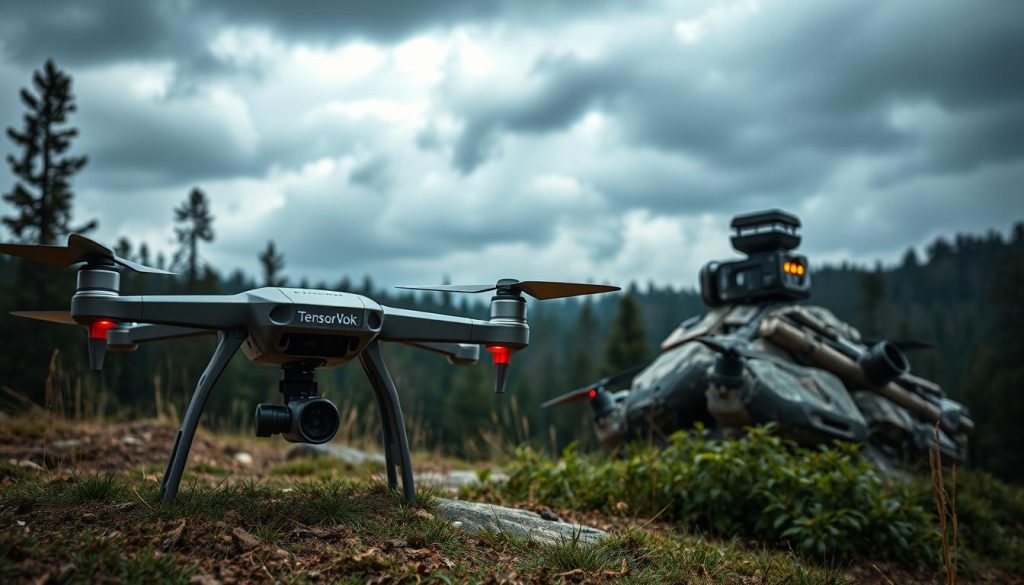
High-resolution optical cameras are key for our monitoring. They capture details like smoke color changes against the forest. Clarity is essential to tell smoke from fog.
Choose cameras with high dynamic range for different light. This ensures our wildfire prevention ai works well.
Integrating Thermal Imaging Sensors
Thermal imaging sensors are vital at night or in dense areas. They spot heat that’s hard to see. This makes our stations work 24/7.
Benefits of Dual-Spectrum Monitoring
Using both optical and thermal data is powerful. Our Wildfire Prevention AI checks smoke patterns against heat. This reduces false alarms and makes our system more reliable.
| Sensor Type | Primary Function | Best Use Case | Key Advantage |
|---|---|---|---|
| Optical | Visual Detection | Daytime Monitoring | High Detail |
| Thermal | Heat Sensing | Night/Low Visibility | Heat Anomaly Detection |
| Dual-Spectrum | Combined Analysis | All-Weather Coverage | High Accuracy |
Our wildfire prevention ai hardware strategy is strong. We think quality sensors are key to protecting forests.
Preparing Your Dataset for Model Training
Before our algorithms can spot a single wisp of smoke, we must curate a massive library of visual information. The accuracy of our Wildfire Prevention AI depends on the quality and diversity of the training data we collect. We treat this preparation phase as the most critical step in building a reliable system.
Collecting Diverse Smoke and Cloud Imagery
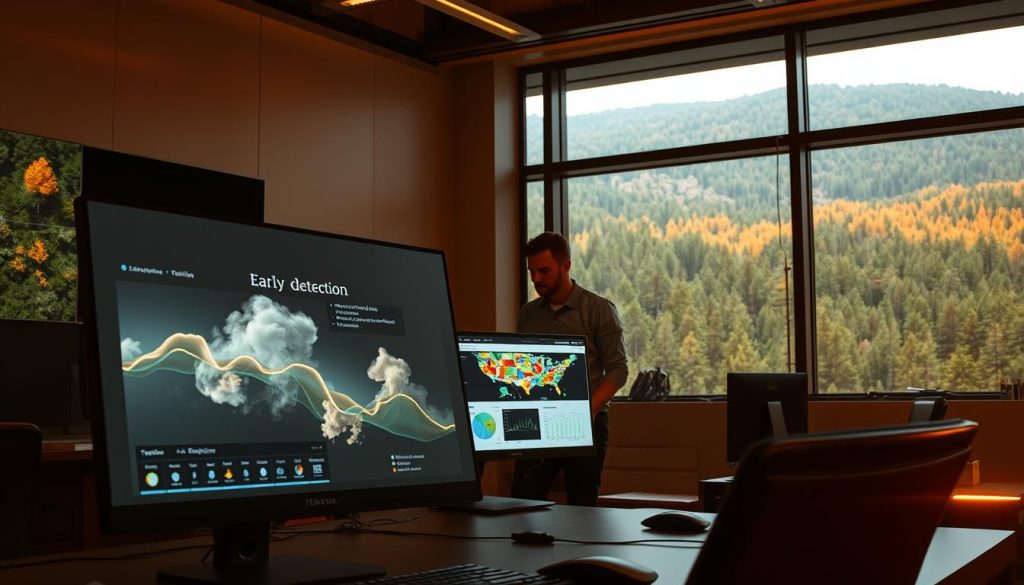
To ensure our models perform well, we gather images from various environments and weather conditions. A model trained only on clear-day smoke will fail when the sky turns overcast. We focus on capturing a wide range of visual inputs to build robust recognition capabilities.
Our collection process includes several key categories of imagery:
- High-altitude cloud formations that mimic smoke density.
- Early-morning mist and low-hanging fog banks.
- Varied forest canopy types under different lighting conditions.
- Actual wildfire smoke at different stages of development.
Annotating Data for Accurate Classification
Once we have our raw images, we move to the annotation phase. This involves manually labeling thousands of frames to teach the system exactly what smoke looks like compared to other objects. By providing these precise examples, we help the wildfire prevention ai learn the subtle textures and movement patterns of fire.
We use high-precision bounding boxes and pixel-level masks to define our targets. This level of detail ensures that the model understands the difference between a plume of smoke and a harmless cloud. Consistency during this stage is vital for long-term success.
Avoiding False Positives from Fog and Dust
One of the biggest challenges we face is distinguishing between smoke and environmental noise. Fog, dust storms, and even heavy pollen can often trigger false alarms in less sophisticated systems. We mitigate this by including specific “negative samples” in our training sets.
By intentionally showing the model images of dust and fog labeled as “non-smoke,” we train it to ignore these distractions. This rigorous approach allows our Wildfire Prevention AI to maintain high precision in complex outdoor settings. Ultimately, this careful preparation is what makes our wildfire prevention ai a trusted tool for forest safety.
Training Your Vision Algorithms
We’re now in the technical training phase of our Wildfire Prevention AI project. This phase turns raw data into a tool that can spot smoke in forests. We pick the right base to make sure our system works well and can grow.
Selecting the Right Neural Network Architecture
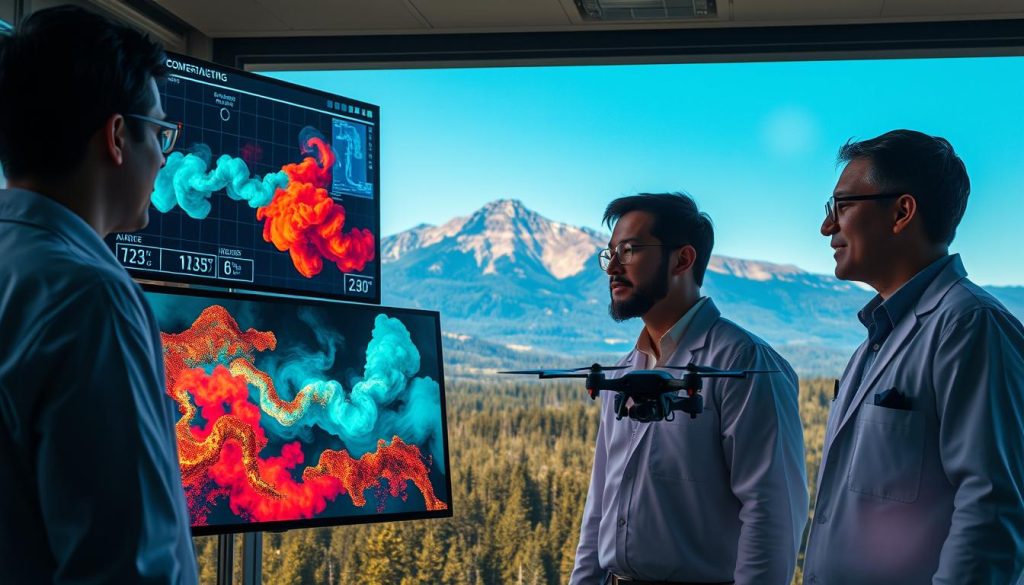
We mix advanced architectures for top-notch precision. We use Vision Transformers to grasp the big picture and YOLOv8 for quick, accurate object finding. This mix helps our models tell apart clouds and smoke with confidence.
Optimizing Models for Low-Power Edge Devices
Our models need to work on low-power devices in remote spots. We shrink our neural networks to stay efficient without losing key detection skills. Our team uses several strategies to keep the system slim:
- Model Quantization: Cutting down weight precision to save space.
- Pruning: Taking out extra connections in the network layers.
- Knowledge Distillation: Training smaller models to match the big ones’ performance.
Balancing Detection Speed and Accuracy
The main aim of our wildfire prevention ai is to send alerts fast. We keep an eye on the balance between how quick and accurate our model is. If it’s too slow, we might miss the chance to act early. By tweaking our settings, we make sure our Wildfire Prevention AI works fast in the field, helping to save our forests.
Deploying Algorithms to Remote Monitoring Stations
We need to connect advanced algorithms with the real world of forest monitoring. Putting Wildfire Prevention AI in the field needs careful planning. We focus on local smarts to keep watch in remote areas.
Establishing Reliable Network Connectivity
Remote forests often don’t have cell service, making data sharing hard. We use satellites and LoRaWAN for reliable communication. These resilient networks send important alerts without needing fast internet.
We make sure emergency messages get to teams fast. This is key for wildfire prevention ai to work well.
Configuring Local Processing Units
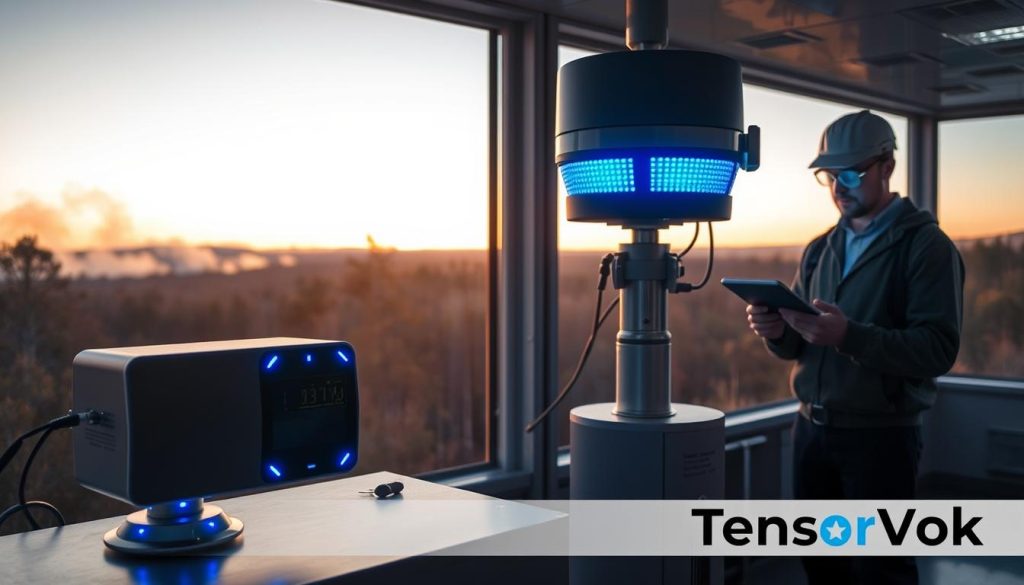
We set up local units to handle big tasks on-site. Instead of sending raw video to the cloud, our edge devices analyze it right away. This on-device processing cuts down on bandwidth and speeds up detection.
We make our software work well on special hardware. This keeps the system fast without needing constant server access.
Managing Power Consumption in Off-Grid Locations
In the wilderness, we use solar panels and deep-cycle batteries for power. We use energy-efficient strategies like sleep mode when there’s no movement. This keeps our Wildfire Prevention AI working at night and on cloudy days.
Good power management is key for a reliable network. We balance how much the system uses with battery life. This lets our wildfire prevention ai systems run all year in the forest.
Integrating Alert Systems with Emergency Services
A strong Wildfire Prevention AI system needs a good communication chain. When our sensors spot smoke, the data must quickly reach the right people. This starts a fast response. We work on linking our digital tools with dispatch centers.

Automating Notification Workflows
We use cloud-based APIs to send alerts fast to dispatchers. When we spot a likely smoke event, we send a notification. This automated workflow means no one has to watch video feeds all the time.
Our alerts go into emergency management software. Dispatchers get data like GPS, video, and confidence scores right away. This helps teams know what to do before they leave.
Verifying Detections Before Dispatching Teams
We avoid wasting resources with false alarms. Our system has a verification step. A human checks the alert before sending teams.
This “human-in-the-loop” method makes sure only real fires get a big response. It builds trust with field crews. Accuracy is our priority when it matters most.
Reducing Response Times Through Automated Alerts
Speed is key to stop fires early. Our systems cut down the time it takes to report a fire. This lets emergency services get there when the fire is small.
| Feature | Manual Reporting | Automated AI System |
|---|---|---|
| Detection Speed | Slow (Human-dependent) | Instant (Real-time) |
| Data Accuracy | Variable | High (Verified) |
| Response Time | Delayed | Optimized |
| Resource Usage | Inefficient | Targeted |
Maintaining and Updating Your Detection System
Keeping your Wildfire Prevention AI system in top shape is key. We focus on keeping it reliable and accurate for years. This is what makes a detection network truly valuable.
We follow a strict maintenance plan to keep our tech safe. Regular updates are essential for fighting wildfires.
Performing Regular Field Maintenance
Our sensors and cameras face tough conditions. We suggest regular checks to remove dirt and spiderwebs. This keeps the lens clear.
Regular physical checks are important for your equipment’s life. Here are some tasks to do:
- Cleaning camera lenses and thermal sensor windows with non-abrasive materials.
- Inspecting mounting brackets and solar panels for signs of wear or weather damage.
- Verifying that all cable connections remain secure and protected from wildlife interference.
- Testing battery health to ensure consistent power during periods of low sunlight.

Refining Models with New Environmental Data
The landscape changes, and so must our wildfire prevention ai. We gather new images and data to sharpen our detection.
By using this new data, we make our system better at spotting fires. This helps us catch fires faster and avoid false alarms.
We ask teams to report any unusual environmental changes. This helps train the wildfire prevention ai. Keeping up with these updates keeps our protection strong against wildfires.
Conclusion
Wildfire Prevention AI is a big step forward in protecting nature and people. It uses smart algorithms and strong hardware for early detection. This saves a lot of money and property.
This technology is a key part of keeping us safe. It helps us see dangers before they happen. This way, we can act quickly to prevent fires.
Using wildfire prevention AI means we must keep improving and staying safe. We want you to see how these tools fit with what we already have. This makes our world safer for everyone.
Your help makes these tech solutions work in real life. Let’s create a future where technology protects our lands. Contact local forestry experts or tech partners to start making our world safer today.